PRECLINICAL ARTICLES
-
 Emerging Trends In Neuroinflammation And Therapeutic Discovery
The central and peripheral nervous systems and the immune system are interconnected, working together to maintain tissue homeostasis and respond to environmental challenges.
-
 Targeting p27 To 'Let Biology Do The Work' With Stacy Blain, CEO, Concarlo Therapeutics
Stacy Blain, PhD, turned 30 years of p27 research into Concarlo’s LOCKTAC, a molecular glue designed to restore natural CDK2/4/6 inhibition in cancer.
-
 Autoimmune Drugs For Women: What To Bring To The Clinic
Autoimmune disease is one of the most sex-skewed categories in medicine. Sex, reproductive status, and hormonal state should not be treated as background noise.
-
 Datapoints Summit 2026 Highlights: Moving AI Closer To The Lab
At the Datapoints Summit, speakers showed where AI can improve drug discovery—and why better data, validation, and scientific judgment remain essential for lasting progress.
-
 Can An Ibogaine Analog Preserve The Therapeutic Potential Without The Trip Or Cardiac Risk?
Ibogaine’s anecdotal and clinical signals on cravings, withdrawal, and PTSD are growing, but the biggest obstacle is that ibogaine carries serious cardiac risk and hallucinations.
-
 Wall Street Is Wary Of NAMs — And For Good Reason: What Happens To Yesterday's Drugs?
Part 2 follows the consequences into Wall Street, asking what better evidence could mean for pharmaceutical valuations and, ultimately, drugs already in the portfolio.






PRECLINICAL VIDEOS
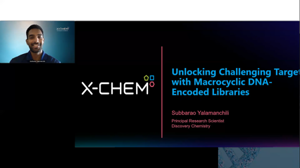
Discover how macrocycle DNA-encoded libraries can uncover new opportunities for challenging targets and help researchers translate promising screening hits into starting points for drug discovery.
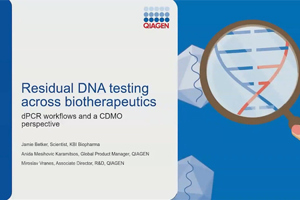
Residual host cell DNA testing can create bottlenecks. Learn how digital PCR supports more consistent quantification, simpler method deployment, and faster in-process and lot release decisions.

In a live audience poll, 46% of respondents cited validation and trust as the biggest barriers to broader organ‑on‑chip adoption. The result suggests the technology itself is no longer the main hurdle; instead, confidence in reproducibility, benchmarking, and fit‑for‑purpose use will determine how quickly these models are integrated into drug discovery decision‑making.

Women’s health research highlights both the limitations of traditional models and the strengths of organ‑on‑chip systems. Panelists describe how hormone dynamics, immune signaling, microbiomes, and sex‑specific biology can be studied with unprecedented precision, enabling mechanistic insights that were previously inaccessible and opening new paths beyond symptom‑based treatment.
PRECLINICAL ARTICLES, APP NOTES, CASE STUDIES, & WHITE PAPERS
-

Uncover how EPR spectroscopy fills the conformational gap by capturing dynamic protein motions, refining Cryo-EM models, and revealing hidden structural ensembles for drug discovery.
-

Explore how EPR-based distance measurement techniques differ in implementation, optimization, and strengths, as well as which sample characteristics can help determine the most suitable approach.
-

Gain insight into how EPR spectroscopy reveals protein dynamics, validates structural models, supports Cryo-EM sample screening, and characterizes GPCR conformational changes.
-

Protein structures are not static. See how conformational changes influence physiological function and how electron paramagnetic resonance spectroscopy provides insights into effective design.
-

See how EPR extends structural analysis beyond conventional NMR constraints by revealing long-range distances, conformational heterogeneity, paramagnetic centers, and more.
-

Missing cryo-EM density does not always indicate disorder. Learn how flexibility, conformational variation, incomplete occupancy, and sample heterogeneity can shape what is visible in a protein structure.
-

Discover how pulsed dipolar EPR complements NMR by revealing protein flexibility, conformational changes, and ligand-induced dynamics, including low-population states that can be difficult to resolve.
-

Gene expression profiling reveals whether engineered T cells display intended molecular changes while helping identify unwanted effects. See how a standardized workflow can improve consistency.
-

With only 105 FDA-approved excipients for nasal and inhalation routes, formulating biologics for respiratory delivery demands precise excipient selection across both liquid and solid dosage forms.
-

A material-sparing strategy integrating formulation mapping, lab-scale spray drying, and compact screening can accelerate risk identification and inform first-round tablet formulation decisions for poorly soluble APIs.
-

A CDMO-authored framework for navigating dry powder inhaler development, covering target product profile definition, API characterization, particle engineering technology selection, and encapsulation considerations.
-

SDD scale-up introduces scale-dependent risks that threaten bioavailability, stability, and manufacturability. This white paper details a model-based framework for managing those risks from early feasibility through commercial production.








PRECLINICAL SOLUTIONS
-

Protein dynamics can expose critical gaps between computational predictions and biological behavior. Learn how experimentally measuring conformational states can strengthen model validation.
-

Our custom expression platform directly addresses the primary host limitations in early-to-mid stage assay development:
-

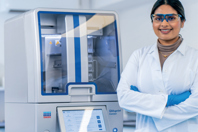
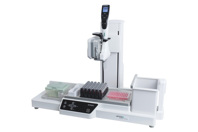
Automated nucleic acid purification can deliver high throughput without limiting flexibility or consuming valuable bench space. See how adaptable workflows support efficient sample preparation.
-

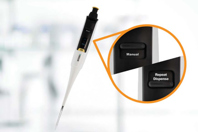
Combine precise manual control with rapid repeat dispensing in one instrument. One-handed volume adjustment, intuitive controls, and flexible charging help streamline liquid handling.
-

Regulatory-aligned off-target risk assessment for genome editing programs, from early guide RNA screening through IND-enabling confirmation studies, structured to support FDA submission requirements.
-

Software for Automated, Digitalized Experimentation
Katalyst D2D® (Design-to-Decide) provides integrated experiment design, planning, execution, and analysis for high-throughput synthesis, process optimization, and preformulation studies. It helps scientists execute experiments more efficiently and connect data with decisions across the design-make-test-analyze (DMTA) cycle.
-

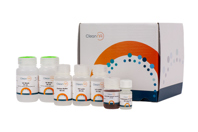
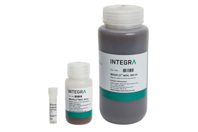
Magnetic bead-based genomic DNA extraction kit.
-

Frees you from routine pipetting and provides excellent results
-

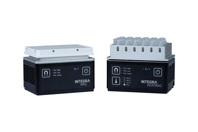
We have introduced the MAG and HEATMAG modules with you, the scientists, in mind.
-

MAGFLO magnetic beads are only available in Austria, Belgium, Denmark, France, Germany, Ireland, Netherlands, Sweden, Switzerland and the United Kingdom.
-

Explore how a data‑driven discovery model combines DEL screening, computational insights, and medicinal chemistry to accelerate hit‑to‑lead decisions, reduce risk, and enable efficient progression.
-

Chemomics transforms full DEL datasets into predictive insights. See how combining large-scale screening with clear computational models accelerates SAR understanding and strengthens confidence.
-

Generate human-relevant data with an Organ-Chip system that combines automation, imaging, and cost efficiency for faster, more confident insights for drug development and complex biological studies.
-

With 12 independent Emulations in one consumable, Chip-Array optimizes workflows and reduces cell requirements—delivering scalable, physiologically relevant models for advanced research.