REGULATORY ARTICLES
-
 Bravo, FDA For Retiring 'Animal Testing' In Favor Of 'Nonclinical'
HHS is advancing human-based drug research through new FDA terminology, NIH infrastructure, CDC studies, and ARPA-H tools that reduce reliance on animal testing.
-
 The Continuing Challenge Of Drug-Induced Liver Injury
Recent liver safety concerns highlight the limits of conventional preclinical testing. Human-relevant models could help researchers detect drug-induced liver injury earlier and reduce costly setbacks.
-
 Wall Street Is Wary Of NAMs — And For Good Reason: What Happens To Yesterday's Drugs?
Part 2 follows the consequences into Wall Street, asking what better evidence could mean for pharmaceutical valuations and, ultimately, drugs already in the portfolio.
-
 Wall Street Is Wary Of NAMs — And For Good Reason: The Evidentiary Shift
Part I of this series focuses on the evidentiary shift of how NAMs may change the architecture of evidence and how that transition unfolds.
-
 What The China Biotech Debate Reveals About U.S. Drug Discovery
Peter Kolchinsky and Jason Kelly sparred over China’s biotech rise and what it means for U.S. drug discovery, investment, and strategic control.
-
 July Update — U.S. Generic Drug Tariffs: Implications For Pharma And Outsourcing
Mathini Ilancheran updates us on how delayed U.S. tariffs on generic drug imports could reshape supply, sourcing, and trial planning.
-
") Why Ending Rh Disease Requires More Than A Breakthrough (Part 3 of 3)
Why Ending Rh Disease Requires More Than A Breakthrough (Part 3 of 3)Rh disease has been preventable for decades. Yet babies still die worldwide because access, supply, and infrastructure have not caught up.
-
 Chinese Competition And The Future Of Science: Insights From The U.S. Science Summit
At BiotechTV’s U.S. Science Summit, biotech leaders discussed China, AI, scientific storytelling, and what it will take to protect U.S. innovation.








REGULATORY VIDEOS

Explore how human-relevant liver models can improve DILI risk assessment and support stronger development decisions while advancing toward regulatory qualification and scaling into automated studies.
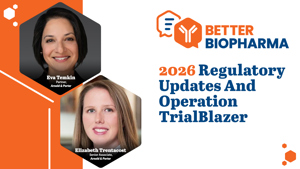
In this episode of “Better Biopharma,” host Tyler Menichiello is joined by former FDA staffers Eva Temkin, partner at Arnold & Porter, and Elizabeth Trentacost, senior associate at Arnold & Porter. They reflect on 2026 regulatory developments and discuss the implications and nuances of Operation TrialBlazer.
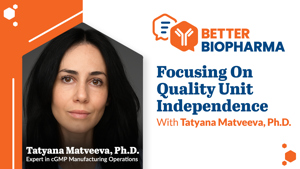
In this episode of “Better Biopharma,” host Tyler Menichiello is joined by Tatyana Matveeva, Ph.D., an expert in cGMP manufacturing and regulatory compliance.
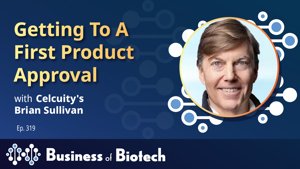
On this week's episode of the Business of Biotech, Brian Sullivan, CEO at Celcuity, talks about winning the company's first FDA approval for Revtorpyk, a kinase inhibitor for breast cancer patients, and why targeting an “untreated disease mechanism” can beat chasing a single mutation.
REGULATORY ARTICLES. APP NOTES, CASE STUDIES. & WHITE PAPERS
-

Growing demand for cell and gene therapies is increasing pressure on cytokine production. Explore interleukin manufacturing, quality, consistency, safety, scalability, and supply reliability.
-

Recent liver safety concerns highlight the limits of conventional preclinical testing. Human-relevant models could help researchers detect drug-induced liver injury earlier and reduce costly setbacks.
-

Policy and scientific validation have aligned to shift drug development beyond animal models. New regulations and technologies are making human‑relevant methods the standard for preclinical research.
-

Hidden packaging and drug interactions pose real risks. A collaborative knowledge base helps scientists unify data, improve decisions, and advance safer development through accessible E&L insights.
-

Chromatography's environmental footprint is often overlooked. Applying green chemistry principles reduces solvent use and waste, unlocking sustainable workflows without losing performance.
-

NMR data holds deep insights, but extracting them requires the right tools. Smart software improves accuracy and workflows, turning complex spectra into clear, actionable understanding.
-

NMR reveals far more than structure, offering insights into purity and molecular behavior. Advanced analysis unlocks deeper value from data to better understand mixtures and 3D structures.
-

Catalyst selection is vital for green chemistry. Balancing efficiency and environmental impact requires smart decisions to advance sustainable synthetic methods without losing performance.








REGULATORY SOLUTIONS
-

Automated nucleic acid purification can deliver high throughput without limiting flexibility or consuming valuable bench space. See how adaptable workflows support efficient sample preparation.
-

Regulatory-aligned off-target risk assessment for genome editing programs, from early guide RNA screening through IND-enabling confirmation studies, structured to support FDA submission requirements.
-

Predict Genotoxic & Carcinogenic Endpoints to Meet ICH M7(R2) Guidelines
ACD/Impurity Profiling Suite predicts a variety of toxicological endpoints to help you assess the genotoxic and carcinogenic potential of impurities and degradants. Developed through a collaborative agreement with the US Food and Drug Administration (FDA), the software can be used as part of your ICH M7(R2) workflow—to help prepare regulatory submissions and remain compliant.
- Determine the ICH M7(R2) classification for impurities and degradants
- Predict 21 toxicological endpoints from structure; for mechanisms of hazardous activity including:
- Mutagenicity (AMES test and other procaryote and eucaryote test systems)
- Clastogenicity
- Other DNA damage
- Carcinogenicity
- Endocrine disruption mechanisms
- Identify potentially hazardous structural fragments responsible for carcinogenic and genotoxic activity
- Gain insight into the possible mechanisms of toxic effects
- Assess the reliability of predictions
-

Advance impurity risk assessment with predictive modeling that clarifies toxicity mechanisms, strengthens regulatory arguments, and reduces experimental burden—helping teams make confident decisions.
-

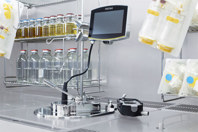
This checklist provides a detailed look at the requirements of 21 CFR Part 11 and highlights how the Sterisart® Universal | Gen 4 - Advanced supports your efforts to meet these regulatory demands.
-

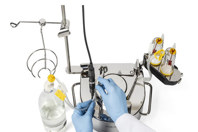
This pump combines state-of-the-art hardware with sophisticated, user-friendly software to offer compliant, paperless documentation and reporting.
-

Discover the nanoparticle engineering, formulation and GMP manufacturing services that can drive forward your market success and unlock the power of “small."
-
")
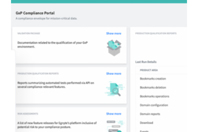
Accelerated GxP and 21 CFR Part 11 compliance without disrupting your existing workflows.
-
Choosing the right document management platform comes with daunting responsibility: compliance, usability, and adoption to name a few. We created this Buyer’s Guide to provide you with a tangible framework to evaluate varied solutions and, ultimately, identify one or more that meet your specific use case.
-
Life sciences organizations face more pressure than ever to run efficient, uninterrupted manufacturing production at the lowest possible cost. To stay compliant with government regulations, quality and manufacturing organizations must precisely follow Good Manufacturing Practices (GMP) standardized processes and maintain an associated document control process that adheres to those requirements.
-

As the pharmaceutical industry innovates and evolves, learn more about how Nanoform can play a critical role in empowering your company's journey to net zero.
-
Quality & Manufacturing organizations in Life Sciences companies are facing more pressure than ever to run efficient, uninterrupted production at the lowest possible cost, while meeting stringent safety, quality, and regulatory standards.
-

Formulation and aseptic filling solutions are crucial at every stage of development. Consider a manufacturing partner who can address every challenge on the path from pre-clinical programs to commercialization.