BIOINFORMATICS ARTICLES
-
 Datapoints Summit 2026 Highlights: Moving AI Closer To The Lab
At the Datapoints Summit, speakers showed where AI can improve drug discovery—and why better data, validation, and scientific judgment remain essential for lasting progress.
-
 Closing The Loop Between AI And Experimental Biology
We caught up with Rosie Rodriguez, Ph.D., president of growth at Relation, to discuss AI’s place in accelerating discovery
-
 The Changing Role Of Computational Mechanics In Drug Discovery
Computational models will never replace experimental biology, but their emerging role is different.
-
 Drug Discovery AI Has A Ground Truth Problem
If the goal is more healthy years of life, the bottlenecks are target identification, target validation, and clinical testing. Why is AI not transforming those steps? Because the data are not there.
-
 How AI-Powered Automation Is Redefining Pharmaceutical R&D
The autonomous lab is not a distant aspiration but a present-day competitive differentiator.
-
 Wondering If Your Org Should Purchase R&D Datasets?
Pharma/biotech companies are increasingly looking to access large-scale data sets to fill gaps in their computational biology capabilities. Be prepared for the investment.






BIOINFORMATICS VIDEOS
DEL technology is evolving from a screening tool into a rich data engine for AI. Learn how expanding datasets and computational methods are reshaping what researchers can uncover.

Discover how AI-powered modeling uncovers hidden patterns in DEL data, broadens chemical diversity, and accelerates decision-making to help teams prioritize compounds and move more efficiently.

Zaher compares EU and U.S. progress, noting legislative and policy shifts driving NAMS integration. Samantha calls for open data platforms and consortiums to build confidence, while Zaher stresses benchmarking against human clinical data and government-led initiatives akin to the Human Genome Project.

Zaher frames the urgency of NAMS adoption by highlighting the staggering 92% drug failure rate in clinical trials despite animal testing. He explains how interdisciplinary convergence and AI are accelerating the shift toward human-relevant models, positioning NAMS as a solution to systemic inefficiencies in drug development.
BIOINFORMATICS APP NOTES, CASE STUDIES, & WHITE PAPERS
-

Uncover how EPR spectroscopy fills the conformational gap by capturing dynamic protein motions, refining Cryo-EM models, and revealing hidden structural ensembles for drug discovery.
-

Discover how automated EPR pulsed dipolar spectroscopy measures protein dynamics, complements Cryo-EM and AlphaFold, and delivers crucial structural insights for drug discovery.
-

Hidden packaging and drug interactions pose real risks. A collaborative knowledge base helps scientists unify data, improve decisions, and advance safer development through accessible E&L insights.
-

Chromatography's environmental footprint is often overlooked. Applying green chemistry principles reduces solvent use and waste, unlocking sustainable workflows without losing performance.
-

NMR data holds deep insights, but extracting them requires the right tools. Smart software improves accuracy and workflows, turning complex spectra into clear, actionable understanding.
-

NMR reveals far more than structure, offering insights into purity and molecular behavior. Advanced analysis unlocks deeper value from data to better understand mixtures and 3D structures.
-

Catalyst selection is vital for green chemistry. Balancing efficiency and environmental impact requires smart decisions to advance sustainable synthetic methods without losing performance.
-

AI progress is stalled by fragmented, low-quality data, not technology. Standardization, automation, and cultural change transform disconnected datasets into a foundation for smarter decisions.






BIOINFORMATICS SOLUTIONS
-

Protein dynamics can expose critical gaps between computational predictions and biological behavior. Learn how experimentally measuring conformational states can strengthen model validation.
-

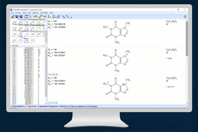
Calculators & Predictors for LogP, LogD, pKa, Aqueous Solubility, and more…
The physicochemical properties of a molecule can help you better understand its likely behavior, support QSPR high-throughput screening (HTS) of libraries, and data-driven lead optimization.
ACD/PhysChem Suite is made up of a number of prediction modules. It provides high-quality, structure-based calculations of physicochemical properties.
- Predict aqueous solubility,* boiling point, logD,* logP,* pKa,* Sigma, and other molecular descriptors for organic compounds, from structure
- Evaluate the calculated results with sorting, plotting tools
- Assess the reliability of predicted physicochemical property values
- Investigate quantitative structure-property relationships, structure modifications, and/or lead optimization for a target profile
- Train predictors with experimental data to better reflect novel chemical space
- Include custom models and in-house prediction algorithms
*Models are trainable with experimental data
-

The Percepta Platform is a portfolio of software applications and a technology ecosystem for predicting and managing physicochemical, ADME/Tox, and other molecular property data.
With Percepta applications you can predict molecular properties from structure, and train models with experimental data. You can even include custom models created in-house to centrally manage in silico calculations and training sets for distribution so that everyone calculating property data is using up-to-date information.
-

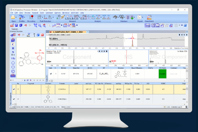
The Ultimate NMR Software for Data Interpretation, Structure Characterization & Knowledge Management
ACD/NMR Workbook Suite is a comprehensive NMR software application. It features a full suite of advanced processing, analysis, and databasing functionalities for 1D and 2D NMR data from all major vendor formats.
Use NMR Workbook Suite to:
- Process and analyze NMR data easily with synchronized peak picking and assignment across datasets
- Reliably verify chemical structures
- Quantify and analyze mixtures
- Create comprehensive reports and publication-ready data
- Share, manage, and store live NMR spectra linked with structures
-

The Most Accurate 1D and 2D NMR Predictors
From experimental design to data interpretation, ACD/Labs’ NMR predictors can significantly speed up your workflow. Use ACD/NMR Predictors to:
- Predict a complete set of 1D and 2D NMR spectra, for 1H, 13C, 15N, 19F, and 31P nuclei from a chemical structure
- Calculate chemical shifts and coupling constants in seconds
- Train the algorithms with in-house data to improve accuracy for novel chemical space
-

Get Systematic Chemical Names for Structures, and Produce Structures from Names
ACD/Name generates chemical names according to IUPAC rules, converts chemical names to structures, and easily handles challenging areas of nomenclature.
- Generate names for organic; biochemical; and some inorganic, organometallic, and polymer structures
- Convert systematic or trivial names to structures
-

Characterize the Best-Fit Structure for Your NMR and MS Data
ACD/Structure Elucidator Suite is the industry-leading software solution for computer-assisted structure elucidation (CASE). It offers a reliable workflow and accurate results for de novo elucidation of complex organic compound structures.
Use Structure Elucidator Suite to:
- Determine structures using NMR and other analytical data
- Generate all the candidate structures that fit your NMR and MS data
- Rank the generated structures and identify the most probable one
- Determine 3D configuration from a 2D structure using NOESY/ROESY data
- Dereplicate previously identified compounds
- Search fragment databases or manually define fragments for partially known structures
- Report the final structure and add SDFiles to the prediction databases
-

Gain insight into how faster structural elucidation is possible with integrated mass spectrometry workflows that combine intelligent data analysis, spectral matching, and automation.
-

Model MS fragmentation pathways and align predictions with experimental data to assign fragment ions faster. Streamline spectral interpretation and confirm compound identities with greater confidence.
-

A smarter approach to method selection helps labs reduce guesswork and maintain consistent results. Learn how structured workflows and guided optimization can support confident decisions.
-

One MS Software for All Your Mass Spectral Data Analysis and Management
ACD/MS Workbook Suite is an all-in-one package for MS data handling.
- Process MS, LC/MS, and GC/MS data acquired with instruments from any major vendor
- Auto-annotate peaks and associate them with compound structures
- Identify unknowns by deconvoluting spectra and searching databases for spectral matches
- Create easily shareable and searchable spectral databases
-

Characterize Samples and Identify Unknown Components
Do you often need to identify unknown compounds from complex samples? ACD/MS Structure ID Suite offers a simple, replicable workflow for generating and narrowing down structural candidates.
- Deconvolute complex LC/MS and GC/MS data into individual component traces
- Search proprietary and commercial databases for spectral matches
- Search PubChem for accurate-mass and molecular-formula matches
- Narrow down candidate structures by retention time and fragment include/exclude lists
-

Rules-Based Fragment Prediction for Mass Spectrometry
ACD/MS Fragmenter helps you predict mass spectral fragmentation in seconds. Have more confidence in your compound IDs, learn about fragmentation mechanisms, and publish your results easily.
It’s as simple as this:
- Draw your compound
- Select the ionization polarity and fragmentation options
- View its fragmentation tree
-

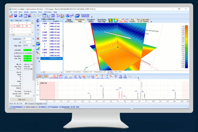
Your Method Development Toolbox
ACD/Method Selection Suite is your software assistant for LC and GC method development. When you want to develop methods using Quality by Design (QbD) principles, and make every experiment count, reach for Method Selection Suite to:
- Choose your starting conditions and columns
- Simulate separations under new conditions
- Optimize your chromatography with 1D, 2D, or 3D models
- Predict the retention times of new compounds
- Database successful methods for future use