TARGET RESEARCH ARTICLES
-
 Targeting p27 To 'Let Biology Do The Work' With Stacy Blain, CEO, Concarlo Therapeutics
Stacy Blain, PhD, turned 30 years of p27 research into Concarlo’s LOCKTAC, a molecular glue designed to restore natural CDK2/4/6 inhibition in cancer.
-
 Viewing Treatment Resistance As A Target
Viewing treatment resistance as a target instead of an undesirable side effect could allow effective treatments to work for longer.
-
 Target Transcription Factor States, Not Pockets
Transcription factors expose broad protein–DNA and protein–protein interfaces, contain intrinsically disordered regions, and exchange partners as cellular context changes.
-
 Beyond Apoptosis: Context Is The Target
Cells that evade apoptosis do not necessarily evade death; they may remain vulnerable to ferroptosis, pyroptosis, necroptosis, or another regulated cell death program.
-
 Alpha-Synuclein Is Not One Target
Alpha-synuclein is not one target, and a nanobody is not a smaller antibody with automatic access.
-
 Drug Discovery AI Has A Ground Truth Problem
If the goal is more healthy years of life, the bottlenecks are target identification, target validation, and clinical testing. Why is AI not transforming those steps? Because the data are not there.






TARGET RESEARCH VIDEOS
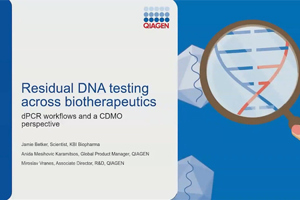
Residual host cell DNA testing can create bottlenecks. Learn how digital PCR supports more consistent quantification, simpler method deployment, and faster in-process and lot release decisions.
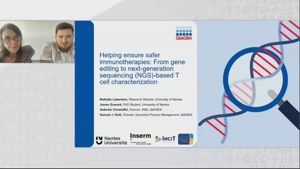
Gene-edited T cells targeting PD-1 and TIGIT are redefining approaches to cancer therapy. Explore how cell engineering and integrated genomic workflows uncover critical insights into T cell function.

Zaher frames the urgency of NAMS adoption by highlighting the staggering 92% drug failure rate in clinical trials despite animal testing. He explains how interdisciplinary convergence and AI are accelerating the shift toward human-relevant models, positioning NAMS as a solution to systemic inefficiencies in drug development.

Panelists debate whether NAMS can replace 10% of animal testing for regulatory submissions by 2030. Shashi asserts that big pharma is already reducing animal use, while Samantha cites the EU’s success in cosmetics and FDA’s roadmap for monoclonals. Zaher predicts over 50% replacement by 2030, citing OECD updates and liver injury data.
TARGET RESEARCH ARTICLES. APP NOTES, CASE STUDIES. & WHITE PAPERS
-

Discover how EPR complements structural maps by resolving flexible regions, detecting hidden conformational states, identifying differences between grid-based and solution conditions, and revealing the dynamic changes that connect molecular structure with biological function.
-

Explore a scalable RNA-seq approach that delivers reproducible, high-quality transcriptomic data from checkpoint-edited T-cells, uncovering gene expression changes linked to PD-1 and TIGIT deletion.
-

Discover how automated EPR pulsed dipolar spectroscopy measures protein dynamics, complements Cryo-EM and AlphaFold, and delivers crucial structural insights for drug discovery.
-

Targeted LNPs that bypass the liver and home to the spleen could reshape in vivo CAR T cell manufacturing. See the data behind the approach.
-

Resolving dynamic states in membrane proteins is vital for drug discovery. EPR spectroscopy tracks conformational shifts in native environments, bypassing standard structural limits.
-

Repeat dosing may be essential for long-term mRNA applications. Explore safety, immune-response, and efficacy findings from multiple LNP administrations, including a nine-dose evaluation over six months.



TARGET RESEARCH SOLUTIONS
-

Capturing dynamic conformational states is key to target druggability. Advanced EPR spectroscopy delivers nanometer-resolution measurements for complex structural biology.
-

Macrocycles expand drug discovery into previously inaccessible targets. With validated success and flexible approaches, they provide a powerful path for tackling the most challenging biology.
-
")
CHO cells have been the workhorse for protein and antibody manufacturing. The major advantages of CHO include robust growth, hardiness in suspension culture, stellar protein production and secretion, and a long track record.
-
")
HEK293 cells have been the most popular mammalian transient production platform. The primary advantage of HEK293 cells is transfection efficiency.
-

The demand for high-throughput antibodies has exponentially increased over the last couple of years and has rapidly accelerated the antibody screening process.
-

E. coli is often the system of choice for biomanufacturing because of its amenability to genetic manipulation, low production cost, and rapid timelines for bioexpression.
-

Curia provides a wide range of biochemical and cell-based bioassay workflows to support Discovery, Research & Development as well as cGxP therapeutic testing campaigns
-

We deliver custom assay development, screening, potency, and selectivity testing services for the pharmaceutical, biopharmaceutical, and agrochemical industries.
-

Evaluating small and large molecule therapeutics within cellular environments is essential to understanding their efficacy, potency, and safety within a complex biological system.
-

Curia’s expert scientists use advanced technology to produce and analyze high-quality recombinant proteins.
-

Curia’s discovery biology team accelerates your program toward the clinic and commercialization with our best-in-class, customizable solutions.
-

At Curia, our team of expert protein chemists and structural biologists brings the advanced experience and technology needed to support all your structural biology services needs.
-

High‑throughput scNMT‑seq offers a powerful way to map methylation and transcriptional activity. Learn about strategies that cut variability and support dependable multi‑omics datasets.
-

Generate human-relevant data with an Organ-Chip system that combines automation, imaging, and cost efficiency for faster, more confident insights for drug development and complex biological studies.