
Drug Discovery's Hidden Feedback Loop
By Alistair Henry, CSO, UCB
For an industry built on evidence, we can have a surprisingly short memory. We design rigorous experiments, test hypotheses, map disease pathways, and generate large quantities of data. Then the moment a study concludes or a treatment reaches patients, our focus shifts to the next question, the next drug, the next experiment. The evidence that got us there? It fades into the background.
However, as our understanding of biology evolves, researchers are discovering new meaning in existing evidence. Some of the most valuable insights may not come from the next experiment, but from past experiments, sometimes failed experiments, and unexpected findings, all of which contain clues that can reshape future research.
This is where back translation plays a critical role. By creating a feedback loop between discovery, development, and patient experience, it helps scientists use insights from every stage of research to refine the questions, models, and assumptions that guide future discovery. Back translation encourages us to see data not as a static record of what we once learned, but as a scientific asset whose value can grow as our understanding advances.
Why The Opportunity Is Growing
Back translation is not an entirely new concept, but several factors are making it an essential activity.
First, our understanding of disease has fundamentally shifted. Diseases once considered through the lens of individual pathways are increasingly understood as interconnected biological systems. This is particularly evident in areas such as immunology and neurodegeneration, where multiple biological processes often contribute to disease progression and treatment response. As we perturb the system with a treatment intervention, we start to see what other pathways and nodes we can now modulate to get greater or deeper responses.
Second, clinical studies are producing richer biological data sets, which, when combined with real-world evidence, can provide additional context around disease progression and patient experience. When you combine these sources, you see disease progression and treatment response in three dimensions instead of one.
Third, artificial intelligence and computational science are accelerating this further. While much of the current conversation focuses on generating new medicines, these tools can also help scientists interrogate existing evidence, identifying patterns and relationships that may previously have gone unnoticed.
The real power isn't in any one of these alone. It's in combining them: deeper understanding of disease, richer data on outcomes, and computational power to find the signal in the noise. That combination doesn't just accelerate discovery. It transforms how we think about the research we've already done.
When Yesterday's Data Becomes Tomorrow's Discovery
Drug discovery is often described as a pipeline where we generate biological insights, test them in preclinical models, evaluate them in patients, and use the results to inform the next decision. The model works because it creates structure, and every stage has a purpose, designed to answer a specific question. The challenge is that biology rarely respects those boundaries. Back translation allows scientific learning to move in more than one direction, connecting observations from discovery, development, and patient experience to inform future research.
The development of T-cell engager therapies provides a useful example. These therapies did not emerge from a single breakthrough or one defining dataset. Their development has been shaped by accumulated learning across immunology, oncology, translational science, and clinical research. Over time, researchers have developed a more sophisticated understanding of how T cells behave in different disease settings, including which biological signals may be associated with response and how efficacy must be considered alongside the risk of unintended immune activation.
Much of that understanding was drawn from studies that were originally designed to answer entirely different questions. Signals that seemed like background noise in one context became meaningful once researchers looked back with fresh eyes and new tools. Crucially, those insights do not remain confined to the clinic; they influence the questions scientists ask much earlier in development and when assessing real-world evidence too.
Rather than simply asking whether a molecule can successfully engage a T cell, researchers can ask more precise questions:
- Which patient populations are most likely to benefit?
- What degree of target engagement may be required to produce a meaningful effect?
- How can translational models better reflect the biology observed in patients?
- Which early signals should be investigated as potential indicators of later outcomes?
When this happens, discovery becomes less a series of handovers and more of a continuous conversation between laboratory science, translational research, clinical development, and patient experience.

Why Failed Programs Still Matter
Not every hypothesis proves correct. Studies miss their objectives. Programs change direction. Assets are discontinued. These are not failures; they are responsible science. But here's what we routinely get wrong: we treat the discontinuation of a program as the end of its scientific value. It's actually the opposite.
A program’s outcome and its scientific value are not the same thing. A study may not achieve its original objective but still generate important insights into disease biology. A trial designed to test one target may reveal something unexpected: A subgroup of patients responds in ways the original hypothesis didn't anticipate. That response suggests biological differences we didn't understand when we designed the trial. The program might not progress. But the insight is real. And it might even be worth far more than the original question we were asking. It could inform future target selection, biomarker strategies, or translational models. Of course, we should try to have a better understanding of the human pathobiology from the start, but we need to learn as we progress.
These moments, when evidence contradicts our assumptions, are where learning lives. Yet many organizations archive them. A project ends, the knowledge gets filed away with the discontinued asset, and the insight stays confined to one team's history instead of informing the next discovery decision.
Back translation flips this. It asks:
- What did the evidence actually teach us?
- Which assumptions need rethinking?
- How do these lessons improve the questions we ask next time, earlier in development, in translational models, and in patient selection?
When you can extract insight from every program, not just the ones that progress, you stop repeating old mistakes. You start building a laboratory and a team that gets smarter with every experiment, not just every success. That's how you move from isolated programs to continuous learning. And that's how you get better medicines to patients faster.
Remembering What We Already Know
Generating new evidence will always be fundamental to drug discovery. Every experiment, study, and patient interaction expands our understanding of disease and creates opportunities for innovation. We need to balance generating new evidence with learning from what we already have.
Back translation works best when different disciplines converge around the same problem. Discovery scientists, translational researchers, clinicians, and data scientists each bring a different lens. Combined, those perspectives reveal insights no single discipline could uncover alone. Critically, retrospective analyses can generate hypotheses, not just confirm them. Existing evidence can point researchers toward promising new directions. But scientific progress still demands rigorous testing and new validation. When used this way, back translation becomes routine, not an occasional exercise. It becomes how scientists connect past observations to future discovery.
The research organizations that will thrive aren't those that simply keep launching new trials. They're the ones that achieve balance: generating new data and reinterpreting what already exists. Drug discovery will always move forward. But the learning that supports it should move in every direction. Sometimes the most important question in R&D isn't what we should study next. It's what we've missed in what we already know.
About The Author
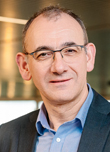 Alistair Henry leads UCB's global research and early development organization with a mission to bring scientific innovation to patients living with severe diseases. A biophysicist by training and drug discovery leader by experience, he has played a pivotal role in advancing UCB's biologics platform and integrating AI and data science into modern pharmaceutical R&D. He is a passionate advocate for bold science grounded in real-world patient value.