
How Rh Incompatibility Endangers Pregnancies And How Rhogam Helped My Family (Part 1 of 3)

By Ray Dogum, Chief Editor, Drug Discovery Online
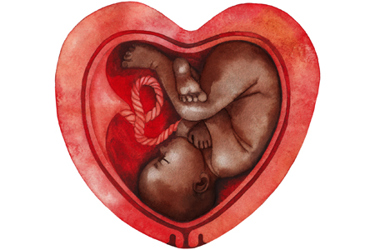
The typical drug discovery workflow of finding a biological target, validating it, screening for hits that interact with the target, and selecting and optimizing lead candidates seems logical, but some of the greatest therapeutics ever created came from nonlinear, improvisational, clinically driven science rather than a neat target-to-product sequence.
One product in particular is Rhogam (or anti-D or RhIG), a blood plasma-derived medication containing anti-D antibodies which is administered in Rh-negative pregnant women to prevent Rh(D) sensitization, thereby reducing the risk of hemolytic disease of the fetus and newborn (HDFN).
Without this simple injection, my baby girl would have probably faced deadly complications, due to Rhesus disease (or Rh Disease), a form of HDFN. The Rh factor was first identified on the membrane of rhesus monkey red blood cells, which helped researchers recognize a blood-group antigen with major implications for pregnancy and transfusion medicine.
Basically, without this treatment, a mother’s immune system attacks the fetus because of an incompatible blood type, specifically Rh-factor incompatibility.
This is part 1 of a 3-part series on Rhogam and its significance in treating Rh disease. Part 2 is on Rhogam’s history and its unconventional drug discovery journey. Part 3 is on current global Rh disease eradication efforts and clinical lab supply limitations.
What’s Blood Got To Do With It? But A Second Chance With Rhogam 🎶
Before my wife received Rhogam, I had never thought about blood type as a pregnancy risk. I certainly didn’t know that one routine injection could prevent the maternal immune system from endangering a fetus.
In fact, I didn’t even know my blood type at the time, so we didn’t know she was carrying a Rh positive fetus. Surprisingly, the fastest and cheapest way for me to check my blood type was to donate blood at an American Red Cross clinic, and that’s exactly what I did a few days after our first ER visit 3 months into her first pregnancy.
After my wife’s fifth administration of Rhogam and following the birth of our second kid, I got curious about the origins of this highly effective drug.
I learned about the story of Rhogam’s discovery by reading Good Blood by Julian Guthrie, who recounts the journey of this unconventionally discovered drug. That led me to conversations with its 94-year-old co-inventor, Dr. John Gorman, and his current business partners, Evan Wilder and Jordan Stuart, who are currently working to help Dr. Gorman strike a $250M high finance deal to operationalize patented clinical lab automation technology under the company, Team Conveyer Intellectual Properties. More on this deal and the Rh Club in part 3 of this series.
When I spoke with Dr. Gorman, he expressed his dissatisfaction with the lack of funding available to ensure his discovery can help all mothers worldwide, especially the global south.
“We got Rhogam out about sixty years ago, and it’s worked beautifully. The disease is eradicated in all cases where compliance with the protocols is good. Basically, the disease has gone away—in wealthy countries. Now, at this point, fifty percent of the mothers in the world are not getting Rhogam. It’s a disgrace. It’s unacceptable.”
What is Rh Incompatibility?
Rh incompatibility affects roughly 17% of babies, and many couples are not even aware of it until after they end up in an emergency room because of bleeding complications, which is exactly what happened about 3 months into our first pregnancy.
On the day of my wife’s initial Rhogam administration, we did not know anything about Rh incompatibility or Rhogam. It was an emergency room crash course education.
Until 1968, the year Rhogam was finally given its FDA stamp of approval, many mothers suffered through unexplained miscarriages and stillbirths, but strangely only after the first child is born. In her book, Guthrie explained, “The unsolved questions of Rh disease were clear: Why would a mother’s body defy an almost universal law of nature and wage an attack against her own unborn child? How could this be stopped?”
Once a woman is sensitized from having her first children, the antibodies she develops can cross the placenta to destroy the red blood cells of her second fetus, which can lead to miscarriage, brain damage, or the newborn’s death. And its harmful effects are more pronounced in future pregnancies, leading to incredible grief as parents kept trying to conceive. It was and still is a serious medical, societal, and cultural issue.
Importance of Rh Factors During Pregnancy
My blood type is A positive (A+), meaning my red blood cells carry A antigens and the Rh(D) antigen (represented by the “+”).
My wife, who lovingly carried our two children, is blood type A negative (A−): she has A antigens but lacks Rh(D). That mismatch, an Rh(D)-negative pregnant person carrying an Rh(D)-positive fetus, is where Rhogam matters.
In the U.S., roughly 85% of people are Rh(D)-positive and about 15% are Rh(D)-negative, with meaningful variation by ancestry and geography. America’s Blood Centers reports ABO/Rh distributions used for blood-donation statistics.
The Rh system is a set of red-blood-cell surface antigens; clinically, the most important is the D antigen (what “positive/negative” usually refers to). During pregnancy, small amounts of fetal blood can enter maternal circulation, most commonly at delivery, but also with bleeding, procedures, or trauma. For more background on Rh antigens and nomenclature, see this review of Rh blood group system.
If an Rh(D)-negative mother is exposed to Rh(D)-positive fetal red blood cells, her immune system can become alloimmunized and produce anti-D IgG antibodies. Those IgG antibodies persist and can cross the placenta in a subsequent Rh(D)-positive pregnancy, destroying fetal red blood cells and causing HDFN and, in some cases, fetal anemia, hydrops fetalis, severe neonatal jaundice, kernicterus, and death.
Recognizing Rhogam As A Highly Effective Treatment
The key biopharma point is that prevention with Rhogam has proven to be dramatically effective. A landmark epidemiology study of U.S. hospital discharge data (1996–2010) estimates overall HDFN diagnoses at about 1,695 per 100,000 live births, driven largely by ABO and non-D antibodies; in that same analysis, Rh-mediated HDFN declined to ~60–85 per 100,000 births, reflecting widespread Rh immune globulin use but also highlighting that failures still occur.
In a 2017 Practice Bulletin, The American College of Obstetricians & Gynecologists published, “First introduced in the 1970s, postpartum administration of Rhogam reduced the rate of alloimmunization in at-risk pregnancies from approximately 13–16% to approximately 0.5–1.8%. The risk was further reduced to 0.14–0.2% with the addition of routine antepartum administration.”
While writing this, I was surprised to learn how many families I personally knew benefited from Rhogam, including colleagues at Life Science Connect, friends, and family relatives.
This major success story is the outcome of innovative thinking, clinical determination, and a bit of luck that could serve as reminder to the biopharma industry that drug discovery is truly a messy, relentless, and team-driven effort.