
2026 Nucleate Boston Activator Cohort Interview: Ryan Posey & Anusha Manglik — Resilientia Therapeutics

By Ray Dogum, Chief Editor, Drug Discovery Online
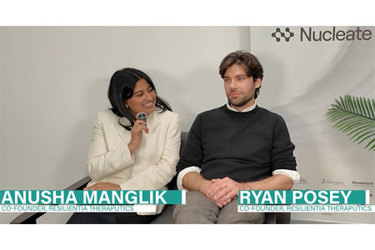
This video series was created in partnership between Drug Discovery Online and Nucleate Boston.
Summary
In this interview, Ryan Posey and Anusha Manglik introduce Resilientia Therapeutics, a pre-seed company developing therapies to reduce harmful long-term side effects of cancer radiation treatment. They explain how their organ-on-a-chip-based platform supports target discovery in epithelial barrier diseases, especially in the lung and intestine.
The founders describe how the Nucleate Boston Activator helped refine their messaging, business model, and lead-asset strategy. They also reflect on the uncertainty of early-stage company building, the importance of patient-first thinking in drug discovery, and their near-term goals of sharpening the pitch and advancing the company narrative.
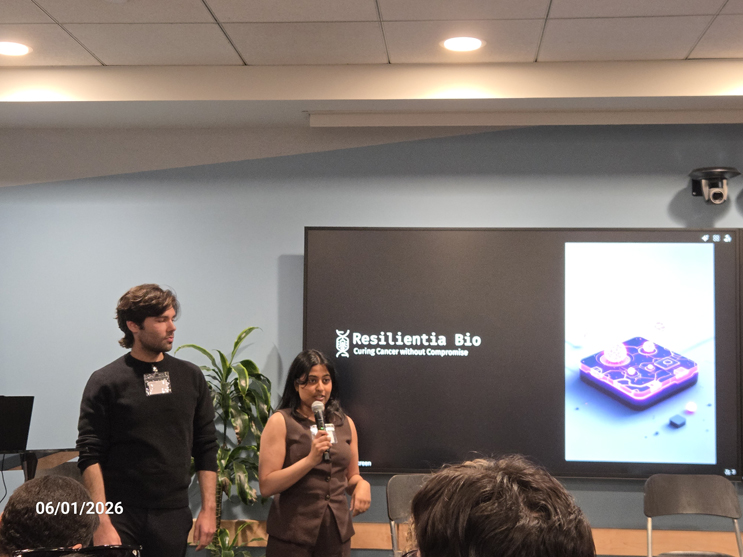
Resilientia Therapeutics team pitching at the Nucleate Final Forum.
Transcript (Edited for Clarity)
Ray: [00:00:00] Hey there. Can you share your names, the company you founded, and when you founded it?
Anusha Manglik: Hi, my name is Anusha.
Ryan Posey: I'm Ryan.
Anusha Manglik: And we are Resilientia Therapeutics, and it was founded this year.
Ray: Awesome. Can you give me a 30-second pitch on what the company does?
Anusha Manglik: 30-second pitch. Wow. So we are a pre-seed company, and we're aiming to make sure that patients that receive cancer therapy don't have the toxic side effects that might affect them later in life.
And beyond that, we have a therapeutic platform for discovery in epithelial barrier diseases.
Ray: So you went through the Nucleate Boston Activator, this year, the program. What did it actually change about how you're building the company?
Ryan Posey: I'll take this one. It definitely changed a lot of things.
I think we got to hear a lot of feedback from experts, and that informed what our [00:01:00] target market should be, as well as how we're going to explain it to people. Um, basically the whole thing.
Ray: Okay.
Anusha Manglik: Yeah, I'd agree. It's really on messaging, and we also found each other through Nucleate.
Ray: Where did the original tech or science come from for the company?
Ryan Posey: That came from my PhD work.
Ray: Can you explain to me more about what the tech does?
Ryan Posey: Yeah. So it's basically working on using different types of in vitro culture systems and different genetic tools to really rapidly identify new therapies, and specifically therapies that affect diseases where cells are interacting with each other, and that causes some dysfunction.
Ray: Okay. So is this like a in vitro plate? Is it organ on a chip?
Ryan Posey: Yeah. So it's basically organ-on-a-chip based, essentially.
Ray: Okay. So what organs [00:02:00] are you trying to mimic?
Ryan Posey: We're primarily targeting the lung and the intestine.
Ray: Okay. Why?
Ryan Posey: Because those are tissues that are very sensitive to radiation injury.
So patients with radiotherapy, a lot of their complications, you see them in those two tissues.
Ray: I get it. So it's a very common, commonly used
Ryan Posey: then. Yes.
Ray: were there any specific, like, conversations or moments during the program that changed the trajectory of the company?
Anusha Manglik: Yeah. So I think we were debating for a long time what kind of business model we wanted to use.
We had a couple of options. After getting feedback from a lot of the experts, we decided to take a more asset-centric approach, and so we refined our pitch deck to focus more on our lead asset and how we wanted to approach building a pipeline.
Ray: What is your lead asset?
Anusha Manglik: Our lead asset, as I mentioned before, is a therapy that protects patients from the harmful effects of radiation, which a lot of patients will get for cancer.
And long term, they might [00:03:00] see increased risk of cardiac mortality, lung issues, and intestinal damage.
Ray: Okay. So you have the organ-on-chip platform to help inform how the asset will work? Did I get that right?
Anusha Manglik: So the organ-on-chip platform is for target discovery in this broader category of diseases that have epithelial barrier dysfunction.
And this is what happens when you have radiotherapy. It damages the cells in your blood vessels, for example. And so the way that we do target discovery is we figure out how we can fix that, and that's what the organ-on-chip models help us validate.
Ray: And what is the most challenging thing about being founders?
Ryan Posey: You go first.
Anusha Manglik: Everything? Um. Yeah, I guess it's making big decisions with not a lot of information, right? Because when you're working on early-stage technology, it's [00:04:00] obviously wonderful and you're working with the coolest things on the planet, but at the same time, it's innovative because you don't have all the information you would like to.
And I come from industry. We generate a lot of information when we make decisions, so this is a very different kind of approach to decision-making. And every decision that you make influences the outlook of the company and for patients. So we have to make sure to do that with an ethical and science-forward mindset.
Ryan Posey: Yeah, I would say knowing what you need to do before you've started doing it is really tricky because especially in terms of giving a pitch, you're thinking, "Okay, I'm going to say these things and they're going to understand what I'm talking about," and then sometimes they don't, and you have to sort of adjust based on who your audience is and what you're doing.
It changes day by day, and you have to kind of add in or take out depending on what you're trying to do.
Ray: The drug discovery and development space is huge. There's so many complicated, you [00:05:00] know, ecosystems within it, but if you could change one thing about this industry, what would it be?
Anusha Manglik: I mean, personally, I would wish that people had patients on their mind first because we're all developing therapies so that we could help patients, right?
And I feel like a lot of us, because many of us are scientists, get caught up in the details of the science and less so the details of who's going to be using the therapy in the end. So I would really love to see more of that brought into the industry and into how we're making decisions here.
Ryan Posey: Yeah. I agree. You know, patients first, and also I think a really big focus on how we're connecting what we're doing to patients. I think a lot of scientists, like you said, get caught up in the how of the science and less in how this is going to help the broader community.
Ray: if you had a target for potential acquisition of your company, [00:06:00] what would that ideal partner look like?
Anusha Manglik: It's an interesting question because we're so early, I'm not sure we have deeply considered that. Obviously, someone who respects us and allows us to work on the best science and also allows us to learn from them, right? Because that's the beauty of this industry, right? We're all players in a broader ecosystem, and we all benefit each other, and in the end, our goal is the same.
Ryan Posey: Yeah.
Ray: what are the company's primary goals for the rest of the year?
Anusha Manglik: Probably to finish our pitch deck and then talk to as many people as we can about it, really get our narrative straight, as well as more of the business-focused parts of the questions that we need to answer, such as what is our next asset going to be, how are people perceiving our pitch, and what should we work on next.
Ray: All right. I have one final fun last question here.
Anusha Manglik : Oh, a fun question. Fabulous.
Ray: You'll have to each answer it individually. So if you were a cell or an [00:07:00] organelle, which one would you be and why?
Anusha Manglik : All right, Ryan, give it your best.
Ryan Posey: I would be a T cell, ‘cause, you know, just look around for problems to solve.
Anusha Manglik : Okay, now I have to think of an answer. You were too succinct. Yeah, I don't know. Probably a neuronal cell. I just think there's something beautiful about the way they operate and kind of control the basic functions of our beings.
Ray: Love it. Thank you so much for your time, guys. Thank you. And sharing a little bit with Drug Discovery Online.
Thanks.
Ryan Posey: Thank you.