
Inside Discovery On Target 2026: New Modalities, AI, And A Higher Funding Bar

By Ray Dogum, Chief Editor, Drug Discovery Online

The nor’easter couldn’t slow down scientists from sharing their latest discoveries at the 24th Annual Discovery on Target conference or DOT. However, I can assure you much (brain)storming did occur.
Last week, I joined researchers across big pharma, early biotechs, AI companies, and academia to discuss the latest advances shaping drug discovery.
The plenary keynote panels covered a range of topics, including: tackling difficult drug targets, venture capital insights, and translating lab ideas into commercial impact.
The posters, speed networking, and sponsor booths provided plentiful opportunities to make some memorable connections. Everyone from the speakers to the staff brought their energy and you can tell by the Q&A sessions, people wanted to have productive interactions with each other.
I believe it is important to have difficult industry-wide conversations publicly, so that we can collectively address the industry’s challenges with the best tools and hypotheses. That means examining discovery, translation, and clinical relevance together. DOT creates a valuable forum for bringing these interconnected challenges into the open.
On Undruggablility With Big Pharma
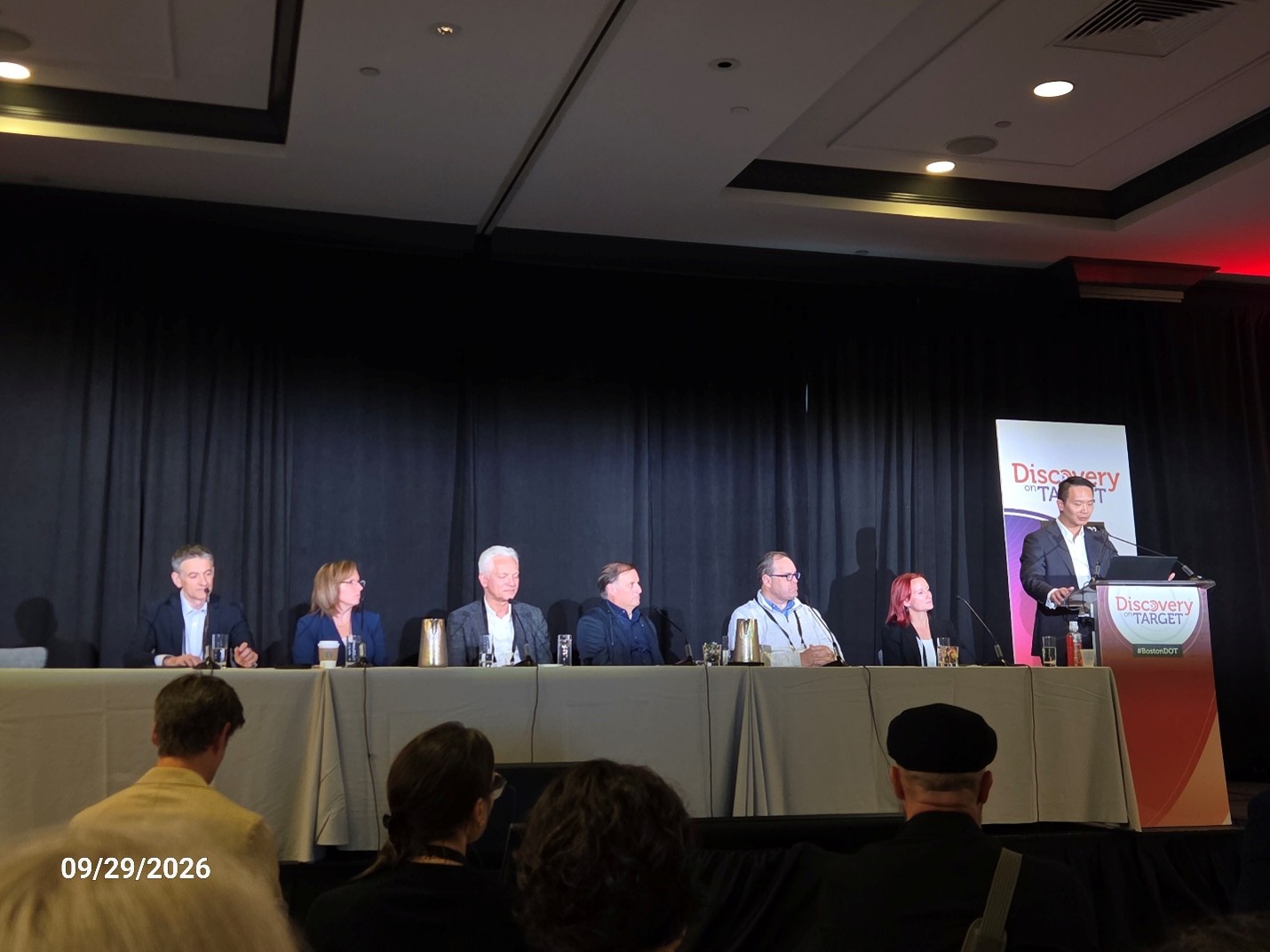
Ian Storer (AstraZeneca), Andrea Weston (Pfizer), Klaus Urbahns (Biogen), John Tallarico (Novartis), Ryan Potts (Amgen), Erin Davis (Bristol Myers Squibb), and moderator Dennis Hu (Drug Hunter) during the opening keynote panel at Discovery on Target.
The traditional concept of an "undruggable" target may finally be nearing retirement, according to a panel of senior R&D leaders from Pfizer, Amgen, Biogen, Novartis, AstraZeneca, and Bristol Myers Squibb during the opening keynote discussion at Discovery on Target.
Moderated by Drug Hunter founder and CEO Dennis Hu, the discussion explored how drug discovery organizations are navigating an increasingly complex landscape of technologies, modalities, and therapeutic opportunities.
A central theme emerged quickly: advances in drug modalities have dramatically expanded the universe of accessible biology.
"We need to retire the term undruggable," said Pfizer's Andrea Weston, citing developments ranging from induced proximity approaches and molecular glues to trispecific antibodies, macrocyclic peptides, radiopharmaceuticals, and novel delivery systems.
Novartis discovery sciences leader, John Tallarico, agreed, noting that the industry's understanding of druggability has fundamentally changed. Where scientists once evaluated targets largely through the lens of small molecules or conventional antibodies, today's toolkit includes degraders, RNA therapeutics, immune-cell engagers, induced phosphorylation technologies, and multiple induced proximity-based approaches.
Biogen's Klaus Urbahns emphasized that innovation increasingly comes from combining modalities rather than relying on any single technology. The ability to engineer molecules that both target tissue and manipulate biology in new ways could become one of the field's most powerful capabilities.
Momentum Around Induced-Proximity Modalities
Several speakers highlighted induced proximity approaches as particularly transformative. Amgen's Ryan Potts argued that the technology allows researchers not merely to access previously difficult targets, but to create entirely new therapeutic opportunities by engineering biological interactions that do not naturally exist.
PROTACs were a recurring example of the progress in induced proximity, with development accelerating rapidly in recent years. These bifunctional molecules represent a leading approach in targeted protein degradation chemistry, redirecting the cell’s own machinery to eliminate disease-causing proteins rather than simply inhibiting them.
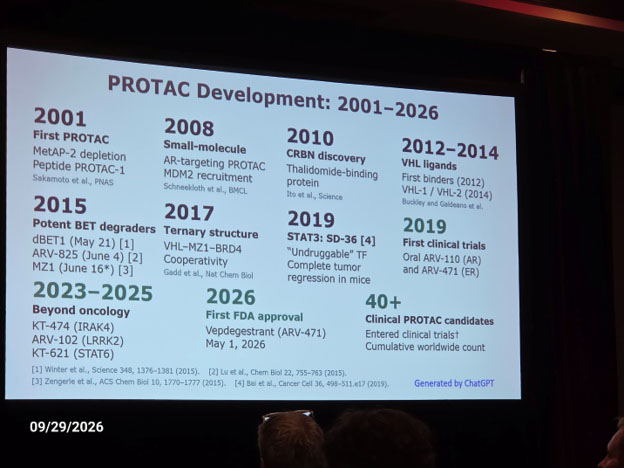
Slide on PROTAC Development: 2001-2026.
AI As Assistant Scientists
The panel also explored AI’s growing role in discovery. While enthusiasm for generative AI was evident, panelists consistently emphasized caution.
"The biggest opportunity isn't autonomous drug discovery," said Bristol Myers Squibb's Erin Davis. Instead, AI's greatest value today lies in helping scientists navigate and synthesize the enormous volume of scientific information available across organizations and the broader research ecosystem. As an expert on DNA-encoded libaries, which require large-scale screening datasets, Davis is extremely aware of the capabilities and limitations of these computationally-intensive tools.
Others echoed that sentiment. AstraZeneca's Ian Storer described AI as a transformative productivity tool, helping scientists gather information, prepare analyses, and accelerate decision-making. However, panelists generally agreed that AI has not yet fundamentally solved complex medicinal chemistry or target-selection challenges.
Another recurring theme was the importance of biology itself. Despite excitement around emerging technologies, speakers repeatedly stressed that understanding disease mechanisms remains the foundation of successful drug discovery.
"You have to understand the target before choosing the modality," Potts said, arguing that companies sometimes move too quickly into feasibility assessments without first defining the desired biological outcome.
Biotech's Unequal Funding Drought
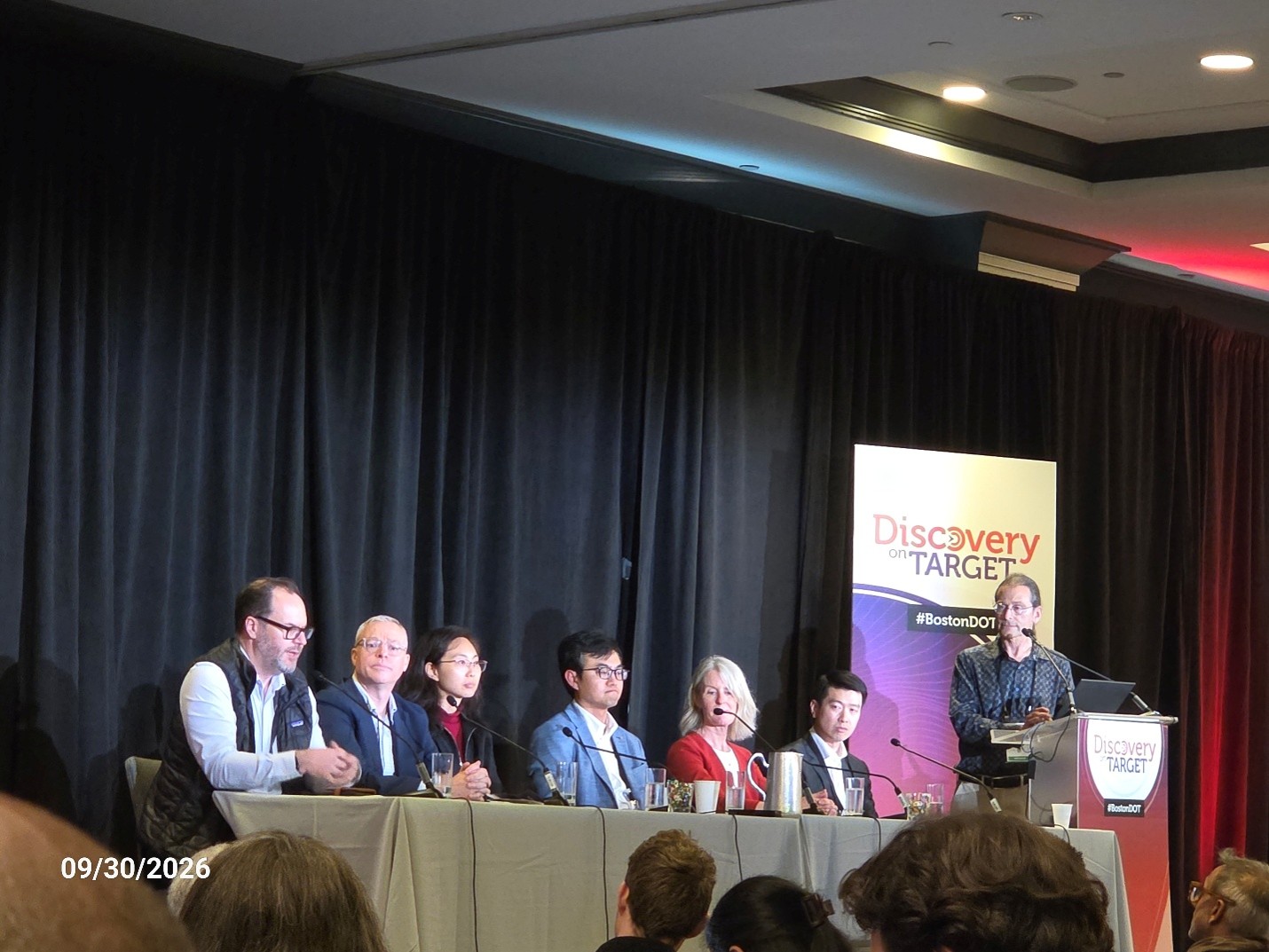
Venture-Capitalist Insights on Trends in Drug Discovery Panel with Chris De Savi, CSO Partner, Curie.Bio; Neil Kubica, Therapeutics Division Head, General Inception; Pengpeng Li, Principal, Lilly Asia Ventures; Ken Lin, CEO & Co-founder, ABIES Capital; KT Moortgat, Founder & Managing Partner, Dalena Capital; Hok Hei Tam, Science Partner, Flagship Pioneering; moderated by Daniel Erlanson, Chief Innovation Officer, Frontier Medicines.
The biotech downturn is often described as a capital drought. But a drought is indiscriminate. Today's market is not.
Money remains plentiful for clinically de-risked assets, validated biology, and programs capable of producing decisive data in a reasonable timeframe. What has become scarce is capital willing to finance uncertainty itself.
That was the striking consensus from a panel of investors spanning nearly every corner of biotech finance, from company creation engines and venture studios to multinational funds and family-office capital. Despite their different models, they largely agreed on one point: the scientific bar has risen.
"What we used to need for a seed is really like pre-seed," said Kubica, therapeutics division head at General Inception, which helps build companies from formation through early financing. A modern seed package, he argued, increasingly resembles what a Series A package looked like only a few years ago.
The result is an industry asking founders to answer late-stage questions with early-stage data.
For Hok Hei Tam, co-founder and CTO, Montai Tx, science partner, Flagship Pioneering, which has created dozens of biotech companies and invests from a multibillion-dollar fund, the solution begins with differentiation. "Make sure that you have a clear path towards value creation," he said.
Chinese Market Competition and Innovation
Much of that increased pressure comes from China. Pengpeng Li, a principal at Lilly Asia Ventures who invests across both the U.S. and Chinese biotech ecosystems, urged founders to rethink the competitive landscape. "We should probably not see China purely as a competitor, but really consider it as a resource," she said. Chinese biotech's growing advantages in speed, cost efficiency, and development infrastructure have changed the benchmark against which Western startups are measured.
The panel also challenged the notion that platform companies have fallen out of favor. "Platforms are not a dirty word," said Chris De Savi, CSO partner, Curie.Bio. But broad technological promise must now be translated into a lead program. His first question for founders remains deceptively simple: "What's going to be that first biological target?"
Perhaps the most practical advice came from KT Moortgat, founder of Dalena Capital and former head of West Coast investing at AbbVie Ventures. "Talk to your customer," she said. In biotech, that customer is often a future pharmaceutical partner. Understanding what data pharma wants to see may be just as important as generating the data itself.
The panel's message was not that investors have lost faith in innovation. Rather, they have become far less willing to subsidize exploration. Great science remains the starting point. But in today's market, science alone is no longer enough. Founders must show a credible path from discovery to differentiation to commercial value long before the market is willing to fund the journey.
That is a difficult burden at a time when early-stage basic research is finding it harder to secure funding from both public and private sources.
Local Encounters With DDO Board Members
At Drug Discovery Online, we are fortunate to have leading drug discovery experts on our editorial advisory board, two of whom spoke at DOT.
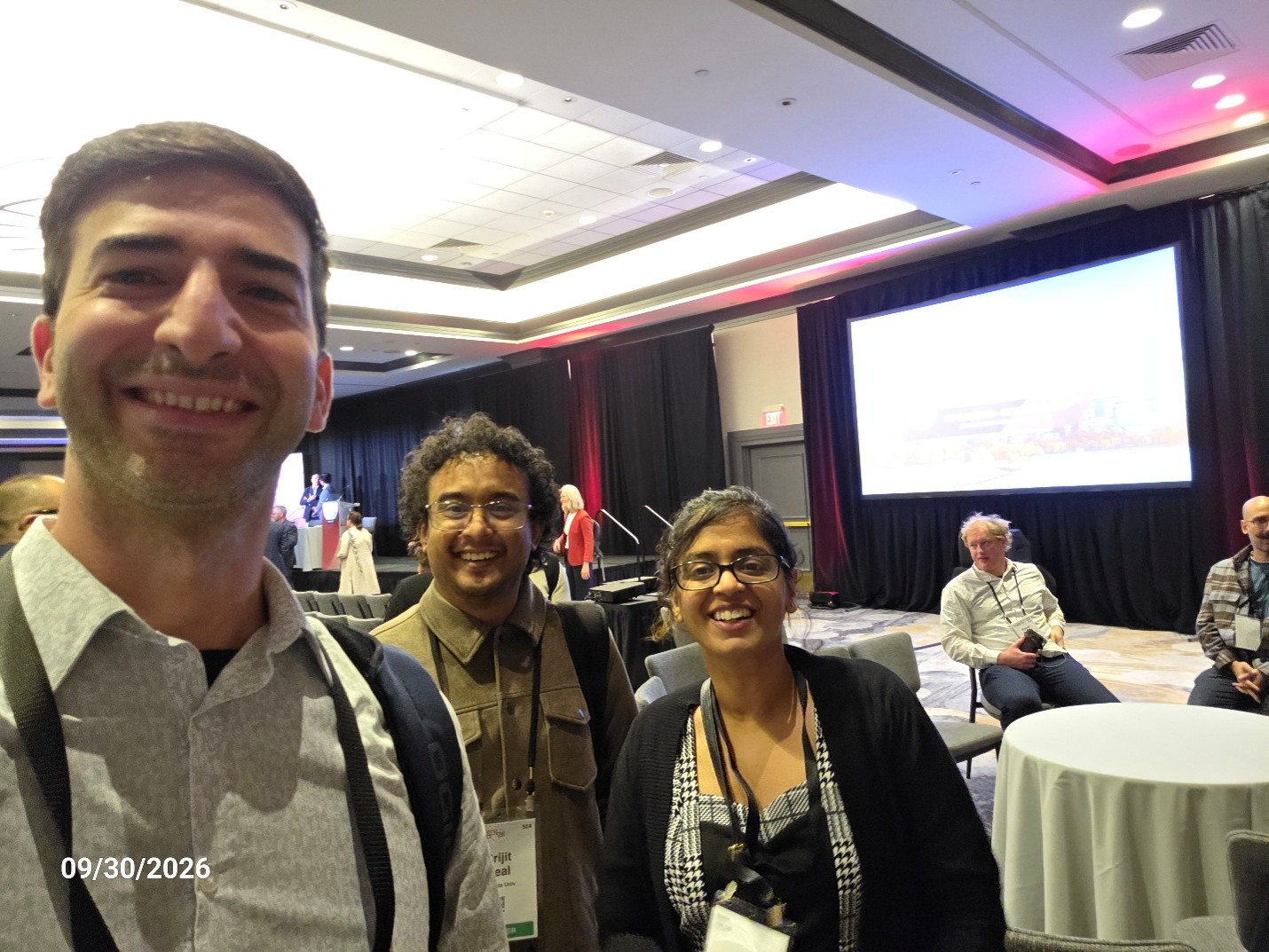
Ray Dogum, Srijit Seal, and Shruthi Bharadwaj at Discovery on Target 2026.
- Srijit Seal, Ph.D., AI researcher and principal agentic AI scientist at the Human Chemical Company, where he’s developing regulatory-grade chemical safety assessments, chaired the session on AI/ML-guided prediction case studies. He also presented a modality-agnostic framework for using agentic AI to assess target safety and support early discovery decisions.
Target safety assessment is a critical but resource-intensive step in early drug discovery and it was a major discussion point at the event. Seal’s agentic co-scientist framework automates the process across therapeutic modalities, integrating computational toxicology predictions to flag potential toxicities across species and distinguish among compound-specific, scaffold-specific, on-target, and off-target effects.
- Shruthi Bharadwaj, Ph.D., executive director of AI Drug Discovery Analytics at Revolution Medicines where she leads their, co-moderated the plenary breakout discussion, “Connect the Dots: Start-Ups & Funding,” which examined how life science market trends are shaping R&D.
The discussion explored when a discovery is ready to become a company, what makes science fundable, how strong research attracts attention, and how founders can evaluate private investment, government funding, and strategic partnerships. Bharadwaj recently received the honor of being included in BioSpace's 2026 40 Under 40 list.