
Discovery Dialogues: Helen Bright, Ph.D., CSO of Centauri Tx

By Ray Dogum, Chief Editor, Drug Discovery Online
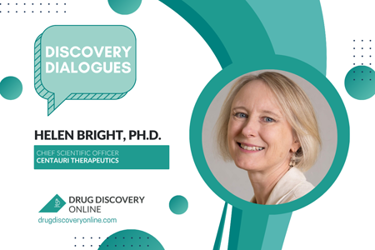
At PEGS Boston, the 2026 Protein & Antibody Engineering Summit, Drug Discovery Online caught up with Helen Bright, Ph.D., chief scientific officer at Centauri Therapeutics. In an exclusive interview, Bright outlined how their lead candidate, CTX187, uses innate immunity to target difficult gram-negative infections rather than acting like a traditional antibiotic.
She described the translational challenges of building immune-relevant models, the chemistry and SAR decisions that made the candidate safer, and the importance of proving mechanism through complement activation, anti-rhamnose antibody recruitment, and neutrophil engagement.
Bright also emphasized the need for faster diagnostics, importance of addressing elderly patients with comorbidities, noted encouraging regulatory openness to new antibacterial modalities, and said PEGS was valuable for tracking peptide binders, nanobodies, and AI-enabled drug design.
Video Interview
Transcript (Edited for Clarity)
Ray: Helen, can you tell us a little bit about the main drug in your pipeline today?
Helen Bright: Our main clinical candidate is CTX187. It is an immunotherapy against broad-spectrum gram-negative bacteria. It's different because it stimulates the innate immune response to kill bacteria.
Ray: And gram-negative bacteria are a little more antibiotic resistant?
Helen Bright: Yes. Gram-negative bacteria are a top-priority pathogen for the WHO, and we particularly focus on four species: Pseudomonas aeruginosa, Klebsiella, Acinetobacter, and E. coli. Together they're called the ESKAPE pathogens because they represent a significant unmet clinical need at the moment.
Patients don't do very well on current antibiotic therapies for them.
Ray: What are some of the developmental challenges you had to overcome leading up to Centauri's first clinical candidate?
Helen Bright: That's a great question. I think the hardest thing we found is that because we're not a traditional antibiotic and we leverage the immune response, there was no perfect translational model for us.
The traditional MIC approach in antibacterials—growing bacteria in broth or on an agar plate—doesn't capture all of the mechanisms. So we worked hard on novel in vivo models that captured the immune system, as well as in vitro models that included neutrophils, complement, and similar components.
Ray: What types of in vivo models were you using?
Helen Bright: We had to do something a little different. Traditionally, you would use a neutropenic mouse model, where you eliminate neutrophils in a mouse, infect it, and then dose with your drug. But we had to work with immunocompetent mice that have the full immune system.
That's quite hard because getting bacteria to take hold and grow well in that environment is necessary to truly see the benefit of our drug. In addition, our platform uses natural antibodies that we all have—anti-rhamnose antibodies. Humans have them; mice don't. So we had to passively introduce human anti-rhamnose antibodies into the mice to recapitulate that part of our mechanism as well.
It wasn't easy, but we generated strong data showing that this mechanism works.
Ray: What were some of the key decision points in advancing ABX-01 into the clinic?
Helen Bright: If I go back four years, when we first started, we had a very rough hit. It was rough because the front end of the molecule is an antimicrobial peptide, and those have known liabilities.
We also have a proprietary linker and rhamnose on the end, which attracts natural anti-rhamnose antibodies. The big decision was to focus our SAR and chemistry efforts not on increasing the activity of the antimicrobial peptide, but on using toxicity as the guide for SAR.
That's a hard thing to do. You have to make a lot of compounds to test that in mice. But it drove us down a very good path, where we could maintain binding of our molecule to the bacterial surface, which is what we need, while making the molecule very safe. That was a big decision.
Another key set of decisions around SAR involved proof of mechanism and doing the right experiments to see the immune boost. We needed to show that we were attracting anti-rhamnose antibodies to the bacterial surface, activating complement at the bacterial surface, and engaging the right pathways as well.
We then had to show that we could get neutrophils to migrate to the bacteria and kill them. Proving that mechanism both in vitro and in vivo is essential. Like every drug developer, you have to have your proof of mechanism nailed down.
Ray: How does the Alphamir platform change the way we think about anti-infectives compared with traditional antibiotics?
compared to traditional antibiotics?
Helen Bright: We've had to make a mindset shift. I'm an immunologist, not a microbiologist, and I think that was a deliberate decision by the board. They needed somebody with a broad range of immunology experience, and my background is in vaccines, other immunotherapies, and viruses.
So I already had that mindset shift. But you also have to recognize that for very ill, difficult-to-treat patients, it's not just that the bacteria are hard to treat—the patients are hard to treat as well. Often that's because their immune systems are not in a good place.
So we think about the patient, the host response to the bacteria, and what we can do about that—how we measure it and translate it. I think that's what our platform is really challenging the field on.
Ray: Interesting. So are there any specific chemistries that you find to be a critical part of the Alphamir platform that really makes a significant difference?
Helen Bright: One of the things we've learned is that our molecule is bifunctional. The front end is an antimicrobial peptide that can intrinsically kill bacteria.
But before that happens, the other end of the molecule activates the immune response and brings in innate immunity.
Helen Bright: What we learned as we built that molecule was that a cyclic peptide is quite hard to work with and comes with liabilities. It wasn't as simple as plugging in the ideal antimicrobial peptide with a linker and then putting rhamnose on the end.
You have to look at the whole molecule together in a more holistic physicochemical way. Our chemists did a lot of work to do that. As we move forward and think about other binders we can attach—maybe larger peptides or even nanobodies—that lesson still applies.
That's why I'm here at PEGS—I'm interested in where the field is going with peptides and other types of binders.
Ray: What has surprised you most in advancing this program from discovery to the clinic?
Helen Bright: Honestly, the biggest surprise was the regulators' response.
They were incredibly receptive. We did a pre-IND meeting with the FDA, a scientific advice meeting with the MHRA, and we filed a CTA with the Dutch regulatory authorities. All the way through, when we asked questions about our translational plan, they were really helpful and receptive.
They want to see novel modalities being used as antibacterials going forward. That was the biggest surprise—how helpful they were.
Ray: That's refreshing to hear. I've heard a lot of negative things about regulators, so it's good to hear that.
Helen Bright: Yeah.
Ray: Where do you see the biggest gaps in the current anti-infective pipeline? [00:08:00]
Helen Bright: This might surprise you, coming from someone taking a drug into the clinic, but I think the biggest gap right now is diagnostics. We still can't accurately identify what pathogen a patient has for 24 to 48 hours, and that window is so important.
In the era of at-home lateral flow tests, we need rapid diagnostics for antibacterials. That would help me tremendously as a drug developer as well.
Ray: That's a fantastic point. What can society and the drug developer development community do to help reduce antibiotic-resistant infections on a global level?
Helen Bright: I think there are two things. First, we need to stop using antibiotics in farming to increase the yields of farm animals. In many countries that's already the law, but globally we need to stop that.
Ray: How do you think complement fixation and phagocytosis enhance outcomes in difficult-to-treat infections?
Helen Bright: When we talk about difficult-to-treat infections, we immediately think about the pathogen and resistance, and that is important. But we also have difficult-to-treat patients, and that's what we're focused on at Centauri.
These patients are often elderly and have comorbidities such as type 2 diabetes and obesity. Their immune systems are often affected by what we call inflammaging.
So we try to understand the host response to infection and how our drug and platform can help leverage that immune response. Take complement, for example: in elderly people, complement is actually still quite well maintained.
In elderly people, complement is actually still quite well-maintained as a
Ray: What is complement?
Helen Bright: Complement is a major part of our innate immune system. If you think of the innate immune system as the early warning system, complement is present in our lungs, at mucosal surfaces, and in large quantities in our blood.
If bacteria get through a mucosal surface into the lung, complement immediately goes to work. It can lyse bacteria directly, both by recognizing pathogen-associated patterns and by binding via antibodies. So complement is a real first-line responder in our immune system.
The second thing complement does, in addition to lysing bacteria directly, is recruit neutrophils. It effectively labels bacteria with strong 'eat me' signals that neutrophils can follow. That matters for difficult-to-treat patients because complement remains a good target even in older people, who often still have good complement levels.
Our Alphamir platform essentially lights up the bacteria to say, 'Here I am' so complement can find it. Difficult-to-treat patients also often have impaired neutrophils, or at least impaired neutrophil migration.
You might ask why a platform that uses neutrophils would still be an advantage. The reality is that those neutrophils often don't know where to go. If you've really covered the bacteria with 'eat me' signals, it helps neutrophils find and clear them. That's one important mechanism.
We also think about cancer patients, many of whom become immunocompromised. One thing we know about our underlying mechanism is that the natural anti-rhamnose antibodies we all have remain present even when patients become immunocompromised, and complement does too.
There is a lot of historical data from xenotransplantation studies showing that patients can be severely immunocompromised and yet this older innate mechanism of complement and natural antibodies is still there.
So for difficult-to-treat patients, such as immunocompromised patients and cancer patients who often suffer terribly from infections, we believe this is a very strong therapeutic approach.
Ray: Very interesting. Um, what are you looking forward to most for the rest of the conference at PEGS?
Helen Bright: I am looking forward to understanding more about where machine learning is for in silico design of novel binders.
We all want to speed that part up. The faster I can get to a really good binder, the faster I can put it into my platform and have a drug candidate.
Ray: How long does it take now?
Helen Bright: It used to take about nine months to find a good antibody or nanobody through methods like immunizing mice or phage display.
Now, according to the keynote yesterday, in silico methods could get that down to around three weeks. The reality is probably somewhere in between, but it will certainly be faster if you can identify a good binder quickly and then make and test it.
Ray: Very cool.
Helen Bright: That's what I'm most excited about at PEGS right now.
Ray: Is there anything I didn't ask that you'd like to mention or share?
Helen Bright: No, I really enjoyed talking with you. Thank you very much.