
What The China Biotech Debate Reveals About U.S. Drug Discovery

By Ray Dogum, Chief Editor, Drug Discovery Online
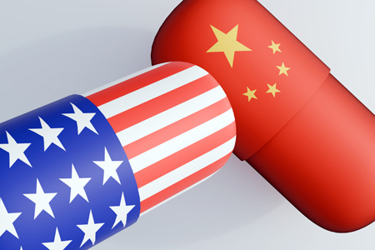
At a packed Endpoints News event in Cambridge, MA, the China biotech debate was not really about China. It was about who gets to define drug discovery.
The event happened to be at the Koch Institute, a place where I learned to grow organoids and ran mouse studies over a decade ago. It felt good to stand in the back of the crowded room listening to some brilliant people debate an existential issue for the industry. People obviously care about what the United States will do to remain competitive with China. And it’s clear, from the heat of the conversations, any solution will be complex and multifaceted.
Across a series of panels on China’s growing influence in biotech and early discovery, the discussion boiled down to the same question: is China’s rise an opportunity for the industry, a strategic vulnerability for the U.S., or both?
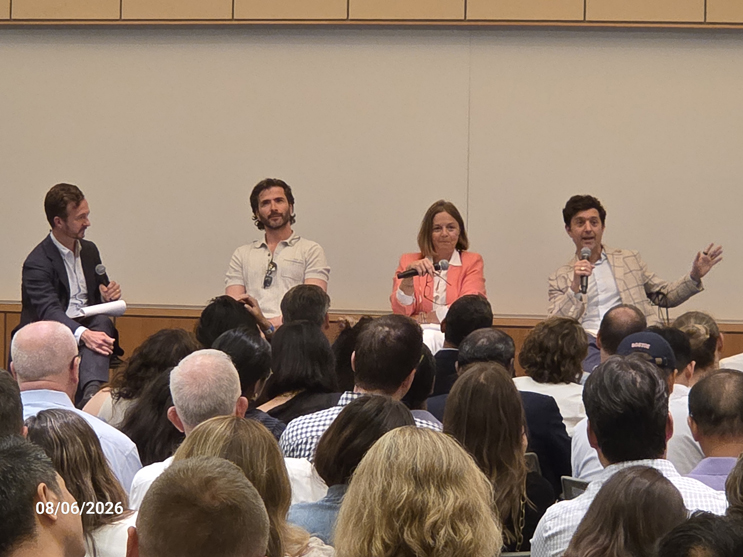
At Endpoints News’ China Biotech Debate, Drew Armstrong moderates a sharp discussion with Peter Kolchinsky, Fiona Murray, and Jason Kelly on competition, collaboration, and U.S. biotech strategy.
Investment Opportunity Or Geopolitical Vulnerability
Peter Kolchinsky, Ph.D., author of The Great American Drug Deal, and managing partner of RA Capital, brought the perspective of a major life sciences investor whose firm has helped finance and form companies across healthcare. He argued that Chinese biotech is generating increasingly valuable assets and that efforts to restrict licensing would mostly hurt U.S. companies and patients, saying, "We would not be building a U.S. company and hiring American people" if those deals disappeared.
For Kolchinsky, whose firm boasts over 200 portfolio companies across healthcare and planetary health (12 of which are companies focused on developing assets that were licensed from China), the practical consequences of restricting Chinese biotech partnerships are often misunderstood.
The assumption, he argued, is that blocking access to Chinese science would redirect capital back into American innovation. He said, "What I hear people saying is, well, if we just ban you from doing these in-licensing deals, you'll be forced to invest in U.S. companies and therefore support U.S. innovation. It's like, well, no, actually, that's not at all what I would do."
Biotech As Strategic Power
Jason Kelly, Ph.D., chief executive officer of Ginkgo Bioworks and former chair of the U.S. National Security Commission on Emerging Biotechnology, countered by arguing that biotech should be viewed not just as an investable industry, but as a strategic technology. He framed biotechnology not only as a source of medicines, but as a platform technology with economic and geopolitical consequences.
As he put it, "Biotechnology is a general-purpose technology... one of the uses, and the dominant use in the private sector today, is for developing medicine. What happens is whoever owns the private-sector drug-discovery industry owns where the people in this building go get jobs."
Kelly’s central concern was control: who controls the market, who captures the talent, and who ultimately sets the direction of the technology. "The business plan of every startup in China is right now: sell their drug in the United States. So don't tell me for a second that we cannot control what gets into our own market. Of course we can."
He warned that the stakes extend beyond reimbursement and deal flow, saying, "Three thousand letters of RNA killed 1.2 million people in the United States and grounded an aircraft carrier for the first time since World War II. Let's not pretend that biotechnology does not have the potential to be an instrument of geopolitical power."
He also challenged the economic structure that allows other countries to build biotech ecosystems while relying on U.S. pricing to support global drug development. "Here's two roads. One, the U.S. keeps paying for all the drugs like we do today and the rest of the world, including China, free-rides behind our support of this ecosystem. The other road, absolutely, let's have an ecosystem in China. Great. Why doesn't China raise the price they pay for drugs to justify their domestic biotech and drug-discovery ecosystem?"
Kelly and Kolchinsky have been having this contentious China policy debate on social media well before having this discussion on stage.
Drew Armstrong, executive editor at Endpoints News, kept the debate focused and moving, even as Fiona Murray, Ph.D.’s, seat between Kelly and Kolchinsky began to look less like coincidence and more like prudent event planning. As Kelly’s former MIT professor chair of the NATO Innovation Fund, Murray brought her own authority to the exchange.
The Policy Risks Beyond China
In a later talk, Andrew Baum, a longtime biopharma analyst and strategic advisor to the Pfizer’s CEO, Albert Bourla, described China as "already an important part of the ecosystem" and argued that policy choices such as the IRA [Inflation Reduction Act] and MFN [Most-Favored Nation pricing] pose a greater threat to industry returns than Chinese competition.
It’ll also be important to understand how other policies such as the Biotechnology Investment National Security Act (BINSA) and the Comprehensive Outbound Investment National Security Act (COINS) will impact the U.S. frontier of biotech innovation. If you have a perspective to share on China’s growing influence in drug discovery, we’d love to hear from you at Drug Discovery Online.
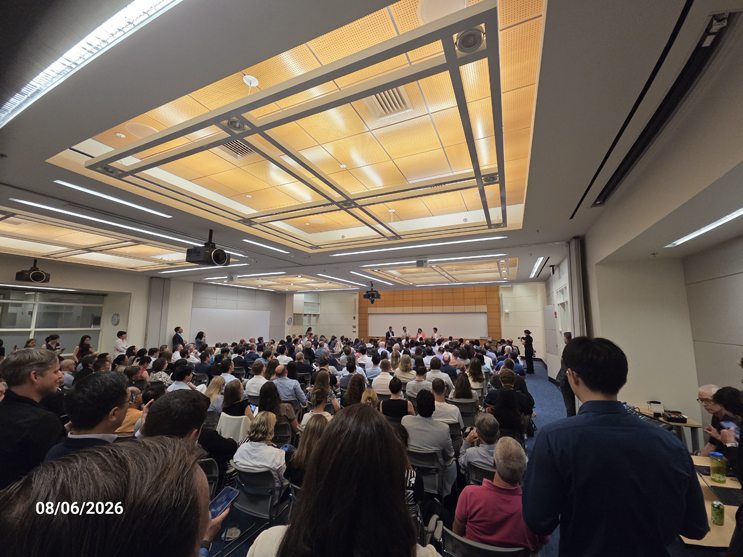
A crowded room at the Endpoints News China Biotech Debate.