
2026 Nucleate Boston Activator Cohort Interview: Carlos Ezio — Criocore

By Ray Dogum, Chief Editor, Drug Discovery Online
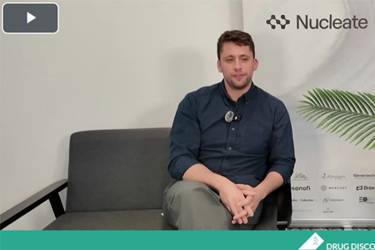
This video series was created in partnership between Drug Discovery Online and Nucleate Boston.
Summary
This conversation profiles Carlos Ezio, co-founder and CEO of Criocore, a Harvard Medical School spinout developing shelf-stable, bioprinted human tissue models for preclinical drug development.
Carlos explains that Criocore’s core innovation is a cryobioprinting platform that enables complex 3D human-relevant models to be manufactured centrally, stored frozen long term, and shipped ready to use on demand.
The goal is to make advanced in vitro systems easier to adopt in pharma by removing the operational burden of bioprinting while improving reproducibility, speed, and predictive value in drug testing.
He says the Nucleate Activator experience helped shift the company’s thinking beyond science toward commercialization, fundraising, and customer needs. Rather than selling hardware, Criocore aims to sell the output of its platform: ready-to-use tissue-containing well plates that fit into automated workflows.
Carlos highlights oncology and tumor microenvironment models as an early focus and says the company’s near-term priorities are refining prototypes, running pilot projects with pharma partners, and moving toward revenue generation.
The discussion also touches on founder pressure, the importance of automation in modern drug discovery, and Carlos’s personal motivation for working on human-relevant systems.
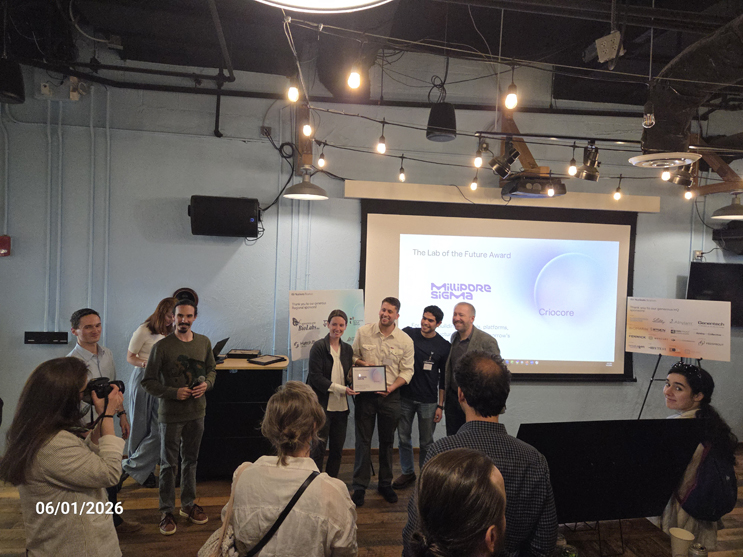
CrioCore received the “Millipore Sigma The Lab of the Future Award” at the Nucleate Final Forum.
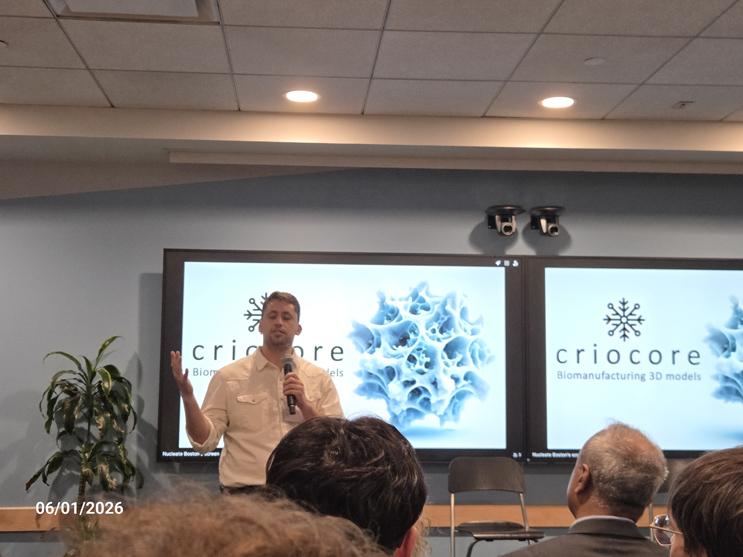
Carlos Ezio pitching at the Nucleate Final Forum.
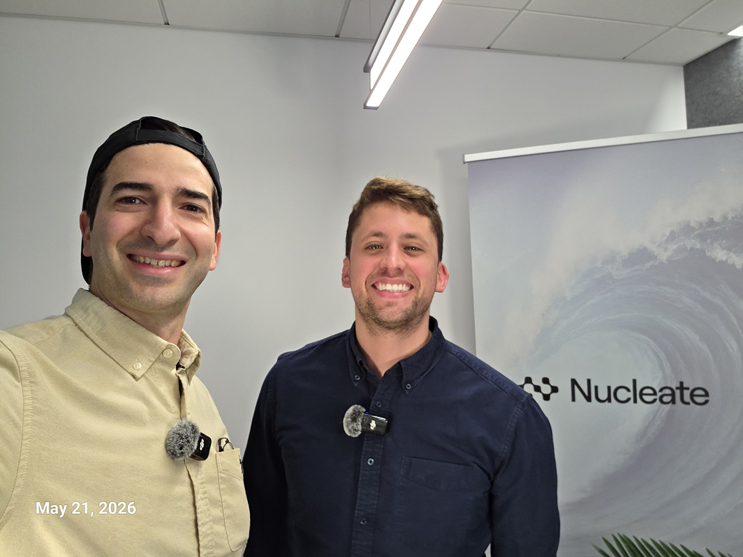
Ray Dogum and Carlos Ezio at the Nucleate Boston Practice Pitch Day (date of interview recording).
Transcript
Ray: [00:00:00] Can you give me your name, the company you founded, when you founded it, and the 30-second pitch?
Carlos Ezio: Awesome. Yeah. My name is Carlos Ezio. We are building Criocore, which is a Harvard Med spinout. this started really maybe about six years ago at the Zhang Lab, but with a super hyper-focused, on, on really translating this towards broader and transformative impacts, I'd say about a year, year and a half.
A- and what we're aiming to do is create this more advanced in vitro model to enable more personalized and predictive drug development, and we do that through an automated biomanufacturing platform
Ray: You went through the Nucleate Boston Activator program. What did you actually change about how you're building the company?
Carlos Ezio: Wow, that's another good question, actually. So what, what we changed, I think it's understanding that you can tap into, like, I think this ecosystem really opened up a lot of doors and gave us a lot of different insights. So I think first of all, the network that Nucleate, offers gave us the [00:01:00] ability to have different perspectives, right?
Whether it's, like, on the, on the scientific side, like, "Hey, maybe you need to tweak this and that or, or showcase it in X, Y, and Z way," on the business side, on the fundraise side, or on the team side. So I think, like, the ability to have, to have the exposure to all these perspectives was really, like, transformative or, or enabled us to take, like, the next steps.
Ray: Were there any, like, specific conversations or moments during the program that changed your trajectory?
Carlos Ezio: Every now and then, like, these, the gatherings at the Nucleate offices.
A- and those, I mean, you see some of the people that you can network with, that you can connect with, and you're like, "Wow." And, and even if it's just, like, a one-minute chat, I think just being, like, there, there's, like, the Hamilton song, right? "I've been, I wanna be in the room where it happens." Mm. Literally, being able to be in that room, I think that's like, whoa.
That's, that's cool.
Ray: Yeah.
Carlos Ezio: yeah.
Ray: Let's talk a little bit about the technology itself. Can you explain, how you're able to get these more predictive insights?
Carlos Ezio: Yeah. Definitely. So the way we are able to do this is, well, first of all, [00:02:00] our lab, I'll, I'll start with that. Our lab is really good at bioengineering, biomaterials, and biofabrication.
So that sets the foundation for being able to do what we call bioprinting, which is just 3D printing, but using cells. A- a- and we're really have, like, a lot of, like, knowledge and, a- a- and depth insights on, like, creating these complex bioprinted structures. And now specifically, we developed this, like, what we call this cryo-bioprinting platform that now enables us to create these shelf-stable bioprinted structures.
I mean, bioprinting, a lot of people have been, like, optimistic about the potential that it has, but nobody has really been able to unlock its adoption. And now with our cryo-bioprinting platform, we can create these complex structures via high spatial localization of different materials, different cells, but in a shelf-stable format to enable seamless plug-and-play adoption.
Ray: When you say shelf-stable, does that mean room temperature and- What else?
Carlos Ezio: So w-w-what we mean by shelf-stable is the, the shelf life of these models [00:03:00] can be extended to pretty much what... or what we believe to be, indefinitely. So you can have them frozen or, like, in a freezer.
So almost like when you buy cells, you have, like, a cell vial, and it's, like, in liquid nitrogen, and whenever you want, you just take that cell vial out, but it's just a cell vial. You still have to plate it. It's in 2D. It's not that good, et cetera, et cetera. Well, what if you could have that same, , accessibility or ease of use of just taking out the cell vial, but instead of taking out a cell vial, you just take out this well plate, and this well plate is gonna have complex structures, complex shapes, different types of tissues in a reproducible way.
So whenever you want, you just take it out, thaw, use on demand, and that's what we mean by shelf life 'cause now whenever you want, it'll be ready for you to use.
Ray: Sounds expensive.
Carlos Ezio: Yeah. So that's where the, the, the technology, right, and the insights and what we're trying to build comes a-a-and really paves the way for us to do that 'cause, yeah, and that's actually, uh...
it's, I mean, pharma companies have been trying to do this bioprinting themselves, right? [00:04:00] They've all bought bioprinters, and now all these bioprinters are in the shelf in the corner, and nobody really uses them. Yeah. 'Cause it is difficult. It is difficult, and that's where our insights come into play, and we've spent six years building this out, and we feel confident in our ability to, to deliver on that.
Ray: I imagine after some time, you find the right way to scale it and cost savings come in then.
Carlos Ezio: Exactly.
Ray: So most preclinical models still fail to predict human outcomes. What's the core flaw that you're designing around?
Carlos Ezio: Yeah, so the way that we're designing this specifically is being able to recreate some of the complex structures that you would find in the human body, in human systems.
Ray: What organs are you focusing on?
Carlos Ezio: So to start, we're focusing on, like, the more, like, oncology-based applications like tumor a-and... are really trying to recreate the tumor microenvironment. So for that, you have different cell types, but what's interesting is that these cells are arranged in specific manners, specific ways.
So that would be one, and then for other, like, uh, more standardized higher volume [00:05:00] applications as well, but oncology is one that we're excited about.
Ray: So human relevant models are getting a lot of attention lately. What problem is Cryo-Core actually trying to solve that others miss?
Carlos Ezio: Yeah. I think it's twofold, right?
A lot of these companies are try- or a lot of these models, they are basically creating a solution that is not that human re- I mean, they have some good insights here and there, right? And they have some great features, and that's why some of these have already been adopted, but still, no solution has really been able to, address all these needs.
And that's why the FDA Modernization Act with the 2.0, 3.0 is coming up. NIH just invested $150 million in the center 'cause no solution right now is still good enough, right? A- and why? '
Ray: Cause- Yeah, 90% of drugs that pass, you know, pre-
Carlos Ezio: they fail ...
Ray: fail.
Carlos Ezio: Right. Exactly. So. So l- there's still, like, this gap.
And the current solutions, I mean, they're interesting and they're great, and they have some unique insights, but they're not good enough. And that's why we think, like, with our technology, we could create [00:06:00] these very complex structures with high spatial localization, and we take the onus of manufacturing these models, and then we just distribute them to the user, and they can just thaw and use them on demand.
Ray: I mean, it sounds like you're saving them a lot of time potentially by doing that.
Carlos Ezio: That's the name of the game.
Ray: you are coming out of an academic lab. What was the hardest shift from moving from scientific novelty in the lab to something pharma will actually pay for?
Carlos Ezio: Yeah. Uh, it's ... And it's been a journey.
It's, it definitely has been a journey, 100%. I think one of the biggest things is changing that mindset to, like, I mean, I, I love the science. I mean, I could talk about the science all day, and I used to be at the lab all day, all night. That was my life. But really, when you're talking to VCs, you're talking to investors, I mean, they could not care less, with all respect to, like, our science.
I mean, they could not care less. Are you making money? When are you getting to sales? How many sales are you gonna get? That's it. A- and obviously you need some sort of IP, like, underlying that to protect and make sure nobody can steal you. But I mean, if the [00:07:00] IP is there, who cares about the rest? Can you generate revenue?
And how much? And, and being like, "It's cool science, yeah, sure, but no, we need to generate revenue." And that shift in the mindset, that, like, we need to force ourselves and, and continue to enforce that.
Ray: And that's probably something you were reinforced with here at
Carlos Ezio: Nucleate. Exactly, 'cause they always talk about, like, getting to commercial, uh, commercialization.
Ray: if you could change one thing about drug discovery and how it's done today, what would it
Carlos Ezio: be? Ooh, that's, that's interesting.I think one thing that I'm excited about in the way that drug discovery is being changed is, like, the whole, the openness to adopt these automation technologies and tools, right?
I think if you look at the last, like, the last 10 years, it's been, like, very manual, tedious and et cetera, et cetera. And now all these companies with, like, AI, machine learning, et cetera, et cetera, the only way to do that is you need large quality, a- and high quality and big enough data sets.
So with that, like, automation comes into play. That's transformative. And what excites me about that [00:08:00] is that our, like, if you have a solution that you can just take out, speed comes into play, and you can just take out and plug into all these automated workflows, it can just expedite and even, pronounce this effect even greater.
I think that's what excites me a lot, like, like the automation aspect coming into play.
Ray: What's the most challenging part of being a founder in this space?
Carlos Ezio: Uh, to be honest, like, just being sincere. I mean, there's pressure, right? There's pressure even at this early stage. and I understand that we're not where we wanna be, and yes, we're excited to even get to this point
But we're by no means satisfied. that being said, I mean, there is still pressure to getting to this stage, right? Pressure from our initial investors, pressure from, the team, pressure from, our advisors. and not that they place it, but I mean, you don't wanna fail. I mean, right? Who, who wants to fail?
But then it's also, like, understanding, like, "Hey, there's a risk associated with this." We all understand that, but still, we believe enough in what we're doing that we're okay to accept that risk. We're okay to accept that pressure 'cause [00:09:00] w- we have a mission, so let's do our best to try to accomplish that.
Ray: What are your company's primary goals for the rest of 2026?
Carlos Ezio: Yeah, so we wanna ... We're tweaking these first initial, products that we're making. So we already have a prototype. We wanna further refine that prototype to get now to a more formal or, or structured type of product. And with that structuring, we're also gonna be working on a pilot with a potential, pharma company and, and customer.
So ultimately, what we're trying to get to by the end of 2027 is generate revenue. That, that's really it.
Ray: So can you explain to me how you imagine the product actually looking like? Is it like a, a small box with, you know, plates maybe like, I don't know, 496 well plates with the tissue so, you know, rather small.
and then you just ship them out so it's like pre-treated. Everything is in there. All the things you need, and then you have some special media, I presume, that they need to use
Carlos Ezio: That's exactly it. So that box that you just mentioned, that we c- we could think of it as a black [00:10:00] box, and how do you print these cells?
How do you manufacture them on- But you, they're
Ray: not buying the printers. Not at all. They're just buying the, the-
Carlos Ezio: What comes out- Yeah ... of that black box. And that black box, that's our, like, that's our secret sauce. That's where we're good at, et cetera. Like, being able to create that black box. That black box is not just the hardware, it's the materials, et cetera, et cetera, but the output of that.
And nobody wants to, I mean, nobody wants to understand how the black box works or even make a black box, and that's where we come in, right? We're, we're keying in on that. But the output of that black box, these wells, that's the product, these wells. That's what they're interested in. And that's what we'll provide to them, and you could just have them, thaw them, use on-demand to have more speed and higher reproducibility.
Ray: Yeah. All right, this is a fun question. if you were a cell or an organelle, which one would you be?
Carlos Ezio: Ooh.
Ray: And why?
Carlos Ezio: Wow. To be honest, I think the one I would love to be is some type of neuron, right? Or something, like, related to brain. I think there's different reasons. One is, I mean, just like even being able to talk right [00:11:00] now, being able to do whatever you wanna do, that comes, all comes from the brain. I mean, what is going on there?
I have no idea, right? I mean, you think about that.
Ray: None of
Carlos Ezio: us do. Right. But, like, it's so, like, it's like speaking about a black box. That is, like, maybe the ultimate black box. The ultimate
Ray: quantum black
Carlos Ezio: box. Exactly, right? So understanding that, I would love to, like, be a little cell and be able to communicate with all my friends and be like, "Yo, we're in this together."
That'd be kinda cool. But more than that for, like, a, from a personal reason, I'm, there's been, people in my family who've had, like, like, dementia, Alzheimer's and all that type of stuff, so understanding why that happens, being able to communicate with your other cell friends and being like, "Hey, this is happening.
Let's try to stop it," or, "If we do this, we could stop it," or, "If we had this, we could be able to, to slow it down," I think that would be really interesting.
Ray: Carlos, thank you so much for your time. Awesome. It's a pleasure. This has been a pleasure. Is there anything else you wanna share with the audience?
Carlos Ezio: This is perfect.
Thank you very much.