
Chinese Competition And The Future Of Science: Insights From The U.S. Science Summit

By Ray Dogum, Chief Editor, Drug Discovery Online
At BiotechTV's inaugural U.S. Science Summit in Cambridge, Massachusetts, some of biotechnology's most influential leaders came together to discuss the forces shaping the next decade of innovation. From drug discovery and AI to global competition and scientific culture, the conversations revealed both optimism and urgency. The event also highlighted the importance of leveraging social media and accurate storytelling to ensure the public understands what biotech does and why it matters.
The lineup included industry veterans such as Noubar Afeyan, founder and CEO of Flagship Pioneering and co-founder of Moderna; Elias Zerhouni, former NIH director and founder of ModeX; funding experts Alexis Borisy of Curie.Bio and Mathai Mammen of Parabilis Medicines; and CEOs Jason Kelly (Ginkgo Bioworks), Nello Mainolfi (Kymera Therapeutics), Samarth Kulkarni (CRISPR Therapeutics), and Najat Khan (Recursion). Alongside other speakers across the program, they brought decades of experience building, funding, and leading some of biotech’s most consequential companies.
The Chinese Are Coming
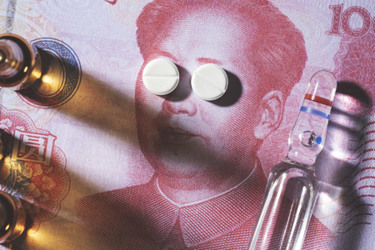
Competition with China emerged as one of the summit’s most urgent themes. Few sounded the alarm more strongly than Jason Kelly, co-founder and CEO of Ginkgo Bioworks. In the spirit of Paul Revere’s midnight ride, Kelly exclaimed, "The Chinese are coming. And we are losing. We're in the process of losing Kendall Square." Kelly cited the dramatic rise in biotech assets originating from Chinese companies and warned that the United States risks repeating mistakes seen in other industries.
He’s not alone in his thinking. In a July 2026 report to President Trump, director of the White House Office of Science and Technology Policy, Michael Kratios explains, “America no longer stands alone as the unchallenged leader in science and technology. The United States risks losing its first position to competitors that are quicker to update their models of research funding, maintain greater institutional flexibility, and can build tighter connections between different sectors of their scientific enterprise.”
During the funding panel, Alexis Borisy, founder of Curie.Bio and veteran entrepreneur-investor with more than three decades in biotech, offered a similarly candid assessment of China in discovering novel drugs with novel targets and mechanisms.
Borisy rejected the notion that China is merely a fast follower. “Their innovation is extraordinarily strong at this point in time. Anybody that's thinking that they're only doing best in class or fast followers is completely wrong."
At the same time, he argued that allowing biotech leadership to become concentrated in a single nation would be unhealthy for global innovation. "Not doing anything and ignoring it is probably not going to end up being a great outcome for the US."
Noubar Afeyan, who has spent more than 35 years building companies in Cambridge, urged policymakers to focus on fair competition rather than fear. When asked if he’s concerned about the threat of China, he said, "We need to worry, but only so much. We [the U.S. biotech innovation ecosystem] have such massive advantages."
Still, several leaders agreed that immigration, basic research funding, and scientific infrastructure remain essential if the U.S. hopes to maintain its leadership position.
Samarth Kulkarni, CEO of CRISPR Therapeutics, framed the challenge differently. "The China phenomenon is a good thing... the US has always operated better when there's competition."
His concern was not competition itself, but whether America continues investing in the ingredients that historically fueled innovation: world-class science and global talent.
Similarly, Nello Mainolfi, founder and CEO of Kymera Therapeutics, highlighted America's willingness to tackle difficult scientific problems. He noted, "The US is the best place in the world because we try to do the hard things first."
AI and the Next Era of Drug Discovery
As expected, AI featured prominently throughout the summit, though speakers repeatedly emphasized that AI must be paired with biology, data, and scientific expertise. Khan, who has become one of biotech's most prominent AI advocates, described biology as humanity's most difficult problem. "It is the most complex problem one can be faced with."
She argued that AI can fundamentally improve both target discovery and molecule design by helping researchers understand biological systems at unprecedented scale. "We only understand 10% of biology." At Recursion, she explained, massive datasets, supercomputing, and machine learning work together to identify novel drug targets and shorten development timelines.
Kelly offered a complementary vision focused on automation. He articulated, "Science is basically formalized human curiosity... and every person is curious." By combining AI models with robotic laboratories, he believes experimentation can become dramatically more democratized, accessible, and productive.
Patients Remain the North Star
Despite discussions of AI, geopolitics, regulation, and financing, speakers repeatedly returned to the same motivation: helping patients.
For Khan, the inspiration came from witnessing childhood leukemia in Bangladesh and later watching her mother battle Parkinson's disease. She recalled, "I don't want to be a doctor. I want to be somebody that invents something."
Mainolfi offered perhaps the day's most direct expression of biotech's purpose, saying, “The best job in the world is to make medicines."
And as the summit concluded, the message that emerged was clear: maintaining U.S. leadership will require more than capital. It will require protecting scientific culture, investing in talent, embracing competition, communicating better, and never losing sight of the patient.
Communicating Science Better
Nearly every panel returned to a surprisingly consistent message: biotechnology must improve how it tells its story.
Mathai Mammen, former global head of R&D at Johnson & Johnson and now CEO of Parabilis Medicines, which recently raised $770 million in their initial public offering, is investigating a drug targeting the beta-catenin:TCF protein-protein interaction. He argued that the industry often celebrates the wrong achievements. He shared on stage, "We don't talk enough about particular conditions, diseases, the wins from a patient perspective."
Instead of focusing primarily on IPOs or acquisitions, Mammen said the industry should lead with patient outcomes. Alexis Borisy agreed, emphasizing that storytelling is a core leadership skill. His advice to scientists trying to tell their story, ask yourself, "Would my mom understand this?"
And with ~20 handpicked science social media communicators at the event, we can expect a lot more content coming out of this event. Kudos to Brad Loncar and Chloe Kirk for designing the event with reach, accessibility, and modern science communication in mind.
On Kendall Square
There’s a good reason BiotechTV held the event at MassBio’s headquarters. Biotech and healthcare events are held almost every day in the “most innovative square mile on the planet”, also known as Kendall Square, Cambridge, MA. In fact, my friend, Kambiz Shekdar, is literally calling his next event: Another Boston Biotech Event. Shekdar is the founder and CEO of Secondcell Bio and he’s planning to host an open, monthly networking event to give people a chance to form organic connections over tacos and tequila.
If you’re a drug discovery professional who has never strolled around Kendall Square on a sunny summer Tuesday, you are missing out. Personally, I think in addition to being the most innovative square mile, it should also be called the “most inspiring square mile on the planet.”