
Benefit Of Being Bitten: Repeat Mosquito Exposure Could Build Immunity
A conversation with John A. McCauley, Senior Director, Discovery Chemistry, Merck, and Tarit Mukhopadhyay, VP, Infectious Disease Discovery, Merck
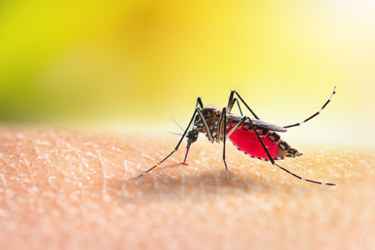
A new malaria study published in Science explores a fundamentally different approach to malaria prevention: using mosquito bites themselves as repeated immune-boosting events.
Led by Australia’s Walter and Eliza Hall Institute of Medical Research (WEHI), in collaboration with Merck & Co., the team developed a “chemovaccination” approach that pairs mosquito-delivered malaria parasites with antimalarial compounds that arrest the parasite at the late liver stage, preventing the transition to blood-stage infection and the onset of malaria disease. In mouse models, the strategy provided complete protection against malaria and generated a durable immune response.
John A. McCauley, senior director, discovery chemistry, Merck, and Tarit Mukhopadhyay, VP, infectious disease discovery, Merck, discuss the preclinical findings that point toward a potential “vaccinate and boost naturally” strategy, in which people living in malaria-endemic regions could potentially build and maintain immunity through repeated mosquito exposure rather than relying on conventional booster schedules.
What was the original drug discovery rationale for targeting plasmepsins IX and X, and how did you discover that inhibiting these enzymes could produce an immunological benefit as well as an antiparasitic effect?
John A. McCauley: Through our long-standing collaboration with WEHI, we identified and explored novel dual inhibitors of plasmepsins IX and X (PMIX and PMX), two proteases that are essential in Plasmodium species, including P. falciparum (the predominant cause of the most severe form of malaria), because of their essential role in key stages of the malaria parasite life cycle. The origin of the project was a phenotypic screen that yielded potent antimalarial hit compounds from Merck’s protease inhibitor collection. WEHI’s target identification work and Merck’s compound optimization efforts led to the identification of potent dual inhibitors of PMIX and PMX. As we evaluated inhibitors of these enzymes, the findings showed that late liver-stage parasite arrest prevented progression to blood-stage infection while exposing the immune system to a broad range of parasite antigens. These observations helped establish the potential of this approach to both prevent infection and generate protective immune responses.
This program had a very unique target identification and validation pathway. Our phenotypic screen yielded potent compounds against the malaria parasite, but they acted against an unknown target. The team then undertook both target ID and lead identification medicinal chemistry work in parallel. The results of this early work showed that the original hit was a PMX inhibitor but the compounds that were made during this time, including WM382, seemed to behave differently with regard to resistance barrier. We then discovered that WM382 was a dual inhibitor of PMIX and PMX, and that changed the focus of the program.
Why is the late liver stage a particularly valuable “sweet spot” for a malaria drug? What is happening biologically at that point that makes parasite arrest especially effective at priming the immune system?
McCauley: The study is the first to target malaria parasites at the late liver stage using an antimalarial drug candidate. Findings demonstrated protective immunity against malaria in mice for up to two years following parasite arrest by dual PMIX and PMX inhibitors. This research builds on our decade-long research collaboration to discover and develop novel antimalarial drug candidates. Our interest in late liver-stage parasite arrest stemmed from the idea that this stage of the malaria life cycle may offer a unique opportunity to generate durable protective immunity. During the late liver stage, parasites undergo extensive replication and express a broad range of antigens. By arresting parasites at this point, the immune system is exposed to a much wider repertoire of parasite antigens than with earlier-stage approaches, potentially producing a stronger and more durable immune response.
From a medicinal-chemistry perspective, what properties of WM382 and MK-7602 allow them to reach and inhibit their targets at precisely this stage of the parasite's life cycle?
McCauley: Through this research collaboration, our work found that PMIX and PMX are potent, orally bioavailable, and well tolerated, making them promising candidates for these preclinical studies.
The late liver stage activity phenotype is more a property of the PMIX/PMX mechanism than the individual compounds. The key property for WM382/MK-7602 was that they were both potent dual inhibitors. Both compounds showed improved pharmacokinetics in mice over the original screening hits, and the key insight for that improvement was constraining the compounds closer to their bioactive conformation using a central bicyclic ring system. This design was enabled by a homology model that predicted the bioactive conformation of our early leads.
We were able to balance these properties through iterative cycles of design using both predictive tools and structure-based drug design mainly focused on locking the bioactive conformation of these inhibitors. For example, we were able to lower lipophilicity to overcome an ion-channel selectivity issue, but our solution led to a reduction in potency. We were then able to get that potency back by accessing a key lipophilic pocket in the active site while at the same time keeping low lipophilicity. Tissue exposure was not a major issue since these compounds have good properties and are well behaved.
Some of the hardest challenges were achieving high potency against both PMIX and PMX, while attaining pharmacokinetics in preclinical species that supported a low human projected dose, and minimizing ion channel activity. The team showed early on that dual inhibition of PMIX and PMX was important toward maintaining a high barrier to resistance, and even though the active sites are quite similar, designing for high PMIX potency was challenging. The initial hits were lipophilic basic amines, so it was no surprise that ion channel activity was an issue we had to address. Through a combination of structure-based drug design, metabolite ID, and a focus on maintaining lipophilicity in a narrow range, we were able to balance properties and invent MK-7602, which has very good preclinical pharmacokinetics and good selectivity.
We are currently evaluating the most advanced candidate, MK-7602, in early-stage clinical studies. Phase 1 clinical data were presented at ASTMH 2025 and we are planning for Phase 2. Two Phase 1a clinical studies found that MK-7602 is rapidly absorbed, and once daily (QD) dosing is supported. Phase 1b clinical studies found that single and multiple doses of MK-7602 were generally well tolerated in healthy participants infected with P. falciparum. Rapid parasite clearance with no clear dose-dependence was observed. MK-7602 exposures in P. falciparum-infected participants were similar to those observed in Phase 1a studies. The data support further clinical development of MK-7602 for treatment of malaria.

Could deliberately allowing parasites to develop to this stage create new opportunities for combination therapies? For example, could a second drug target the parasite at another point in its life cycle to improve both protection and resistance prevention?
McCauley: The study highlights a novel approach to parasite control through late liver-stage arrest. While the findings support further exploration of this strategy, additional research will be needed to better understand its potential application in future prevention and treatment approaches, including whether it could be used alongside other interventions. For treatment of malaria, use of plasmepsin IX/X inhibitors in combination with another agent is the preferred strategy for combating potential resistance. For prevention of malaria, use of a dual PMIX/PX inhibitor may be sufficient, but further research is needed.
Drug resistance is a major problem in malaria. Because PMIX and PMX are described as highly conserved “master regulators,” how vulnerable do you expect this approach to be to resistance, and what resistance mutations are you already looking for?
McCauley: Drug resistance remains an important consideration in the development of any antimalarial therapy. The study showed that PMIX and PMX are highly conserved across Plasmodium species and demonstrated activity against multiple parasite species. Additional research will be needed to further understand the long-term resistance profile of this approach and its potential implications for malaria prevention and treatment. In laboratory experiments, it has been extremely challenging to demonstrate resistance to a potent dual PMIX/PMX inhibitor, indicating a potential high barrier to resistance. In addition, these compounds show good activity against parasites that have resistance to existing antimalarial therapies.
A long-acting injectable formulation for malaria is now in preclinical development. What are the key drug development challenges in converting these compounds from a promising experimental approach into a practical long-acting medicine, particularly in terms of pharmacokinetics, dosing interval, safety, and tissue distribution?
McCauley: Developing a long-acting injectable formulation will require researchers to address several important scientific and drug development questions. These include understanding the pharmacokinetic profile of the compounds, determining whether effective drug levels can be maintained over an extended period, defining an appropriate dosing interval, and evaluating safety with prolonged exposure. Researchers will also need to better understand how the compounds are distributed throughout the body and whether adequate concentrations can be achieved and sustained in the tissues relevant to protection against malaria infection. While the preclinical findings are encouraging, additional research will be needed to determine whether these compounds can ultimately be developed into practical long-acting medicines.
Instead of eliminating the parasite as quickly as possible, you're deliberately giving the immune system a controlled exposure to it before stopping it. Does this suggest we should be designing future antiparasitic drugs not just around parasite killing, but around how the timing and location of parasite arrest shape the host immune response?
McCauley: Findings demonstrated that arresting parasites at the late liver stage prevented the liver-to-blood transition and elicited durable sterile immunity in mice. We’re excited by the novelty of this approach and the new scientific questions it raises, but further research will be needed to understand the implications for future antimalarial approaches. We are very interested in treating blood-stage malaria with MK-7602 and potentially preventing malaria with a long-acting injectable agent. If the sterile immunity finding translates from mouse to human, that could be transformational.
The article mentions that WM382 and MK-7602 could potentially provide protection against a broad range of malaria variants. How much of that breadth comes from the drug's conserved target, and how much comes from exposing the immune system to a wider repertoire of parasite antigens?
McCauley: The study findings suggest that both the conserved nature of the drug target and the immune response generated through late liver-stage parasite arrest may contribute to the protective effects observed. We know that the active sites of PMIX and PMX are virtually identical across malaria species and that our compounds are active across species. Additional research will be needed to better understand the relative contribution of these mechanisms and their potential implications for malaria prevention.
We hope to explore both chemoprevention and chemovaccination proof-of-concept studies in humans at some point. If we can prevent malaria infection with a long-acting injectable PMIX/PMX dual inhibitor, that will provide a great benefit to those at risk. If we can show that the chemovaccination effect translates from mouse to human, that could be transformational for the field.
When deciding where to invest resources, how do you determine which infectious diseases and scientific approaches are most likely to benefit from a breakthrough discovery strategy versus incremental improvements to existing therapies?
Tarit Mukhopadhyay: At Merck, we focus our research investments where we believe we can make the greatest impact for patients and public health. Across our infectious disease pipeline, we're committed to groundbreaking research spanning areas of significant global health need, including malaria, HIV, tuberculosis, dengue, and vaccine-preventable diseases. When evaluating opportunities, we consider both the unmet medical need and the scientific tractability. In some cases, incremental advances can meaningfully improve prevention or treatment, but we aspire to achieve transformative breakthroughs that could fundamentally change how we approach a disease. The preclinical malaria research published in Science reflects that type of transformative breakthrough that can open new avenues for exploration and inform future approaches to disease prevention.
About The Experts
 John A. McCauley, Ph.D., joined Merck Research Laboratories 1998 and is currently a senior director in the department of medicinal chemistry. Over the past 28 years, John and his group have been involved in the design and synthesis of 18 compounds entering clinical development. John is an early development team leader and a discovery program leader in a variety of therapeutic areas and drug target classes, and he currently has responsibility for infectious disease and neglected tropical disease chemistry programs. John was awarded the Gordon E. Moore Medal from the Society of Chemical Industry for Early Career Success in Innovation in 2015 and was recognized with an American Chemical Society Heroes of Chemistry Award in 2017 as part of the ZEPATIER team. He received a Ph.D. in organic chemistry from the University of Pennsylvania in 1996. Following graduate studies, John worked at Harvard University as an NIH postdoctoral fellow.
 As head of infectious disease and vaccine discovery at Merck, Tarit Mukhopadhyay leads a team of scientists dedicated to advancing human health through the discovery of new vaccines, biologics, and small molecules against infectious disease. Previously, he was head of vaccine and biologics process development at Merck and responsible for strategy on pipeline development, externalization, and innovation. Formerly, Tarit Mukhopadhyay was a Professor of Vaccine Bioprocess Development at University College London. His specialization was in high throughput development methodologies and technologies, specifically applied to vaccines. He has worked with bacterial and virus vaccines, such as viral vectors for gene therapy applications and worked extensively with academia and funders, including the Bill and Melinda Gates Foundation, CEPI, and the UK Department of Health.