
AI: The Inflection Point In Retinal Drug Discovery, Development, And Delivery
By Viral Kansara, Ph.D., chief R&D advisor, NeuParadigm Bio
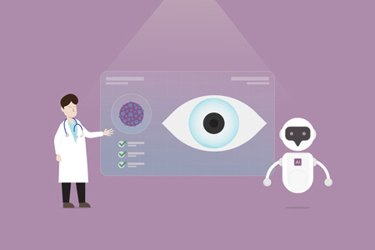
Let me be direct: AI (artificial intelligence) is not going to replace the biologist, the pharmacologist, or the translational scientist. What it is doing right now is changing the quality of decisions we make before we commit tens of millions of dollars to a clinical hypothesis. That distinction matters enormously, and it gets lost in most conversations about AI in drug discovery.
Retinal drug discovery has always been hard. Long development timelines, expensive preclinical models, and a translational gap between mouse and human ocular biology have humbled programs at every major pharma and biotech. What is shifting is not the biology — that remains stubbornly complex — but our ability to interrogate it at scale and with better foresight. AI, in this context, is less a revolution than a much-needed upgrade to how we handle the data we already generate.
Target Identification And The Multiomics Shift
For most of the past decade and a half, target selection in retinal disease followed a familiar rhythm: a compelling biological hypothesis, animal model validation, and a lot of hope that the mechanism would survive contact with human physiology. It often did not. The attrition rate in retinal programs, even at well-resourced large pharma, speaks for itself.
A program led some years ago in dry age-related macular degeneration (AMD) and geographic atrophy (GA) illustrates this tension well. The team had a strong preclinical rationale for a complement-pathway target — robust animal data, a clean mechanistic story, and good druggability. But when early translational work began layering in human genome-wide association study (GWAS) data alongside tissue-level transcriptomics from aged retinal pigment epithelium (RPE), the picture quickly became complicated. The genetic signal pointed toward a related but distinct node in the pathway that the original hypothesis had not prioritized. Without the ability to computationally synthesize that multiomics signal, the team would have advanced the wrong target. That course correction, made at the discovery stage rather than after a Phase 2 failure, likely saved years and substantial capital. This is what AI-driven target identification actually looks like in practice — not a machine generating hypotheses from nothing, but a computational layer that makes it possible to evaluate complex data sets across RPE biology, photoreceptor degeneration, and complement-mediated pathways at a resolution and scale no human team can match manually. The result is a more honest, evidence-based case for any target before the biology team commits to it.
The Translational Gap Is Not Solved — But It Is Narrowing
Anyone who has run IND-enabling studies in retinal disease knows the anxiety of committing to a clinical candidate based on rodent pharmacology. The murine retina is a reasonable model in some respects and a deeply imperfect one in others. That tension has not gone away.
In AMD and diabetic macular edema (DME) programs, a team working on a novel anti-permeability target hit a familiar wall: strong efficacy signals in the laser-induced choroidal neovascularization (CNV) and streptozotocin-induced diabetic rodent models, but meaningful uncertainty about whether the pharmacodynamic response would translate to the human disease setting, where vascular leakage is more chronic and multifactorial. Predictive PK/PD modeling, when informed by available human vitreous and retinal tissue data, helped the team probabilistically stress test the translational assumption before committing to IND-enabling toxicology. The model did not guarantee success. But it gave the team a more honest read on where the biological risk was concentrated, which changed how they staged the development investment.
Broader field examples reinforce this. The failure of several complement inhibitors in GA — despite compelling mechanistic rationales — has pushed the field toward more sophisticated translational frameworks that integrate human longitudinal imaging data with mechanistic models. Programs like the FILLY trial of lampalizumab (Genentech/Roche) and the GATHER trials of avacincaptad pegol ultimately taught the field that endpoint sensitivity and patient stratification matter as much as target biology. AI-driven analysis of optical coherence tomography (OCT) progression data is now being used upstream in preclinical and early translational stages to build better predictive models of lesion growth kinetics before the first patient is enrolled.

Imaging As A Data Asset, Not Just A Clinical Tool
Ophthalmology has something most therapeutic areas do not: decades of high-resolution, longitudinally collected imaging data with direct links to disease progression. The rich imaging data from OCT, fundus photography, and optical coherence tomography angiography (OCTA) are not just clinical instruments. These are structured data sets waiting to be fully exploited.
AI-powered grading platforms are already demonstrating sensitivity in GA and diabetic retinopathy that meaningfully exceeds what manual graders can reliably detect. The practical implications are significant — earlier identification of structural change, cleaner patient stratification by phenotypic subgroup, and trials that could be shorter, smaller, and more decisive. That last point is not a minor convenience. In a field where late-stage retinal program failures remain stubbornly common, better endpoint precision changes the economics of the whole enterprise.
The HARBOR study in wet AMD and subsequent analyses from the CATT trial demonstrated how variability in OCT grading, even among experienced readers, could affect the interpretation of treatment response. AI-driven grading removes that variability systematically. For programs in GA, where lesion growth rates in the range of 1 to 2 mm² per year define a clinically meaningful signal, the difference between AI-assisted and manual endpoint measurement could directly determine whether a trial is powered to succeed.
Delivery Optimization — Where Computation Meets Biology
Gene therapy and long-acting biologics for the retina live or die on delivery. The empirical process of characterizing AAV tropism, optimizing vector design, and establishing pharmacokinetics across ocular compartments is time-consuming and expensive. In a program evaluating suprachoroidal AAV delivery for a chorioretinal disease, a team faced a question that arises in nearly every gene therapy program: which vector serotype, at what dose, via which route, would achieve durable transgene expression in the target cell population — RPE, photoreceptors, or both — without triggering a disproportionate immune response? The suprachoroidal space lies outside the blood–retinal barrier, raising important immunogenicity considerations that are managed differently compared to intravitreal and subretinal delivery routes. Computational modeling of drug or vector biodistribution, informed by rabbit and NHP ocular PK data, helped narrow the experimental design space before committing to the full NHP toxicology study. Specifically, the modeling flagged a dose range where RPE transduction was predicted to be robust but systemic vector exposure was expected to remain low, which is an important distinction when preexisting neutralizing antibodies are a clinical concern.
This approach was built on published preclinical work, including a study by Kansara et al., 2020, demonstrating that suprachoroidally delivered DNA nanoparticles could transfect both retina and RPE/choroid in rabbits. This study validated the route for non-viral payloads and broadened the delivery design space beyond AAV alone. Separately, a pharmacokinetic study of suprachoroidal axitinib suspension, Kansara et al., 2021, established the durability profile achievable via suprachoroidal space (SCS) delivery for small molecules.
The broader field has moved in this direction as well. REGENXBIO's AAVIATE trial is evaluating suprachoroidal delivery of RGX-314 for wet AMD using Clearside Biomedical's SCS Microinjector. This trial represented one of the first clinical translations of suprachoroidal AAV delivery, building directly on preclinical computational and pharmacokinetic modeling work to define the starting dose and administration parameters. Such a data-informed transition from preclinical to clinic is exactly where computational modeling earns its keep.
The Competitive Risk Of Standing Still
A divergence is becoming apparent between organizations that have woven computational capabilities into their discovery workflows and those still running programs as they did a decade ago. The difference is not just speed — it is the ability to extract more signals from negative data, to cycle faster, and to make resource allocation decisions with better information. In a capital-intensive field with long timelines and limited runway, that advantage compounds.
The retina is arguably the best-positioned organ system in medicine for data-driven drug discovery: immune-privileged, visually quantifiable, genetically well characterized, and rich in longitudinal imaging data. The conditions for AI to meaningfully accelerate therapeutic development are better here than almost anywhere else. The question is whether the organizations will build the scientific infrastructure to take advantage of that.
In summary, AI is not a replacement for biological expertise or clinical judgment. The most effective development programs will be those that treat computational tools and deep domain knowledge not as alternatives but as complements — each sharpening the other. That integration, done with scientific rigor and intellectual honesty about what the models can and cannot tell you, is where the next generation of retinal therapeutics will come from.
About the Author
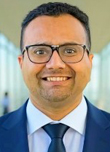 Viral Kansara, Ph.D., is a scientific and strategic leader with a clear mission: translating molecules into medicines that matter. With 15+ years across Clearside Biomedical, Novartis, and Merck, he has built and led high-performing global teams advancing programs from discovery to approval, resulting in clinical wins and commercial success. Dr. Kansara is a recognized voice in ophthalmology. He is a frequently invited speaker and session chair at international conferences, a published author, and a committed mentor to the next generation of drug discovery scientists. He holds a Ph.D. in Pharmaceutical Sciences from the University of Missouri, Kansas City.