
A Quantitative Procurement Framework For Scaling Organ-On-A-Chip Adoption Across Markets Of Varying Maturity
By Siddhi Vora, Ph.D., Senior Category Specialization, Beroe Inc.; and Kasturi Mahadik, Ph.D., Chief Manager, Centre for Predictive Human Model Systems, Atal Incubation Centre-CCMB, India

Organ-on-a-Chip (OoC) technology is moving from exploratory research toward industrial adoption, positioning procurement as a strategic lever to manage cost, technology, developer, validation, and regulatory risks. This article examines how end users can move beyond unit-price negotiations toward total cost of ownership (TCO)-based sourcing, demand aggregation, developer diversification, shared infrastructure, structured technology qualification, and regulatory-ready sourcing to enable scalable and economically viable adoption.
The effectiveness of these procurement mechanisms depends on market maturity, infrastructure, and implementation. Regional differences shape their application: North America benefits from established procurement ecosystems; Europe from collaborative infrastructure; and Asia-Pacific, including India, from opportunities in shared infrastructure, contract research organization (CRO)-led models, and regional manufacturing. However, validation, interoperability, data sharing, and regulatory gaps remain key constraints.
Ultimately, coordinated action among end users, OoC developers, technology providers, procurement teams, and regulators can help move OoC from fragmented research adoption toward a standardized, scalable, and commercially sustainable industrial R&D model.
Organ-On-A-Chip Market Opportunity And Procurement Pathways To Commercialization
Rising drug development costs, complex R&D processes, and high failure rates are increasing the need for more predictive and efficient non-clinical research models. OoC technology addresses this need by providing more human-relevant 3D models than conventional 2D cultures, with applications across disease modelling, drug discovery, and toxicity assessment. Studies estimate that OoC could reduce development costs by 10%–26% through lower direct costs, improved success rates, and shorter development timelines.1,2
The global OoC market is estimated at $208.6 million in 2026 and projected to reach $1.64 billion by 2033, representing a 34.3% compound annual growth rate.3 Despite this growth, commercialization remains constrained by reproducibility, reliability, usability, scalability, standardization, validation, and regulatory acceptance.4
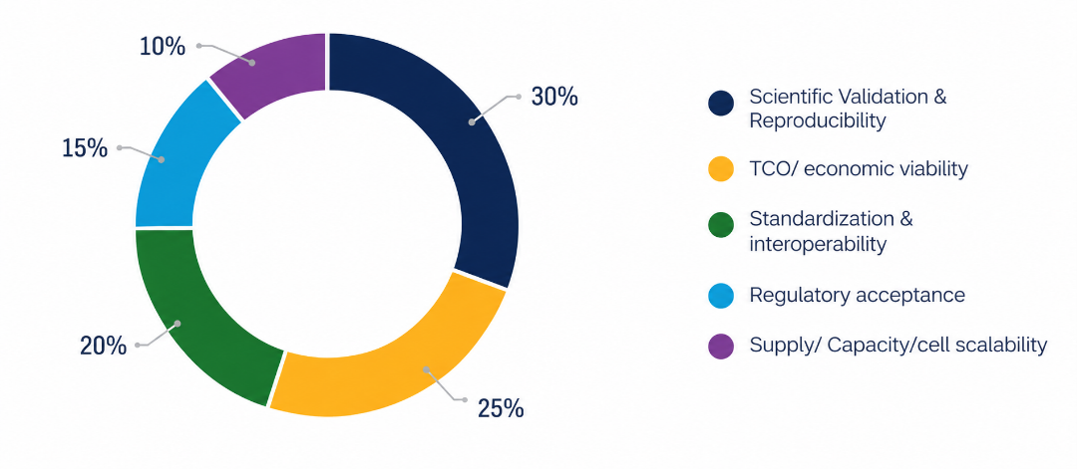
Figure 1: Indicative contribution of major OoC commercialization barriers to procurement friction
Source: Beroe Analysis
As OoC moves toward industrial adoption, procurement priorities are shifting from technical feasibility toward affordability, manufacturability, standardization, validation, and workflow integration. These challenges are both economic and scientific: differences in protocols, measurements, and terminology limit comparability, while gaps in benchmarking, validation, data sharing, cell availability, and regulatory clarity continue to constrain adoption.
Four interconnected procurement levers can address these barriers:
- TCO optimization: improves economic viability
- demand aggregation: creates scale and commercial leverage
- shared validation: reduces duplicated evidence-generation efforts
- regulatory engagement: strengthens confidence for regulated applications.
Together, these mechanisms provide a pathway for moving OoC from technology development toward scalable market adoption.
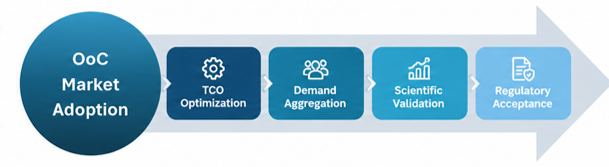
Figure 2: OoC commercialization chain: four interconnected gates to market adoption
Source: Beroe Analysis
Procurement As A Strategic Enabler For Cost And Demand Optimization
Life sciences procurement is shifting from transactional buying to a strategic lever for cost, demand, and value optimization.5 For OoC, this shift requires moving beyond technical feasibility toward reproducibility, validation, scalability, and economic viability. TCO-based sourcing, demand aggregation, and developer consolidation can help end users optimize the full cost of adoption while maintaining research quality and compliance.
From Unit Price To Lifecycle Value
Category managers are shifting to TCO-based sourcing to drive savings through value engineering, volume leverage, alternative sourcing, should-cost modeling, and supplier collaboration.6 The initial platform price represents only part of the cost of generating usable experimental data. An OoC TCO model should encompass:
TCO = Platform + Chips/Consumables + Cells/Media and biological inputs + Instrumentation + Imaging + Software + Labor + Training + Validation + Maintenance + Failure/Repeat Costs
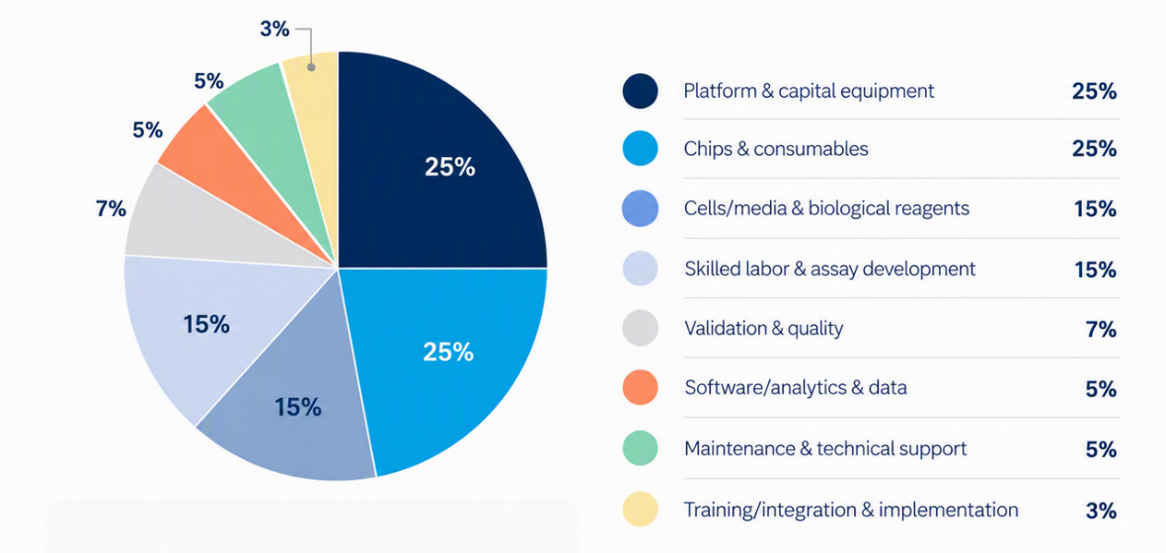
Figure 3: OoC TCO model: Indicative component share
Source: Industry and Beroe Analysis
Platforms, chips/consumables, and cells and reagents account for approximately 65% of the indicative OoC TCO, highlighting opportunities beyond the initial platform purchase. Procurement can capture value through consumable standardization, volume commitments, alternative sourcing, automation, and reduction of experimental failures and repeat runs.
The procurement objective should therefore shift from the lowest platform price to the lowest cost per successful, usable experiment. A higher-priced platform may provide greater value when it delivers higher throughput, lower failure rates, greater automation, or improved reproducibility. Consumables are particularly important because they represent both recurring end-user costs and recurring developer revenue opportunities.7
Regional Implications Of TCO-Based Sourcing
The impact of TCO-based sourcing varies with regional cost structures, developer maturity, infrastructure, and adoption levels. North America and Europe are positioned for greater near-term influence because of relatively mature OoC ecosystems, developer networks, and regulatory engagement. Across Asia, regional manufacturing, CRO outsourcing, demand aggregation, and shared infrastructure can strengthen TCO optimization. In emerging markets such as the Middle East and Oceania, TCO can influence decisions between internal capability development, external partnerships, and OoC-as-a-service models.
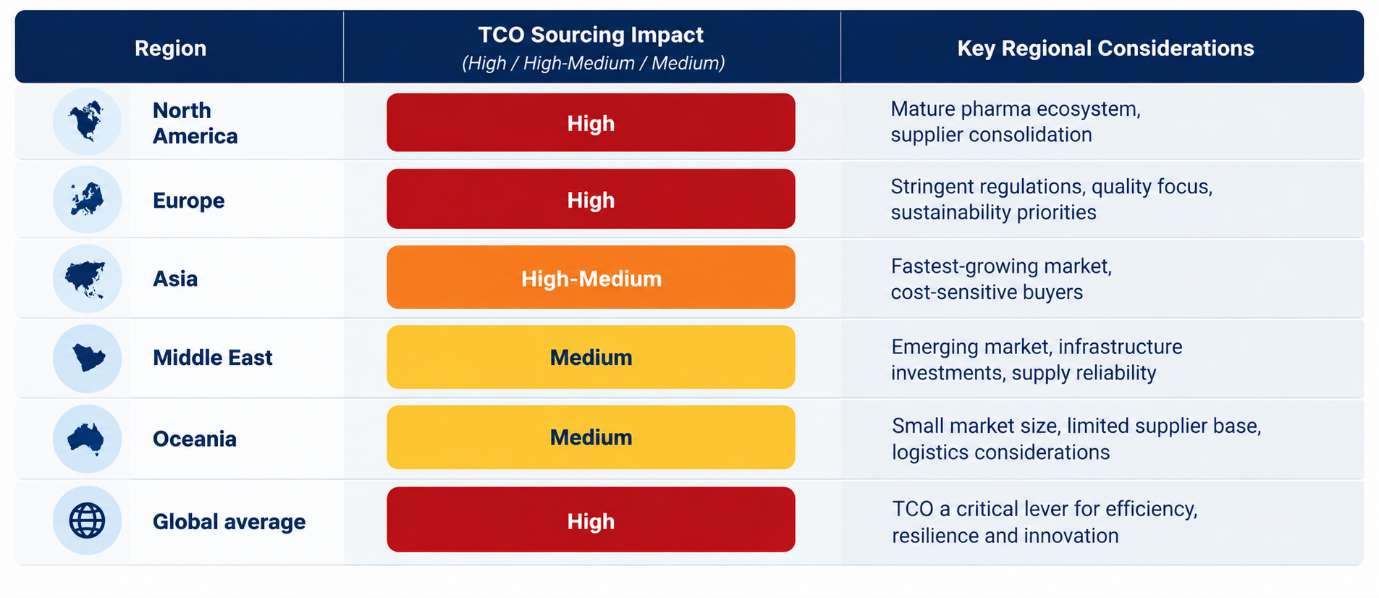
Figure 4: Regional influence of TCO-based sourcing on OoC commercialization
Source: Beroe Analysis
Demand Aggregation: Building Scale For OoC Commercialization
Demand aggregation addresses a fundamental commercialization challenge: end users often face limited supplier options, insufficient price benchmarks, and weak negotiating leverage, while developers face uncertain demand and limited economies of scale. [16]
Pooling requirements through GPOs, industry consortia, CRO platforms, Centers of Excellence (CoEs), and end user–developer partnerships can create more predictable demand, improve commercial leverage, and reduce procurement complexity.
How Demand Aggregation Creates Value
For OoC, demand aggregation can deliver value beyond purchase-price discounts by:
- reducing TCO across platforms, consumables, infrastructure, and services
- increasing buying power through predictable volumes
- standardizing specifications, simplifying technology selection and validation
- scaling developer capacity through greater demand visibility
- sharing infrastructure, reducing individual capital expenditure (CapEx) requirements
- establishing market benchmarks and improving price transparency.

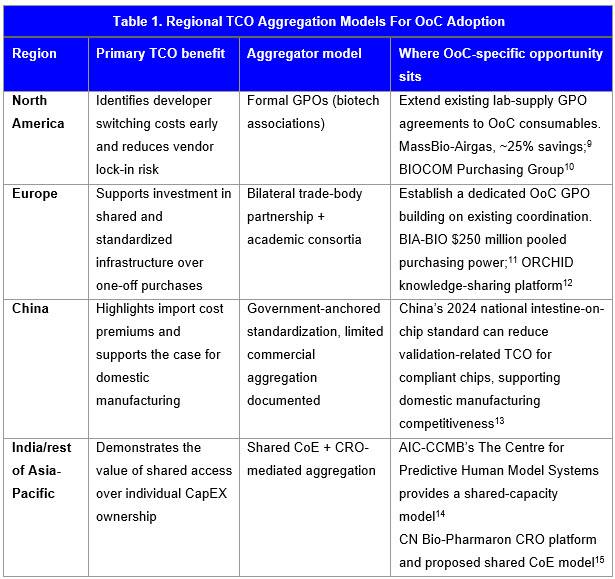
Regional Models for Demand Aggregation
Evidence from pharmaceutical and medical-supply procurement in Brazil indicates that pooled purchasing can reduce acquisition prices by approximately 7%–13% compared with individual procurement.8
Source: Beroe Analysis
India provides an emerging example of shared-capacity adoption. CPHMS at AIC-CCMB is developing infrastructure and networks around human-relevant models, reducing the need for individual organizations to independently invest in specialized infrastructure and expertise.14 However, cost optimization alone is insufficient; gaps in validation, benchmarking, data sharing, interoperability, and regulatory guidance continue to constrain commercialization.16
From Demand Aggregation To Market Scale
Demand aggregation alone cannot resolve OoC commercialization barriers. It must be supported by standardized specifications, validation frameworks, interoperability, data sharing, and clearer regulatory pathways. The emerging ISO/CD 25693 framework, which establishes minimum requirements and considerations for OoC development and fitness-for-purpose evaluation, illustrates the direction toward greater standardization.17
Ultimately, coordinated procurement can shift OoC adoption from fragmented, project-based purchasing toward a more standardized and scalable market, reducing TCO for end users while providing developers with the demand visibility needed to invest and scale.
From Procurement Barriers To Commercial Adoption: Regional End-User–Developer Strategies For OoC
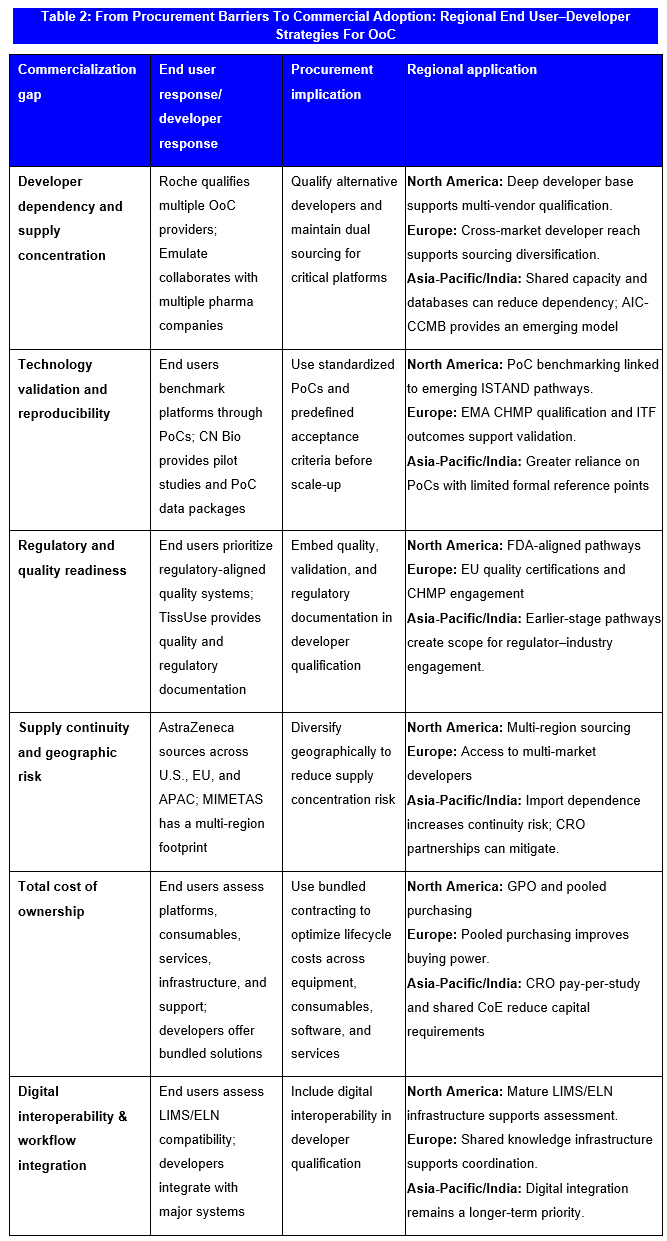
As OoC moves from exploration toward industrial adoption, procurement is shifting from technology acquisition to risk-managed commercialization. End users and developers address key barriers through developer qualification, proof of concept (PoC)-based validation, supply diversification, lifecycle-cost management, regulatory readiness, and digital interoperability.
The priorities are broadly consistent across markets, but implementation varies with developer maturity, validation infrastructure, regulatory pathways, and research capacity. Table 2 therefore links each commercialization gap with the corresponding end-user/developer response, procurement action, and regional application.
Source: Industry and Beroe Analysis
The regional comparison highlights the need to align OoC commercialization with local market maturity. In India, where adoption remains emerging and largely concentrated in academia, developers can move beyond unit-device sales toward ecosystem-based models that support consumables, infrastructure, training, and access to primary human cells through direct provision or specialized partnerships. Such models can reduce adoption barriers while supporting broader industrial use and applications relevant to Global South.
Evidence from OoC adoption studies reinforces the importance of early end user–developer alignment. A 2020 translational roadmap identified robustness, reproducibility, usability, integration, biological relevance, validation, standardization, quality, regulatory readiness, and end-user support as key requirements for pharmaceutical adoption.18 More recently, 100+ NSF I-Corps engagements indicated that pharmaceutical companies and clinicians prioritize reproducibility, data quality, and relevance over technological sophistication alone.19 These findings reinforce the need to align OoC development with buyer requirements, usability, and intended applications.
Conclusion
OoC commercialization is moving beyond technical feasibility toward reproducible, scalable, and economically viable adoption. Achieving this shift requires procurement to move beyond unit-price negotiations toward a lifecycle approach encompassing TCO optimization, demand aggregation, developer qualification, supply resilience, standardization, and regulatory readiness.
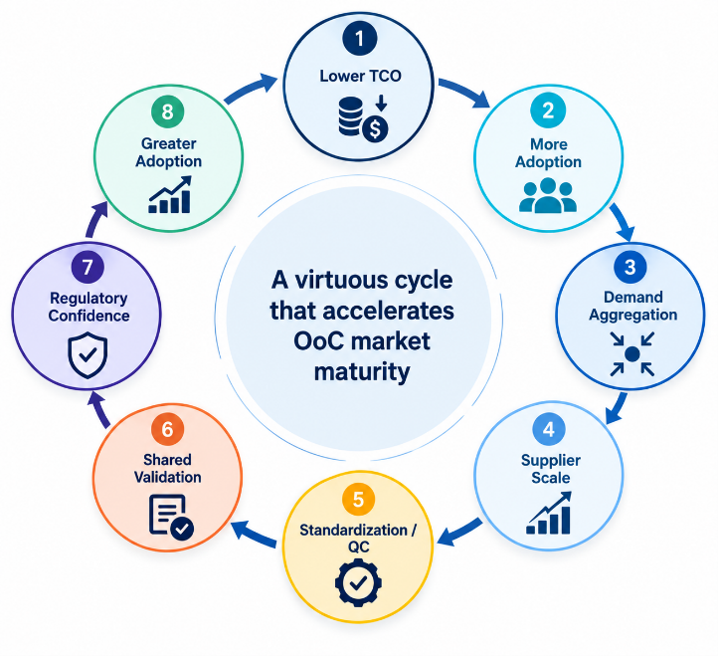
Figure 5: OoC commercialization flywheel: How demand aggregation, standardization, and shared validation drive sustainable growth
Source: Beroe Analysis
A coordinated procurement model can create a reinforcing commercialization flywheel: aggregated demand enables developer scale, standardization improves interoperability and reproducibility, shared validation reduces duplicated evidence-generation costs, and regulatory engagement strengthens confidence in regulated applications.
Ultimately, procurement can evolve from a transactional function into a market-shaping mechanism, reducing adoption barriers, enabling developer scalability, and accelerating OoC from fragmented research applications toward a standardized and commercially sustainable industrial R&D model.
References
- N. Franzen, W. H. van Harten, V. P. Retèl, P. Loskill, J. van den Eijnden-van Raaij, and M. IJzerman, “Impact of organ-on-a-chip technology on pharmaceutical R&D costs,” Drug Discovery Today, vol. 24, no. 9, pp. 1720–1724, 2019.
- B. Thawkar, F. Rizwani, and K. Jain, “Drug-induced acute kidney injury: Mechanisms, biomarkers, and therapeutic strategies,” Current Drug Safety, 2025.
- Coherent Market Insights, “Organ-on-a-Chip market analysis & forecast (2026–2033),” [Online]. Available: https://www.coherentmarketinsights.com/market-insight/organ-on-a-chip-market-49
- K. Fibben, E. K. Williams, J. D. Roback, W. A. Lam, and D. N. Alter, “From lab-on-a-chip to lab-on-a-chip-in-the-lab: A perspective of clinical laboratory medicine for the microtechnologist,” Lab on a Chip, vol. 25, no. 11, pp. 2566–2577, 2025.
- ZAGENO, “Life sciences procurement: A strategic guide for pharma & biotech R&D,” 2026. [Online]. Available: https://go.zageno.com/blog/life-sciences-procurement
- Spendflo, “Category management in procurement: Strategic framework & best practices,” 2026. [Online]. Available: https://www.spendflo.com/blog/category-management
- C. Olaizola-Rodrigo, C. Bayona, S. Oliván, and R. Monge, “A review of organ-on-chip fabrication methods: From early developments to overcoming inert barriers,” iScience, 2025.
- K. Barbosa and E. Fiuza, “Demand aggregation and payment risk effects on pooled procurement: Evidence from the public healthcare sector,” The Quarterly Review of Economics and Finance, vol. 103, p. 102011, 2025.
- MassBio, “Summer Savings Week showcases the value of MassBioEdge,” 2026. [Online]. Available: https://www.massbio.org/news/recent-news/summer-savings-week-showcases-the-value-of-massbioedge/
- BioSpace, “BioSurplus signs exclusive BIOCOM Purchasing Group agreement,” 2006. [Online]. Available: https://www.biospace.com/b-biosurplus-b-signs-exclusive-biocom-purchasing-group-agreement
- BIA, “Save with business solutions,” [Online]. Available: https://www.bioindustry.org/membership/business-solutions.html
- ORCHID, “Organ-on-Chip in Development,” 2018. [Online]. Available: https://ec.europa.eu/newsroom/horizon2020/items/619699/en
- H. Liu, Y. Wang, X. Zhang, M. Zhang, P. Wang, J. Shang, et al., “Standard: Human intestine-on-a-chip,” Cell Regeneration, vol. 13, no. 1, p. 16, 2024.
- Atal Incubation Centre (CCMB), “MPS researchers database,” [Online]. Available: https://aic.ccmb.res.in/mps-researchers-database/
- Business Wire, “CN Bio launches all-in-one organ-on-a-chip system, PhysioMimix® Core,” 2025. [Online]. Available: https://www.businesswire.com/news/home/20251014080308/en/CN-Bio-Launches-All-in-one-Organ-on-a-chip-System-PhysioMimix-Core
- U.S. Government Accountability Office (GAO), “Human organ-on-a-chip: Technologies offer benefits over animal testing but challenges limit wider adoption,” [Online]. Available: https://www.gao.gov/products/gao-25-107335
- ISO, “ISO/CD 25693: Microphysiological systems and organ-on-chip—Developing process of organ-on-chip used for the evaluation of substances,” [Online]. Available: https://www.iso.org/standard/91185.html
- V. Allwardt, A. J. Ainscough, P. Viswanathan, S. D. Sherrod, J. A. McLean, M. Haddrick, and V. Pensabene, “Translational roadmap for the organs-on-a-chip industry toward broad adoption,” Bioengineering, vol. 7, no. 3, p. 112, 2020.
- R. M. Komarnisky, S. Wootten, N. Friedman, and M. Nikkhah, “Organ-on-a-chip: Key industry insights, challenges, and opportunities from 100+ NSF I-Corps interviews,” Lab on a Chip, vol. 25, no. 19, pp. 4828–4843, 2025.Top of FormBottom of Form
About The Authors
 Siddhi Vora is a Senior Category Specialization at Beroe Inc., with 4+ years of experience in Pharma R&D, procurement intelligence, and competitive intelligence. With a Ph.D. in Microbiology, she translates scientific and market insights into actionable strategies. She also leads Beroe VOX outreach, engaging industry experts to strengthen Beroe’s research and procurement intelligence across the Pharma R&D sector.
 Kasturi Mahadik is Chief Manager at the Centre for Predictive Human Model Systems (AIC-CCMB), advancing human-relevant models including organoids and microphysiological systems in India. With a PhD in human health and disease, and expertise in 3D biology, she operates at the intersection of academia, industry and policy.
Disclaimer: Strictly no photocopying or redistribution is allowed without prior written consent from Beroe Inc. The information contained in this publication was derived from carefully selected sources. Any opinions expressed reflect the current judgment of the author and are subject to change without notice. Beroe Inc. accepts no responsibility for any liability arising from the use of this document or its contents. For more information, please contact: info@beroe-inc.com.