
A New De Novo Protein Design Platform For GPCR Drug Discovery

By Ray Dogum, Chief Editor, Drug Discovery Online
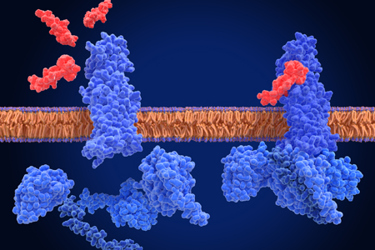
G protein-coupled receptors (GPCRs) have long been the backbone of modern pharmacology, but their importance to drug discovery is matched by the stubborn limits of how they have been drugged.
Now, a new Nature paper from Skape Bio and researchers at the University of Washington’s Institute for Protein Design describes a computational de novo protein design and high-throughput living-cell screening platform for creating miniproteins that modulate GPCRs.
The study produced functional lead molecules against 11 GPCR targets, including both agonists and antagonists, offering a more concrete proof point for biologics in one of medicine’s most important target classes.
Importance And Difficulty Of GPCRs
In an interview with Drug Discovery Online, Chris Norn, chief executive officer, Skape Bio, highlighted that, “GPCRs targeting drugs are thirty-five percent of the global drug market.” The importance of their potential impact in medicine is undeniable. From metabolic disease to neurology, GPCRs control critical signaling pathways that translate extracellular cues into intracellular responses.
Norn has spent over 25 years thinking about protein design, starting just after high school at an industrial environmental biotech called Novozymes, where scientists manually configured enzyme structure point mutations to improve their function.
After earning his Ph.D. in molecular biophysics and doing a post-doc alongside Nobel laureate, David Baker, Norn set his goal on using AI to help scientists develop proteins that can better modulate GPCRs, a family of cell surface receptors that respond to a plethora of external signals.
Building Proteins From Scratch
Norn and his team at the Danish-based company, Skape Bio, are on a mission to build proteins from scratch (de novo).
While antibodies have transformed other areas of medicine, GPCR-targeting biologics remain rare and functionally constrained. “There are just a few approved antibodies targeting GPCRs, and they are all antagonists,” Norn explains. This imbalance matters because many of the most compelling GPCR-linked indications—particularly in metabolic and endocrine diseases—require receptor activation, not blockade.
GPCRs are membrane proteins, embedded within lipid bilayers, and notoriously difficult to isolate or stabilize without disrupting their native conformation. Attempts to engineer soluble surrogates often create something that looks structurally correct but behaves incorrectly.
As Norn notes, “there are companies that mutate all the hydrophobic amino acids that are facing the lipid bilayer to hydrophilic amino acids, but then you have a soluble protein, that’s no longer a GPCR.” What drug discovery has been missing is not just better screening, but a fundamentally different way to design molecules against these dynamic targets.
The new platform tries to solve that by testing designed proteins against full-length GPCRs in living human cells, preserving the receptors’ natural membrane environment while allowing the team to screen up to 100,000 protein designs.
At the heart of the challenge is precision. GPCR activation is governed by extremely subtle conformational shifts—movements so small they approach the limits of structural resolution. “The difference between being active and being inactive is like the width of an atom,” Norn says. For decades, this level of control has kept GPCR drug discovery in a paradigm of approximation: screen large libraries, optimize iteratively, and accept that only certain hits are realistically accessible.
Moving The Needle With AI
The emergence of AI-driven de novo protein design changes that equation. Instead of searching chemical or biological space through manual brute force, researchers can now design functional molecules from first principles. In Skape’s case, the approach centers on building miniproteins from scratch to recognize and stabilize specific GPCR states, enabling molecules that can either activate signaling or block it depending on the receptor conformation they are designed to engage.
"It [AI model] has seen all the structures ever solved,” Norn observes, “so it has a bit more knowledge than protein designers or structural biologists.” That accumulated knowledge is now being translated into practical capability. In early demonstrations, AI-designed proteins have achieved meaningful functional activity with striking efficiency. “We have been able to generate a nanomolar antagonist just testing fifty designs straight out of the computer,” he says.
For drug discovery organizations, the implications are profound: reduced cycle times, lower costs, and access to modalities that were previously impractical.
Perhaps most importantly, de novo design opens the door to entirely new ways of modulating GPCR biology. Agonist biologics—long considered out of reach—are now a realistic objective, and the breadth of the new study matters here: the team reported functional lead molecules across 11 GPCR targets tied to cancer, diabetes, obesity, migraine, itch, and pain. State-selective ligands that stabilize specific receptor conformations could improve both efficacy and safety, while more complex strategies, such as bispecific GPCR targeting, become more conceivable as the design rules improve.
Translating Miniproteins To The Clinic
There remains, of course, a translation gap. Critics point out that few de novo-designed therapies have reached the clinic. But this critique often ignores the timeline. As Norn notes, “It just started working well three to five years ago… and it takes time to get stuff into the clinic.” Drug development cycles have not shortened simply because design has accelerated. At the time of the interview, Norn did mention they've further refined their lead pipeline from 11 to 5 or 6 licensable miniprotein assets.
Still, the new paper offers more than an abstract promise. In preclinical in vivo work, one designed antagonist reportedly performed comparably to an existing drug while showing fewer unwanted side effects, and the team also demonstrated that a receptor antagonist’s half-life could be extended with a commonly used protein tag, pointing toward more conventional therapeutic dosing properties.
For drug discovery, the implication is that this platform will make starting GPCR programs more efficient and will expand what is even considered druggable. GPCRs have always been central to pharmacology, but their full therapeutic potential has remained constrained by the limits of complex chemistry and biology. De novo AI design is beginning to remove those limits, offering, for the first time, a path to engineer precise, functional control over one of biology’s most important signaling systems.