
The Unlikely Weapon Against Fentanyl: Your Immune System

By Ray Dogum, Chief Editor, Drug Discovery Online
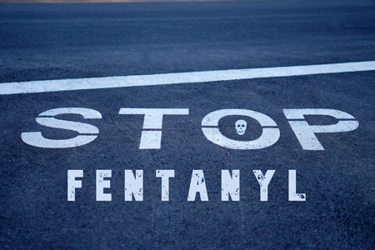
Opioid addiction does not discriminate. It can take down anyone regardless of sex, race, and socioeconomic status. Dependence on opioid drugs like oxycodone, morphine, and heroin creeps in quietly, but once it takes hold, breaking free can feel almost impossible. Fentanyl, a much cheaper synthetic opioid, is roughly 50 times more powerful than heroin and 100 times stronger than morphine, making illicit drug users extremely susceptible to overdosing.
Naloxone (marketed as Narcan and FDA approved for over-the-counter use in 2023) remains the primary pharmacological intervention for reversing opioid-induced respiratory depression during overdose events. However, the lifesaving nasal spray functions as an acute, post-exposure solution rather than preventative strategy.
Although there was a 36% decrease in synthetic opioid overdoses in the U.S. from an estimated 76,282 in 2023 to 48,422 in 2024, this societal issue still remains a growing problem as its victims’ families and communities endure lasting emotional trauma, economic hardship, and increased public health burdens. And the estimates probably don’t capture the reality of the situation on the streets.
Fentanyl overdose remains a leading cause of death for Americans aged 18 to 45, often due to unintentional drug overdoses, as illicit dealers frequently lace counterfeit pills and street drugs with fentanyl to increase potency and profit, often without the user’s knowledge.
Harnessing Immunity to Prevent Overdose
To advance the global fight against fentanyl, one New York based company, ARMR Sciences Inc., has developed a vaccine designed to neutralize fentanyl in the bloodstream before it reaches the central nervous system and binds to μ-opioid receptors (MORs). These receptors, located primarily in the brain and spinal cord, mediate fentanyl’s potent analgesic and euphoric effects.
The concept is straightforward: if at-risk people receive this vaccine once or twice a year, they could be protected from accidental fentanyl overdose. By generating antibodies that bind to fentanyl in the bloodstream, the vaccine would act as an armor and prevent the drug from reaching MORs, eliminating its effects.
In theory, this could reduce the incentive to use fentanyl altogether, as the desired high would no longer occur. Many experts have previously weighed in on new social complexities of a fentanyl vaccine and it’s important to consider the pros and cons of this sort of intervention. Critics argue that some users might respond by escalating their fentanyl dose in an attempt to overcome the vaccine’s blockade, raising concerns about safety and behavioral adaptation.
Developing Its Lead Candidate
The science behind ARMR‑100 began at the University of Houston under Dr. Colin Haile and was refined through six years of research led by Dr. Greg Cuny with Tulane University collaborators, including the developer of the dmLT (double-mutant heat-labile toxin) adjuvant, Dr. Elizabeth Norton. Drs. Haile, Cuny, and Norton remain scientific advisors, joined by Dr. Ofer Levy and Dr. David Dowling, whose expertise in immunology and vaccine design shaped the candidate’s development. Additionally, Dr. Thomas Kosten, a pioneer in addiction medicine contributed critical insights into immunotherapy treatments for substance use disorders.
Published in Pharmaceutics, the immunoconjugate vaccine is shown to safely blocked up to 98% of fentanyl from reaching the brain in male and female rats, essentially eliminating its analgesic and behavioral effects. Importantly, the therapy showed no interference with common pain or addiction treatments like morphine, methadone, buprenorphine, or oxycodone, suggesting these options remain viable in emergencies.
ARMR’s Chief Scientific Officer, Nicholas Jacob, Ph.D., explained to me that, “fentanyl is essentially sequestered by those antibodies, and this immune response prevents the drug from entering the brain and interacting with the MORs, blocking both the effects and the lethality of fentanyl.”
The Role of the Adjuvant: dmLT Explained
Adjuvants are the hidden power behind many vaccines, and in ARMR-100, one called dmLT plays a key role. The dmLT adjuvant is derived from E. coli’s heat-labile enterotoxin but engineered with two point modifications (R192G and L211A) that eliminate toxicity while preserving its immunostimulatory properties. Mechanistically, dmLT activates antigen-presenting cells and enhances both systemic and mucosal immunity by promoting cytokine signaling and upregulating co-stimulatory molecules. This is particularly critical for vaccines targeting small molecules like fentanyl, which are poorly immunogenic on their own.
The vaccine itself combines three components:
- A fentanyl-like molecule (hapten)
- A carrier protein (CRM197, a detoxified diphtheria toxin)
- The dmLT adjuvant
Together, they train the immune system to recognize fentanyl. “You’re taking the structure of fentanyl, which in and of itself is not immunogenic, coupling it to this protein, and then combining that with this adjuvant to really drive the magnitude of that immune response,” explains Jacob. Preclinical studies show this approach works well in animals, and the goal is to provide protection for a full year with annual boosters.
Elizabeth Norton, Ph.D. describes why dmLT matters: “You have an adjuvant that helps to create a danger signal to your body. But it’s a modified danger signal. It’s like any type of vaccine event where it’s a very modest but potent level of inflammation at the site of injection and at the draining lymph node.”
This controlled response triggers clonal expansion: where a few immune cells multiply into millions, and creates long-lived antibody-secreting cells. “Those cells become antibody factories, circulating antibodies that block fentanyl from entering the brain,” Norton adds.
Regulatory Outlook: Approval and Public Perception
FDA leadership changes and initiatives such as the NIH HEAL Research Plan and the HALT Fentanyl Act (H.R.27) could accelerate review of overdose-prevention tools such as ARMR-100. Yet, vaccine hesitancy remains a major hurdle. Post-pandemic skepticism and misinformation have eroded trust in vaccines more broadly, and a fentanyl vaccine may face even greater scrutiny.
Originally intended for military and first responders who may inadvertently be exposed to fentanyl on the field, ARMR-100’s target may evolve to address a wider population, including older teens, college students, and young adults who face growing exposure risks.
Without proactive education, regulatory approval alone won’t ensure adoption.
Moreover, it remains to be seen how Trump’s recent executive order, to designate illicit fentanyl a Weapon of Mass Destruction (WMD), will influence fentanyl-related research.
ARMR is also exploring early-stage vaccine candidates focused on defending against emerging potent adulterants such as nitazenes, medetomidine, and carfentanil.
Nicholas Jacob, Ph.D.
 Chief Scientific Officer to ARMR Sciences, Inc. Nick trained under Dr. Kim Janda at Scripps Research in La Jolla, CA, contributing to the derivation and testing of multiple immunotherapies directed against fentanyl, nicotine and cocaine while achieving his PhD in Medicinal and Pharmaceutical Chemistry.
Elizabeth Norton, Ph.D.
 Associate Professor in the Department of Microbiology and Immunology at Tulane University and the developer of the dmLT adjuvant for the ARMR-100 research vaccine.