
Beyond KRAS G12C: New Approaches For Drugging The Undruggable
By John Taylor, Cancer Research Horizons
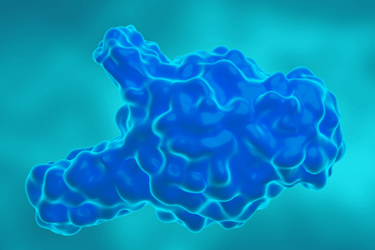
Rat sarcoma (RAS), which comes in multiple isoforms (KRAS, NRAS, HRAS), is a signaling protein that is involved in a myriad of complex cellular regulation processes. It exists in a dynamic equilibrium between a guanosine triphosphate (GTP)-loaded “ON” state and a guanosine diphosphate (GDP)-loaded “OFF” state. In many cancers, mutated RAS proteins are effectively stuck in the ON state, leading to aberrant signaling and poor prognostic outcomes for patients.
For many years, RAS was considered among the holy grail of oncology targets: frequently implicated in cancers with significant mortality rates, yet resilient to traditional small molecule targeting strategies.
Over the past decade, this has started to change with the approval of two drugs (Amgen’s sotorasib and Mirati’s adagrasib) that covalently target the KRAS G12C mutant. The RAS drug discovery story is far from over, however. The specific KRAS G12C mutant targeted by these drugs is present in only a small percentage of RAS-driven cancers. Also, several years of clinical data on the two approved KRAS G12C inhibitors suggest that resistance mechanisms are limiting their longer-term utility for patients.1
A second wave of RAS inhibitors is making its way through the R&D pipeline to address both shortcomings. Aiming to improve the narrow spectrum of activity of current drugs, researchers are pursuing two main strategies: individual drugs for each mutation, where bespoke warheads interact with amino acid residues specific to that mutant, and pan-RAS inhibitors that can inhibit a wide range of RAS mutant states and isoforms simultaneously.
Mutant-Specific Therapies
Scientists at Mirati have tailored their clinically approved KRAS G12C inhibitor, adagrasib, to exchange the cysteine-seeking warhead for an amine group optimized to interact with the mutated aspartate residue in KRAS G12D.2 Despite promising preclinical data, ongoing clinical trials have been shelved, citing formulation difficulties.3
One of the drawbacks of this approach is that for the existing drug classes, only the GDP-loaded OFF state of RAS contains the binding pocket required for selective targeting of specific RAS tumors — a state that is constitutively unfavored in oncogenic mutant RAS proteins. This may be a contributing factor to the lack of sustained clinical efficacy of these drugs. Frontier Medicines is developing an inhibitor, still in clinical evaluation, that targets both the ON and OFF states.4
Revolution Medicines, on the other hand, has applied a novel platform to discover inhibitors that act as a glue to stick various RAS mutants to the abundant protein cyclophilin A, forming inactive “tri-complexes.” Researchers are evaluating the clinical safety and efficacy of these compounds, including the KRAS G12D-targetted zoldonrasib.5
Other approaches include bifunctional proteolysis-targeting chimera (PROTAC) molecules that bind to a specific RAS form on one end and recruit an E3 ligase on the other, catalyzing the degradation of the mutated protein.6
Alternatively, as different RAS variants present unique neoantigens on the cell surface, it may be possible to prime T cells to respond to mutant RAS tumor cells by vaccination and other immunotherapeutic techniques.
Therapies Targeting Multiple RAS Mutants And Isoforms
Other work has focused on an entirely different strategy — inhibition of a wider range of RAS mutants and isoforms. This has the potential benefit of overcoming some of the emerging clinical resistance mechanisms to narrow-spectrum RAS inhibitors, as well as being applicable to a wider patient population. On the other hand, achieving tolerability and a suitable therapeutic index can be challenging due to the many essential signaling functions of wild type RAS.
Revolution Medicines has applied its tri-complex molecular glue approach to pan-RAS inhibition, taking advantage of the unique mode of action of these compounds.7 Many cancer types upregulate the binding partner in the complex (cyclophilin A), thus daraxonrasib, their investigational multi-RAS clinical candidate, displays tolerability and efficacy in ongoing clinical trials.
Boehringer Ingelheim has described an inhibitor of multiple mutations of KRAS, via a non-covalent molecule that binds in a similar site to the approved drugs.8 This tool binds both the ON and OFF states of the KRAS isoform and displays in vivo activity in xenograft models. Researchers are now testing clinical efficacy of an optimized analog of this compound.
Selectively Targeting Different States of RAS Using Fragment-Based Discovery
Our lab at Cancer Research Horizons took a different approach to find non-covalent inhibitors of multiple mutations and isoforms of RAS.9 Prior to the discovery of the approved KRAS G12C inhibitors, RAS was frequently thought to be “undruggable” — a smooth protein with no obvious sites for a small molecule drug to bind. The covalent G12C inhibitors overcame this by tethering an unoptimized version of the drug to the protein with a chemical bond, then systematically growing the molecule in a way that induced conformational changes in the protein, creating its own binding pocket by iterative optimization. We wanted to discover a different binding site that would remove the reliance on specific mutant residues for binding and allow easier targeting of the ON state.

The approach utilized fragment-based lead discovery, a technique where very small molecules are screened against the target of interest. Researchers can thus evaluate a larger proportion of chemical space than would be possible with larger, more drug-like molecules. Conversely, this technique tends to yield much weaker binders due to their small size; this requires the use of specialized screening methodologies and different strategies for optimization to clinical candidates.
The screening cascade employed nuclear magnetic resonance (NMR) and surface plasmon resonance (SPR) to detect changes in the biophysical properties of the protein and ligand upon binding. This approach identified weakly binding hits that traditional high throughput screening would have missed.
We optimized these hits using integrated medicinal chemistry, molecular docking, X-ray crystallography, and solution-phase structural data obtained by NMR. This multidisciplinary approach delivered high-affinity lead molecules that showed biochemical and cellular inhibition of multiple RAS isoforms and mutants. However, these compounds were less potent in cell lines expressing disease relevant RAS mutations.
Subsequent deconvolution of the biophysical and biochemical data revealed that these compounds displayed the same selective binding for the OFF state of RAS, compared to the ON state. Although X-ray crystallography showed that this binding pocket was available in both the ON and OFF forms of RAS, closer examination of the experimental structural information, as well as molecular dynamics (MD) simulations, suggested that a key amino acid residue (Glu37) occupied a higher energy confirmation when these compounds bound to GTP-loaded RAS.
Subsequent MD-guided design focused on molecules able to push this residue aside to occupy a new cryptic binding site. These new “inter-switch” binders displayed preferential binding to the ON-state of RAS and improved inhibition of the key protein–protein interactions that aberrant RAS promotes.
We halted further development of these compounds because of their suboptimal physicochemical properties; nonetheless, they represent a promising starting point for further optimization to deliver clinical candidates that selectively inhibit active RAS across a range of isoforms and mutation states. Answering such previously intractable scientific questions shows the potential of fragment-based discovery strategies, as well as the importance of considering the impact of structural dynamics to protein function for researchers working in this field.
Looking Ahead
This requires drug hunters to embed a deep mechanistic and structural understanding of how molecules interact with the target, right from the start of the drug discovery process. Researchers can maximize impact for patients by combining appropriate biophysical methodologies, predictive computational techniques, and biologically relevant assay systems.
Taken alongside the other therapeutic strategies outlined above, the next few years should be a fruitful period for discovery of new drugs targeting RAS-addicted cancers beyond KRAS G12C.
For teams pursuing next-generation RAS inhibitors, a two-pronged strategy is prudent: prioritize mutant-specific inhibitors for mutations of high clinical importance (e.g., KRAS G12D, KRAS G12V), while also exploring pan-RAS and RAS-ON approaches to mitigate against resistance risks and capture the full market. They should also invest early in target structural biology, mechanistic understanding, and PK/PD assays to de-risk the safety and developability challenges that have slowed competitors.
Targeting multiple mutations and isoforms simultaneously, inhibiting the ON state of RAS, and employing novel modalities can all have a part to play in expanding the scope of current therapies and combating clinical resistance mechanisms. We are hopefully nearing a point where the “undruggable” is finally drugged, making a huge difference to the lives of patients and their families.
References:
- Awad MM, et al. Acquired Resistance to KRASG12C Inhibition in Cancer. N Engl J Med. 2021 Jun 24;384(25):2382-2393. doi: 10.1056/NEJMoa2105281. PMID: 34161704; PMCID: PMC8864540.
- Xiaolun Wang, et al. Identification of MRTX1133, a Noncovalent, Potent, and Selective KRASG12D Inhibitor. Journal of Medicinal Chemistry 2022 65 (4), 3123-3133. DOI: 10.1021/acs.jmedchem.1c01688.
- Study of MRTX1133 in Patients With Advanced Solid Tumors Harboring a KRAS G12D Mutation (Terminated). https://clinicaltrials.gov/study/NCT05737706.
- Snahel Patel, et al. Abstract 1142: Discovery of FMC-376 a novel orally bioavailable inhibitor of activated KRASG12C. Cancer Res (2023) 83 (7_Supplement): 1142. doi.org/10.1158/1538-7445.AM2023-1142.
- Lingyan Jiang, et al. Abstract 526: RMC-9805, a first-in-class, mutant-selective, covalent and oral KRASG12D(ON) inhibitor that induces apoptosis and drives tumor regression in preclinical models of KRASG12D cancers. Cancer Res (2023) 83 (7_Supplement): 526. doi.org/10.1158/1538-7445.AM2023-526.
- Yoshinari T, et al. Discovery of KRAS(G12D) selective degrader ASP3082. Commun Chem. 2025 Aug 23;8(1):254. doi: 10.1038/s42004-025-01662-4. PMID: 40849515; PMCID: PMC12375097.
- Cregg J, et al. Discovery of Daraxonrasib (RMC-6236), a Potent and Orally Bioavailable RAS(ON) Multi-selective, Noncovalent Tri-complex Inhibitor for the Treatment of Patients with Multiple RAS-Addicted Cancers. J Med Chem. 2025 Mar 27;68(6):6064-6083. doi: 10.1021/acs.jmedchem.4c02314. Epub 2025 Mar 8. PMID: 40056080.
- Joachim Bröker. Discovery of BI-2493, a Pan-KRAS Inhibitor Showing In Vivo Efficacy. J. Med. Chem. 2025, 68, 15, 15649–15668. doi.org/10.1021/acs.jmedchem.5c00576.
- Charles W. Parry, et al. Reversible Small Molecule Multivariant Ras Inhibitors Display Tunable Affinity for the Active and Inactive Forms of Ras. J. Med. Chem. 2025, 68, 9, 9129–9161. doi.org/10.1021/acs.jmedchem.4c02929.
About The Author
 John Taylor is a group leader in medicinal chemistry at Cancer Research Horizons, based at the CRUK Scotland Institute in Glasgow. He has a particular interest in employing novel technologies and modalities to address difficult-to-drug targets. As a scientific and people leader, he has amassed over 25 years of experience in the sector, impacting a range of discovery programs at Syngenta, Eli Lilly, and Evotec. He has contributed to multiple peer-reviewed publications, patents, and invited talks. He is passionate about advocating for inclusive leadership and championing social mobility in the life sciences.