
A State Of Stress: Developing Therapeutics Rooted In Cell Behavior
A conversation with Yerem Yeghiazarians, MD, CEO and cofounder, Soley Therapeutics
Complex diseases involve stressed cells responding through many different signaling networks, surviving when they should die, as in cancer, or failing when they should recover, as in neurodegeneration and many other chronic diseases.
In this Q&A, Life Science Connect’s Morgan Kohler caught up with Yerem Yeghiazarians, MD, CEO and cofounder of Soley Therapeutics, to discuss how capturing the complexity of disease requires going beyond a single target and instead viewing whole cell behavior.
What is significant about studying cell response rather than starting with genes or pathways?
The significance is that it flips the starting point of discovery. Genes and pathways are essential tools, but they are abstractions. They describe parts of the system, providing snapshots of individual molecular components, but fail to indicate the resultant cell state and behavior of the entire cell-biological system. In many complex diseases, there are dozens of plausible genetic or pathway hypotheses, and committing to one up-front often reflects what is easiest to measure rather than visually indicating what actually governs cell fate.
This realization came from years of studying stressed cells in very different contexts. In cardiology, heart muscle cells die within minutes under low oxygen and low nutrients. In cancer, cells can survive indefinitely in that same environment. Looking at genes alone did not explain that difference. What mattered was how the cell sensed its environment, how it processed what it was sensing, and how that information flowed through the system to determine cell fate, such as survival or death.
By capturing visual cell data directly (cell images), it becomes possible to observe biology as it actually operates, integrating genetics, environment, and network behavior into a single readout, namely, extracting information from cellular images that indicate what the cell has sensed and how it anticipates future outcomes. That perspective reveals biology that is often invisible when starting from pathways in isolation.
What is the importance of studying how cells respond to stress and drug exposure?
Cellular stress is the common denominator across many diseases, and cellular stress is a fundamental mechanism in how cells respond to drugs. Cancer, neurodegeneration, metabolic disease, and cardiovascular disease are all conditions in which cells are operating under sustained stress. What differs is not the presence of stress, but how cells sense and interpret it and what decisions they make as a result.
Drug exposure does not occur in a vacuum. A drug enters a cell that is already stressed, already compensating, and already close to certain thresholds. The same molecule can have very different effects depending on that state. Studying how drugs reshape stress responses makes it possible to distinguish compounds that meaningfully redirect cellular behavior from those that simply overwhelm the system.
This way of thinking emerged directly from earlier work showing that small changes in stress signaling could rescue dying heart cells, while similar principles explained how cancer cells survive hostile environments. Cellular sensing of stress and subsequent response, not target identity, was the unifying biology.
What did you discover about cells by studying their response? How does stress impact cell response?
One of the most important insights was that cell fate is not binary and not instantaneous. Cells move along trajectories. Cellular sensing of stress reshapes how information is prioritized inside the cell, which signals dominate, which pathways are silenced, and which survival programs are activated.
Under chronic stress, cells often appear stable but are operating close to failure. In that state, small perturbations can have dramatic effects. Increasing stress slightly can push certain cells past a tipping point toward death. Reducing stress modestly can restore function without needing to correct an underlying genetic defect.
This helped explain why so many drugs that cleanly hit a target fail to produce durable benefit. They act on a node, but not on the system-level stress logic that actually governs behavior.
Was there anything surprising or notable about cell behavior that was observed?
One surprising observation was how early meaningful divergence occurs. Cells begin to commit to different fates long before traditional markers like viability, proliferation, or apoptosis change. Those early shifts are subtle, but they carry enormous information about mechanism and selectivity.
Another important realization was that similar outcomes can arise from very different paths. Two compounds may both kill cells at a late timepoint, but one does so by selectively amplifying stress in vulnerable cells, while the other causes broad, nonspecific damage. Without watching the response unfold over time, those differences collapse into the same endpoint and lead to the wrong conclusions.
How has what you learned translated into your drug discovery efforts?
These insights directly shaped how Soley approaches drug discovery. The platform was built to observe and quantify how living human cells sense stress and respond to perturbation over time, rather than optimizing against a predefined target from the outset.
In oncology, this means identifying compounds that selectively increase stress in cancer cells that are already operating near their limits, pushing them toward death while sparing healthy cells. In non-oncology indications, the same framework is used in the opposite direction to identify molecules that reduce or rebalance stress and restore cells toward healthier, more functional states.
This approach has enabled the discovery of novel mechanisms and the development of a diversified pipeline rooted in observed cell behavior. It reflects a shift away from asking whether a drug hits the right target toward asking whether it meaningfully changes the trajectory of a living system in a way that aligns with durable therapeutic benefit.
What does this way of looking at cells change about how drug discovery should be done going forward?
It challenges the idea that drug discovery should begin with certainty. For a long time, the field has been structured around the belief that if the right gene, target, or pathway can be identified up-front, everything else will follow. In many complex diseases, that confidence has not been rewarded. Despite enormous investment, the attrition rate remains high.
Looking at cell behavior forces a different discipline. It starts with observation rather than assumption, and it allows biology to reveal itself before conclusions are drawn. Instead of asking whether a compound hits the intended target, the more fundamental question becomes whether it changes the behavior of a living system in a meaningful and durable way.
This perspective also changes how risk is managed. Rather than committing early to a narrow hypothesis and discovering late that it does not translate, uncertainty is embraced earlier and resolved through data that reflect how cells actually behave under stress. That leads to better decisions made sooner and a clearer understanding of why a program should advance.
Ultimately, this approach suggests that progress in drug discovery will come less from adding complexity to individual assays and more from respecting the cell as an integrated, adaptive system. When discovery is grounded in how cells sense, respond, and determine fate, the path from biology to medicine becomes more coherent, even in the face of complexity.
About The Expert
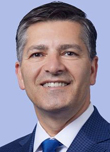 Yerem Yeghiazarians, MD, is cofounder and CEO of Soley Therapeutics. He earned his BA in biology and biochemistry from Brandeis University and his MD from the Johns Hopkins School of Medicine. He completed his residency, chief residency, cardiology fellowship, and interventional cardiology training at Brigham and Women’s Hospital, Harvard Medical School.
As a clinician-scientist with more than 20 years of experience in cardiology, stem cell biology, and translational research, he leads Soley’s biology-first discovery strategy. He served as professor of medicine at the University of California, San Francisco, where he founded and directed the Translational Cardiac Stem Cell Program. His work helped establish the infrastructure for cardiac stem cell research at UCSF and advanced understanding of how stressed cells sense and respond to their environment.