
Inpharmatica installs largest European commercial bioinformatics processor platform
Combining software and science to accelerate drug discovery through protein analysis
Inpharmatica (London), which specializes in applying structural bioinformatics to pharmaceutical research, announced on December 13 that it has more than doubled its in-house computational capabilities. Inpharmatica's 1,100 Linux processor system now becomes the most powerful commercial installation in Europe dedicated to bioinformatics, the use of computer techniques in drug discovery.
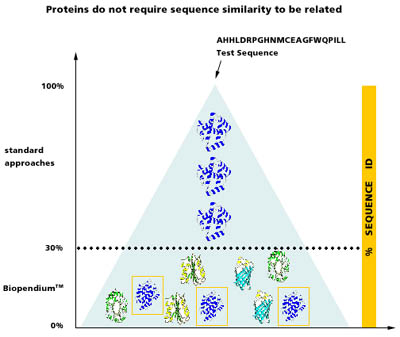
Inpharmatica's Biopendium information product, which will use the mega-processor bank, relates protein sequences to structure and function. According to Malcolm Weir, CEO of Inpharmatica, the processor system can now be updated as needed to carry out customized projects for his company's clients.
"Historically, companies wanting to do large scale processing-intensive computing have had to rely on specialist high performance computing vendors with high-cost proprietary solutions," said Pat Leach, IT director at Inpharmatica. "The use of Linux and the low cost of standard PC components has enabled Inpharmatica to achieve more for less. The key to deploying such large scale scientific compute power is in the load balancing and systems management," Leach added. "At Inpharmatica, we have a world class team who have developed unique methods for distributing and managing many hundreds of thousands of jobs across thousands of processors."
Inpharmatica's latest upgrade includes:
- 300 Dual Intel PIII 700Mhz PCs
- Rack Mounted Sun E4500 8 Processor Database Server
- 1 Terabyte of Sun A5200 Storage
- Black Diamond Gigabit Ethernet Switching
The configuration is housed in a new computer room at Inpharmatica's London West End offices close to University College London.
Why all this processing power?
Gene sequencing projects have created an overload of data on potential drug targets. Armed with all this data, pharmaceutical companies need to identify and select the highest quality targets. Identification of the best targets can significantly enhance drug discovery and improve the rates of attrition during the discovery process by increasing increase the probability of safe, effective new compounds.
Inpharmatica's technologies allow it to look beyond gene sequence data and focus on the proteins encoded by gene sequences (the proteome) that are the true drug targets. The company performs all-by-all analyses of all known expressed proteins, relating sequences to three-dimensional structures and thus to functions. Inpharmatica's strength is its focus on protein function using sequence/structure relationships, which aids in uncovering the most suitable drug targets. And since binding of drugs to their protein targets is driven by structure, not sequence, the company¹s technologies open a window on how these interactions occur.
For more information: David Ricketts, Vice President of Business Development, Inpharmatica, Brighton Business Centre, 221 bd Raspail 95 Ditchling Rd., 75014 Paris Brighton BN1 4ST, UK.Tel: +44-207-631-4644. Fax: +44-207-631-4844.
Edited by Angelo DePalma
Managing Editor, Drug Discovery Online and Pharmaceutical Online
adepalma@vertical.net