
Discovery Research
PRODUCTS
-

In the pharmaceutical industry, every capsule and tablet begins with a concept. Transforming that idea into a tangible product requires an expert manufacturing partner. Natoli stands out as a leader in pharmaceutical equipment and services, providing a comprehensive journey from formulation to full-scale production.
-

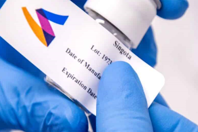
Discover agile labeling and packaging services for pharmaceuticals, specializing in custom designs, regulatory support, and small to medium batch production with quick turnaround times.
-

Accelerate your drug development with our comprehensive pre-formulation, formulation, and novel delivery system expertise, tailored to optimize physical form, enhance solubility, and support scale-up.
-

We support you in the process of optimally implementing complex Manufacturing Execution Systems. In addition to the creation of Master Batch Records (MBRs) and Electronic Batch Recording (EBR), including classic data acquisition and preparation, as well as all other processes that have immediate effects on the manufacturing process.
-

The MBAL-0250CSP2 is a passive monolithic microwave integrated circuit (MMIC) 1:2 balun developed by Marki Microwave, designed to operate across an exceptionally wide frequency range of 2 to 50 GHz.



WHITE PAPERS AND CASE STUDIES
-
 Mobile Gowning Cleanroom, Built To Meet ISO 7 Requirements
Uncover how Germfree designed and installed a mobile cGMP cleanroom on a 53′ tractor-trailer chassis to provide a flexible and efficient cleanroom solution tailored to the company’s needs.
-
 Robust, Scalable Strategy For Monodisperse Nanosuspensions Of Poorly Soluble Drugs
By tailoring the formulation strategy, selecting the appropriate excipients, and fine-tuning process conditions, see how our team was able to improve bioavailability and in vivo exposure.
-
 Disinfection For Purified Water Loop For Kamada Pharmaceuticals, Israel
An Atlantium HOD™ (Hydro-Optic Disinfection) UV system was installed at the outlet of a PW tank to serve as the primary disinfection barrier, with water circulating through the system at 6m³/hr before reaching the points of use.
-
 Changing The Clinical Feasibility Game With AI
AI is only as good as the data it’s built upon. Our customized AI platforms are constructed on a foundation of trustworthy, carefully curated data to produce detailed, expert-driven responses.
-
 Laerdal Error-Proofs Medical Kit Assembly With AI-Powered Vision Verifications
Discover how Laerdal Medical implemented an automated kit assembly solution that enhances quality control and supports continuous improvement through real-time monitoring and visual documentation.
-
 AMERICAN And Partners Install Boltless Restrained Underwater Pipeline System In Ashland, Wisconsin
Beneath the waters of Chequamegon Bay on Lake Superior in Ashland, Wisconsin, about 4,500 feet of 24-inch AMERICAN Flex-Ring Ductile Iron Pipe and a submerged timber crib intake structure were installed to ensure the city’s residents have quality drinking water for the next 100 years. The Ashland Water Intake Project began May 1, 2025, and is now complete.
-
 Executing Concurrent Decentralized RCTs And RWE At Scale
See how a team of four managed data for 40 peer-reviewed studies and 200,000 participants.
-
 Novel Platform For Execution Of Pragmatic Studies Boosts Cancer Trial Efficiency
Learn how Flatiron partnered with Genentech and Foundation Medicine to develop a novel platform for the execution of pragmatic studies.
-
 Enhancing Municipal Water Storage With Submersible Mixers: A Case Study
Ice accumulation in water tanks poses serious challenges, compromising operations by trapping volumes of water and potentially costing tens of thousands of dollars in infrastructure damage. PAX Mixers are highly effective in preventing ice formation, even in extreme cold conditions. By optimizing water circulation, we can maintain consistent water temperatures within a tank.
-
 Flexible Integrations To Reduce Risks And Increase Efficiencies
Learn how a trial team kept the blind of central lab samples and patient treatment across a Phase III and extension trial, whilst optimizing the supply chain.
-
 Global Omnium: Transforming From Conventional To Smart Water
Lessons learned from building one of the largest smart meter networks in Europe.
-
 Monitoring Laser Power In Laser-Based Fill & Finish Biopharmaceutical Systems
Custom laser power measurement ensures precise vaccine vial sealing, meeting strict biopharma compliance standards through tailored detectors, firmware, and calibration for critical fill-finish applications.










NEWS
-
Aircraft Toilets Could Flush Out Spread Of Global Superbugs8/18/2025
Wastewater from aircraft toilets could provide a critical warning system for the global spread of antimicrobial resistant (AMR) superbugs, a silent pandemic that threatens to kill more people than cancer by 2050.
-
Smarter Dentistry Starts Here: Muskan.AI Enhances Diagnostics, Imaging & Patient Care5/19/2025
Muskan.AI, a pioneer in the application of artificial intelligence to dentistry, has reached several key milestones in its mission to transform dental care through intelligent, accessible, and clinician-focused technology.
-
From Everyday To Extreme, Toolant Launches Brand New Line Of Hand Tools8/15/2025
Today, toolant, a tool and accessories brand built around real-world needs, announced the launch of its brand new hand tools collection designed for automotive enthusiasts and professional car detailers alike.
-
Redex Preloaded Systems Deliver Precise Positioning For Machine Tools1/16/2025
Redex is pleased to announce its patented DualDRIVE and TwinDRIVE preloading technologies now give CNC machine designers several ways to build a zero backlash system.
-
Consulta Remedios Selects Kevel's Retail Media Cloud To Power Its Next-Generation Advertising Platform5/2/2025
Kevel, the leading provider of API-based retail media ad serving technology, today announced that Consulta Remédios, Brazil's largest medicine price comparison platform, has selected Kevel's Retail Media Cloud to power the development and enhancement of its in-house retail media network.
ABOUT
About Nutrient Removal
Nutrient removal from wastewater consists of treating wastewater to remove nitrogen and phosphorus before it reenters natural waterways. High levels of nitrogen and phosphorus in wastewater cause eutrophication, a process where excess nutrients stimulate excessive plant growth such as algal blooms and cyanobacteria. The decomposition of the algae by bacteria uses up the oxygen in the water causing other organisms to die. This creates more organic matter for the bacteria to decompose. In addition, some algal blooms can produce toxins that contaminate drinking water supplies.
As authorized by the Clean Water Act, the National Pollutant Discharge Elimination System (NPDES) permit program regulates point sources, such as municipal wastewater treatment plants, that discharge pollutants as effluent into the waters of the United States. In recent years, many of the States’ environmental bodies have lowered nutrient limits to arrest eutrophication. Maryland’s effort to protect the Chesapeake Bay and its tidal tributaries is perhaps the most notable example of nutrient removal in the US. Nutrient removal continues to be a growing area of focus for wastewater treatment throughout the world.
The removal of nitrogen and phosphorus require different nutrient removal processes. To remove nitrogen, the nitrogen is oxidized from ammonia to become nitrate through a process called nitrification. This process is then followed by denitrification where the nitrate is reduced to nitrogen gas which is released to the atmosphere and removed from the wastewater.
Nitrification is a two-step aerobic process which typically takes place in aeration tanks. Denitrification requires anoxic conditions to encourage the appropriate biological conditions to form. The activated sludge process is often used to reduce nitrate to nitrogen gas in anoxic or denitrification tanks.
Phosphorus can be removed biologically using polyphosphate accumulating organisms (PAOs) which accumulate large quantities of phosphorus within their cells and separate it from treated water. Phosphorus removal can also be achieved by chemical removal. Once removed as sludge, phosphorus may be stored in a land fill. However, many municipalities and treatment facilities are looking to resell the biosolids for use in fertilizer.