PRECLINICAL ARTICLES
-
 Discovery Dialogues: Winston Haynes, VP, Computational Sciences and Engineering, LabGenius Tx
DDO interviewed Winston Haynes, VP, computational sciences and engineering, LabGenius Tx, on their T-cell engagers platform, including its lead candidate LGTX-101, a Nectin-4 CD3 molecule showing strong preclinical efficacy.
-
 Discovery Dialogues: Stef van Grieken, CEO, Cradle Bio
DDO caught up with Stef van Grieken, CEO of Cradle Bio, which uses AI to speed protein design, putting tools in scientists’ hands. Gains in lead optimization are clear, but safety CMC and tough targets remain key challenges.
-
 Discovery Dialogues: Helen Bright, Ph.D., CSO of Centauri Tx
At PEGS Boston, Helen Bright, PhD explained how Centauri’s CTX187 harnesses innate immunity to fight resistant gram-negative infections and support better outcomes.
-
 Fostering Entrepreneurial Mentorship And Education: A Peek Into Nucleate Boston Activator 2026 Cohort
Nucleate Boston’s 2026 Activator shows how mentorship, structure, and community can help promising young scientists become credible biotech founders.
-
 Why Tolerability Will Drive The Next Wave Of Obesity Treatments
For the next generation of obesity medicines, enhancing how patients experience therapy will inform discovery and development efforts and may ultimately determine long-term success.
-
 Synaptic Regeneration And The Future Of Alzheimer's R&D
For too long, treating Alzheimer’s disease has been a case of “managed decline.” We need to move beyond slowing disease progression toward achieving tangible functional recovery.



PRECLINICAL VIDEOS
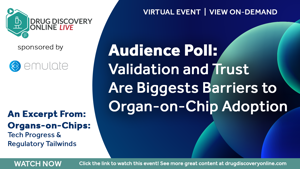
In a live audience poll, 46% of respondents cited validation and trust as the biggest barriers to broader organ‑on‑chip adoption. The result suggests the technology itself is no longer the main hurdle; instead, confidence in reproducibility, benchmarking, and fit‑for‑purpose use will determine how quickly these models are integrated into drug discovery decision‑making.

Women’s health research highlights both the limitations of traditional models and the strengths of organ‑on‑chip systems. Panelists describe how hormone dynamics, immune signaling, microbiomes, and sex‑specific biology can be studied with unprecedented precision, enabling mechanistic insights that were previously inaccessible and opening new paths beyond symptom‑based treatment.
Panelists emphasized that CROs and CDMOs will be essential to scaling organ on chip adoption, but only if they commit to standardized, commercial execution rather than treating these systems as experimental add ons. As Don Ingber put it plainly, CROs “need to start buying these commercial systems and start scaling” them to make organ on chip studies operationally viable for industry.
Whole‑body human‑on‑chip platforms are technically feasible, but panelists caution against viewing them as near‑term solutions for drug development. Instead, progress is being driven by strategically linked organ systems designed to answer specific biological questions—often supported by computational modeling to manage complexity.
PRECLINICAL ARTICLES, APP NOTES, CASE STUDIES, & WHITE PAPERS
-

Learn how high-content imaging enables deeper cellular insights, accelerates hit-to-lead progression, and enhances decision-making through multiparametric analysis.
-

Confident identification of known and unknown compounds starts with smarter LC/MS and GC/MS workflows. Learn how structure elucidation, verification, and centralized data curation work together.
-

Gain insight into how localized modeling of ionizable centers, supported by curated experimental data, delivers reliable predictions that strengthen physicochemical decision-making.
-

Property-driven optimization helps medicinal chemists focus synthetic effort where it matters most. See how integrating ADME and physicochemical predictions can surface better-balanced lead candidates.
-

Digital integration of physicochemical property prediction transforms how chemists evaluate compounds, enabling faster analysis, stronger structure, and more informed decisions across libraries.
-

AI‑enabled DMTA cycles connect design, experimentation, and analysis through structured data and automation, reducing manual handoffs while accelerating discovery, development, and CMC decision‑making.
-

Accelerate your drug discovery program with integrated, cross-functional expertise that advances promising candidates from hit identification to preclinical development with speed and efficiency.
-

Discover how tailored strategies, advanced technologies, and scientifically driven decision frameworks are accelerating the successful development and regulatory readiness of next-generation ADCs.
-

High‑content imaging enables rapid discovery and optimization of small‑molecule protein degraders by delivering multiparametric, single‑cell insights that accelerate hit identification, SAR development, and lead advancement.
-

A streamlined RNA‑seq workflow enables high‑throughput gene expression profiling directly from cell lysates, reducing cost and complexity. See how this approach accelerates lead selection.
-

Digital PCR offers a precise, scalable approach to lentiviral vector characterization, enabling reliable genome titer, vector copy number, and RCL detection while reducing variability.
-

Accurate serial dilutions depend on more than calculations. Learn how mixing, tip handling, and workflow consistency influence accuracy, as well as how small adjustments can improve reproducibility.





PRECLINICAL SOLUTIONS
-

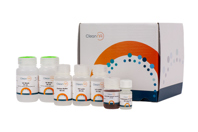
Magnetic bead-based genomic DNA extraction kit.
-

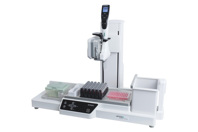
Frees you from routine pipetting and provides excellent results
-

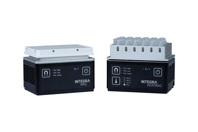
We have introduced the MAG and HEATMAG modules with you, the scientists, in mind.
-

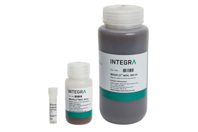
MAGFLO magnetic beads are only available in Austria, Belgium, Denmark, France, Germany, Ireland, Netherlands, Sweden, Switzerland and the United Kingdom.
-

Explore how a data‑driven discovery model combines DEL screening, computational insights, and medicinal chemistry to accelerate hit‑to‑lead decisions, reduce risk, and enable efficient progression.
-

Chemomics transforms full DEL datasets into predictive insights. See how combining large-scale screening with clear computational models accelerates SAR understanding and strengthens confidence.
-

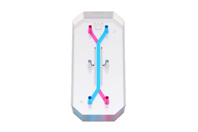
Generate human-relevant data with an Organ-Chip system that combines automation, imaging, and cost efficiency for faster, more confident insights for drug development and complex biological studies.
-

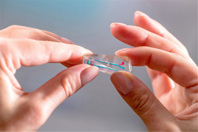
With 12 independent Emulations in one consumable, Chip-Array optimizes workflows and reduces cell requirements—delivering scalable, physiologically relevant models for advanced research.
-

From cancer models to high-throughput screening, Organ-Chip platforms accelerate development, improve safety, and support regulatory compliance for next-generation therapies.
-

This human-relevant liver model featuring a rigid plastic is designed to minimize small-molecule drug absorption. Explore the specifications of this product engineered to model the liver.