
Discovery Research
PRODUCTS
-

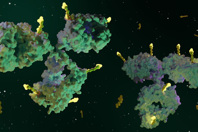
EirGenix provides client-oriented contract development and manufacturing services for biologics, especially monoclonal antibodies and biosimilars. Combining the capabilities of EirGenix’s strategic partner, Formosa Laboratories, Inc, a high potency API manufacturer, we offer integrated services for Antibody Drug Conjugate (ADC) development and manufacturing.
-

Access, interact with, and even adjudicate clinical trial imaging from the same platform where you manage all other study data.
-

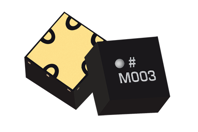
The MM1-1886HCSP2 is a highly linear passive GaAs double balanced MMIC mixer suitable for both up and down-conversion applications.
-

Experience higher data quality, retention and participant compliance by providing a truly engaging experience from data submission to reminders, appointment management, telemedicine and more -- from the phone, tablet, or desktop.
-

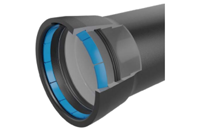
U.S. Pipe’s TR-XTREME® pipe is engineered for seismic resilience, providing the first domestic ductile iron pipeline capable of expansion, contraction, and deflection within a single restrained bell joint.


WHITE PAPERS AND CASE STUDIES
-
 Supporting Participants Through National Travel Disruptions
A sudden travel shutdown threatened a critical clinical visit. Rapid rescheduling, coordinated logistics, and clear communication ensured engagement and the ability to continue without interruption.
-
 Leveraging Single-Use Solutions To Solve Working Cell Bank Challenges
Discover how custom manifolds enhance allogeneic therapy development from formulation to commercialization by improving process control, scalability, and efficiency.
-
 Cell Line Development For High-Titer Lentivirus Vector Production
Explore a groundbreaking method to significantly enhance LV vector yield using engineered HEK293T cells. This approach paves the way for more efficient and large-scale production of LV vectors.
-
 From Months To Hours: MMC Medical's EDC Revolution
Learn how a specialized CRO reduced study build times by 95%. Discover strategies for template reusability and flexible resource scaling to accelerate early-stage medical device validation.
-
 Enhancing Treatment Capacity With miGRATE™ Technology At Verrado WRF
Due to rapid population growth in its service area, Verrado Water Reclamation Facility (WRF) in Verrado, Arizona faced a challenge. Its existing treatment capacity of 1.54 millions of gallons per day (MGD) had become insufficient to meet the rising demand and comply with both Total Suspended Solids (TSS) and Total Nitrogen (TN) permits.
-
 Leverage Apps To Reduce Line Changeover Time From 14 Days To 3
A global biopharma leader modernized its complex equipment changeover process using an innovative platform to achieve faster execution, fewer errors, and greater visibility through digitized, validatable SOPs.
-
 Rapid Results In A High-Stakes Dry Eye Disease Trial
This time-sensitive Phase 3 trial in dry eye disease required precision project management leveraging strong site relationships, ophthalmology-specific expertise, and data-driven site selection.
-
 Monitoring Laser Power In Laser-Based Fill & Finish Biopharmaceutical Systems
Custom laser power measurement ensures precise vaccine vial sealing, meeting strict biopharma compliance standards through tailored detectors, firmware, and calibration for critical fill-finish applications.
-
 Flatiron Prospective Evidence Generation
Explore prospective evidence generation and pragmatic approaches that can help you address staffing challenges and the issue of complexity that is driving up the failure rate of clinical studies.
-
 Naples Aviation Authority ARFF Transition
In a groundbreaking effort to help airports transition from harmful PFAS-laden firefighting foams, the Naples Airport Authority enlisted ECT2 to manage the cleanup of PFAS-contaminated vehicles.
-
 Responsible Reclamation – City of Abilene, Texas
To combat drought, Abilene, Texas, implemented a reuse system utilizing O3 + BAC to remove trace organics. This solution met strict standards, ensured water resilience, and proved more cost-effective than AOP alternatives.
-
 Navigating Regulatory Compliance: A Success Story In The Pharma Industry
Reveal how one pharmaceutical facility overcame strict cross-contamination rules and space limits without costly building modifications to ensure operational continuity.










NEWS
-
Quantum Biopharma Announces Signing Of An Agreement With A Global Pharmaceutical Contract Research Organization To Prepare An IND (Investigational New Drug) Application Package For Lucid-21-302 (Lucid-MS), A First-In-Class Treatment For Multiple Sclerosis5/20/2025
Quantum BioPharma Ltd. (NASDAQ: QNTM) (CSE: QNTM) (FRA: 0K91) (“Quantum BioPharma” or the “Company”), a biopharmaceutical company dedicated to building a portfolio of innovative assets and biotech solutions, today announces that it has signed an agreement with a global pharmaceutical contract research organization to prepare an IND (Investigational New Drug) application package for Lucid-21-302 (Lucid-MS) with the US FDA.
-
3-In-1 Orbital Thread Milling Cutters For New Thread Sizes1/14/2025
Following the successful introduction of the Thrill·tec TC645 Supreme orbital drill/thread mills for dimensions from M4 to M12 in 2023, Walter is now expanding its range to cover additional metric dimensions from M14 to M20 as well as their imperial equivalents.
-
Stoichiometric Crystal Shows Promise In Quantum Memory7/7/2025
For over two decades, physicists have been working toward implementing quantum light storage—also known as quantum memory—in various matter systems.
-
Agilitas Energy Expands Into Hydropower With Acquisition Of Two Projects In West Virginia And Maryland6/24/2025
Agilitas Energy, a leading developer and operator of renewable energy and energy storage systems, today announced the acquisition of two late-stage hydropower development projects from Advanced Hydro Solutions.
-
Consulta Remedios Selects Kevel's Retail Media Cloud To Power Its Next-Generation Advertising Platform5/2/2025
Kevel, the leading provider of API-based retail media ad serving technology, today announced that Consulta Remédios, Brazil's largest medicine price comparison platform, has selected Kevel's Retail Media Cloud to power the development and enhancement of its in-house retail media network.
ABOUT
About Nutrient Removal
Nutrient removal from wastewater consists of treating wastewater to remove nitrogen and phosphorus before it reenters natural waterways. High levels of nitrogen and phosphorus in wastewater cause eutrophication, a process where excess nutrients stimulate excessive plant growth such as algal blooms and cyanobacteria. The decomposition of the algae by bacteria uses up the oxygen in the water causing other organisms to die. This creates more organic matter for the bacteria to decompose. In addition, some algal blooms can produce toxins that contaminate drinking water supplies.
As authorized by the Clean Water Act, the National Pollutant Discharge Elimination System (NPDES) permit program regulates point sources, such as municipal wastewater treatment plants, that discharge pollutants as effluent into the waters of the United States. In recent years, many of the States’ environmental bodies have lowered nutrient limits to arrest eutrophication. Maryland’s effort to protect the Chesapeake Bay and its tidal tributaries is perhaps the most notable example of nutrient removal in the US. Nutrient removal continues to be a growing area of focus for wastewater treatment throughout the world.
The removal of nitrogen and phosphorus require different nutrient removal processes. To remove nitrogen, the nitrogen is oxidized from ammonia to become nitrate through a process called nitrification. This process is then followed by denitrification where the nitrate is reduced to nitrogen gas which is released to the atmosphere and removed from the wastewater.
Nitrification is a two-step aerobic process which typically takes place in aeration tanks. Denitrification requires anoxic conditions to encourage the appropriate biological conditions to form. The activated sludge process is often used to reduce nitrate to nitrogen gas in anoxic or denitrification tanks.
Phosphorus can be removed biologically using polyphosphate accumulating organisms (PAOs) which accumulate large quantities of phosphorus within their cells and separate it from treated water. Phosphorus removal can also be achieved by chemical removal. Once removed as sludge, phosphorus may be stored in a land fill. However, many municipalities and treatment facilities are looking to resell the biosolids for use in fertilizer.