
Bioanalytical and Analytical Sciences
PRODUCTS
-

Early-phase clinical research experts, specialized in first-in-human trials, clinical pharmacology/NDA-enabling studies, and proof-of-concept studies.
-

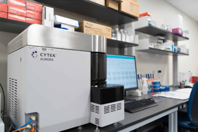
Experience customized and validated flow cytometry (FCM) biomarkers and panels for your clinical research on a global scale. Learn how FCM can enhance your research and help develop the panels you need.
-

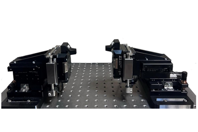
The F-141 system offers ultra-fast, multi-axis photonics alignment with embedded machine learning, ideal for PIC testing and assembly requiring precision, speed, and compact integration.
-

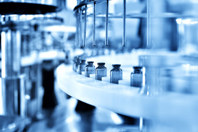
To offer comprehensive solutions to Mycenax’s customers, we provide one-stop shop services including cell line development, upstream cell culture process development, downstream purification process development, formulation development, analytical method development, process scale-up study, PIC/S GMP production and aseptic fill and finish.
-

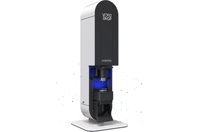
Ideal tool for characterizing nanoparticles
The Corning Videodrop utilizes the principles of interferometry in conjunction with microscopy to sense, detect, characterize, and track single nanoparticles in real time. The operation of this bioproduction analytical device is seamless thanks to its intuitive software interface and efficient sample handling protocol.

WHITE PAPERS AND CASE STUDIES
-
 2R Vials And Deep Cold Storage - Determining Mechanical & CCI Performance
Review the implications of this study on the storage of sensitive molecules that require deep-cold storage and learn how 2R Fina glass vials are poised to enhance cold storage practices.
-
 Navigating The Global Epilepsy Clinical Trial Terrain In 2024
Explore the forefront of epilepsy research with Novotech CRO's comprehensive analysis, unveiling innovative therapies, clinical trials, and future trends shaping epilepsy care.
-
 Container Closure Integrity Test Method Development For Autoinjectors
Discover an autoinjector technology that leverages laser-based headspace analysis for container closure integrity to advance biologic drug delivery with precision, safety, and regulatory confidence.
-
 5 Steps To Design A Microbiological Performance Qualification For Facilities
Explore five steps to design an EMPQ for sterile manufacturing: classification, protocol drafting, cleaning evaluation, disinfectant efficacy testing, and continuous improvement.
-
 Optimize Time, Space and Cost With Inline Buffer Formulation And System
Discover how integrating inline buffer formulation with chromatography reduces buffer waste by 50% and delivers a 710% ROI, transforming downstream efficiency and sustainability.
-
 End-To-End Clinical, Biometrics, And Regulatory Support In Neurology
Discover how an integrated NDA strategy aligned data, vendors, and regulatory execution to achieve an on-time submission and approval without major FDA queries.
-
 Optimizing Bispecific Antibody Expression Via Multi-Omics Analysis And Vector Redesign
Discover how diagnosing ribosome pausing sites and optimizing codon usage dramatically improves bispecific antibody titers, turning difficult-to-express candidates into viable therapeutics.
-
 Streamlining The Importing & Exporting Of Biological Samples
Create a seamless and predictable import and export process by working with experienced bioanalytical laboratory partners, understanding what paperwork samples require, and proactive planning.
-
 A New Story For Myoglobin—Producing Yeast-Generated Alternative
A fast, automated protein analysis workflow empowers researchers to screen yeast strains more efficiently. See how this streamlined approach accelerates innovation while supporting sustainability.
-
 How A Global Pharma Manufacturer Reduced Line Stops And Increased OEE
Gain insight into how a leading pharmaceutical company identified the root cause of long-standing inefficiencies, optimized performance, and productivity with unprecedented speed and accuracy.
-
 Safety, Containment, And Analysis Of Highly Potent Compounds
Explore a comprehensive overview of the challenges, requirements, and best practices for safely working with highly potent compounds in drug development and manufacturing.
-
 Enabling CDMOs To Focus On Core Priorities
Explore innovative solutions for CDMO's striving to remain competitive as the biopharmaceutical market grows and evolves.









NEWS
-
Saelig Introduces The Tekbox TBVNA-6000 1Hz – 6GHz Vector Network Analyzer3/18/2025
Saelig Company, Inc. has introduced the Tekbox TBVNA-6000 Two-Port Vector Network Analyzer, which offers a comprehensive range of measurement features to allow a detailed frequency analysis of RF devices and components, as well as sound-frequency products.
-
Eurofins And trinamiX Expand Mobile Forage Analysis Offering To Support Dairy And Cattle Farmers Across Europe3/19/2026
Eurofins Agro and trinamiX GmbH announce a significant expansion of their joint mobile forage analysis solution, delivering broader geographic availability and enhanced analytical capabilities designed to support dairy and cattle farmers in optimizing feed efficiency, animal health, and farm profitability.
-
Keysight Introduces RF Signal Analyzers To Accelerate Wideband Wireless Design And Validation6/2/2026
Keysight Technologies, Inc today introduced the Pro XA6 SA6320A and Expert XA5 SA6210A signal analyzers, designed to help engineers design and validate increasingly complex wireless systems faster and with greater confidence.
-
Metrohm Helps Develop New DIN Standard For Analysis Of Trifluoroacetic Acid (TFA) In Water9/25/2025
Metrohm, a leading supplier of precise measuring instruments from eastern Switzerland, has contributed its expertise to the development of the new DIN standard 38407-53.
-
Agilent And Veeda Lifesciences Launch Joint Analytical Center Of Excellence To Accelerate GLP 1 And Complex Biologics Development Services5/13/2026
Agilent Technologies, a global leader in analytical and laboratory solutions, today announced a strategic collaboration with Veeda Lifesciences to strengthen regulatory‑aligned analytical and bioanalytical workflows supporting biopharma development, as GLP‑1 and other complex therapeutic modalities continue to advance rapidly through global pipelines.
ABOUT
About Nutrient Removal
Nutrient removal from wastewater consists of treating wastewater to remove nitrogen and phosphorus before it reenters natural waterways. High levels of nitrogen and phosphorus in wastewater cause eutrophication, a process where excess nutrients stimulate excessive plant growth such as algal blooms and cyanobacteria. The decomposition of the algae by bacteria uses up the oxygen in the water causing other organisms to die. This creates more organic matter for the bacteria to decompose. In addition, some algal blooms can produce toxins that contaminate drinking water supplies.
As authorized by the Clean Water Act, the National Pollutant Discharge Elimination System (NPDES) permit program regulates point sources, such as municipal wastewater treatment plants, that discharge pollutants as effluent into the waters of the United States. In recent years, many of the States’ environmental bodies have lowered nutrient limits to arrest eutrophication. Maryland’s effort to protect the Chesapeake Bay and its tidal tributaries is perhaps the most notable example of nutrient removal in the US. Nutrient removal continues to be a growing area of focus for wastewater treatment throughout the world.
The removal of nitrogen and phosphorus require different nutrient removal processes. To remove nitrogen, the nitrogen is oxidized from ammonia to become nitrate through a process called nitrification. This process is then followed by denitrification where the nitrate is reduced to nitrogen gas which is released to the atmosphere and removed from the wastewater.
Nitrification is a two-step aerobic process which typically takes place in aeration tanks. Denitrification requires anoxic conditions to encourage the appropriate biological conditions to form. The activated sludge process is often used to reduce nitrate to nitrogen gas in anoxic or denitrification tanks.
Phosphorus can be removed biologically using polyphosphate accumulating organisms (PAOs) which accumulate large quantities of phosphorus within their cells and separate it from treated water. Phosphorus removal can also be achieved by chemical removal. Once removed as sludge, phosphorus may be stored in a land fill. However, many municipalities and treatment facilities are looking to resell the biosolids for use in fertilizer.